Legal breakthroughs needed to unlock potential for State-owned enterprises

They insisted that the role of SOEs has become increasingly important in maintaining macroeconomic stability, guiding the market, and delivering on national strategic objectives.

Cashew packaging at LAFOOCO, the first State-owned enterprises in Vietnam's cashew industry to go private. (Photo: VNA)

Hanoi (VNS/VNA) - Economists stressed the importance of a shift from administrative control to supporting and granting greater investment autonomy to State-owned enterprises (SOEs).

They insisted that the role of SOEs has become increasingly important in maintaining macro-economic stability, guiding the market and delivering on national strategic objectives, an urgency that the amended Law on the Management and Use of State Capital in Production and Business Activities at Enterprises should address.

SOEs have been said to have faced numerous challenges in implementing investment projects due to complex and outdated legal provisions, particularly those concerning investment scope, decision-making authority and approval procedures under existing laws. Economists and enterprise representatives said that current procedures significantly limit SOEs’ flexibility.

Even when using their accumulated capital, these enterprises must seek approvals that can take months, causing them to miss timely investment opportunities, especially in strategic and high-tech industries.

In contrast, foreign direct investment (FDI) enterprises are not subject to such procedural hurdles. As long as they comply with Vietnamese law, they could make investment decisions quickly. This has placed SOEs at a disadvantage in their domestic market, hindering efforts to position them as a core pillar of the national economy.

Recognising these challenges, the draft law currently under review by the National Assembly has introduced revisions to remove some of these obstacles.

The drafting committee has underscored the importance of clearly delineating the roles of State management and State ownership representation, avoiding administrative interference in business operations. Stronger decentralisation and accountability of ownership representatives and enterprise leaders are vital for improving SOE governance and enabling economic growth.

Notably, the revised draft incorporates feedback from National Assembly deputies regarding State capital investment using the State budget. For projects with budgets equivalent to those categorised as national key projects under public investment laws, investment guidelines are decided by the National Assembly.

In line with this, the National Assembly has proposed further refining Article 11 of the draft law to uphold the principle of 'State capital, once invested in an enterprise, is treated as the enterprise’s legal assets and capital'.

Industry experts said a top priority of the revised law should be to unlock resources, enhance SOEs' autonomy, and improve accountability, rather than perpetuate rigid administrative control.

Lawyer Nguyen Tien Lap, a member of NHQuang & Associates and an arbitrator at the Vietnam International Arbitration Centre (VIAC), argued that the State can explore special governance models for SOEs. Successful examples include Temasek Holdings in Singapore and the Public Investment Fund in Saudi Arabia.

“These SOEs became powerful and globally competitive because the State acts solely as an investor, without exercising direct administrative management," Lap said.

"As investors, governments only need to focus on returns, while State management should apply equally to all economic actors, whether public or private.”

He proposed that the new law should consider removing the concept of State management over SOEs.

“This concept is often ambiguous and complex, leading to potential abuse and hindering the natural autonomy of enterprises,” he added./.

VNA

See more

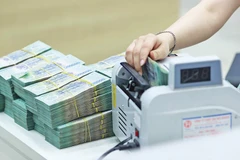
Illustrative image (Photo: VNA)

Vietnam steps up anti-money laundering vigilance amid rising digital assets

Since the Anti-Money Laundering Law was enacted in 2022, the Anti-Money Laundering Department has received thousands of suspicious transaction reports (STRs) annually, with the number of reports growing by about 30% each year. Since 2023, based on these reports, the department has collected and analysed information, issuing nearly 600 documents related to over 5,000 STRs.

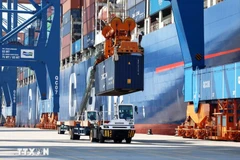
Vietnam Customs holds a ceremony to mark the country’s total import-export turnover surpassing 900 billion USD for the first time (Photo: VNA)

Vietnam’s trade turnover tops 900 billion USD for first time

Vietnam's total trade in 2025 reached about 920 billion USD, up 16.9% year on year. Of the total, exports were valued at 470.59 billion USD, a year-on-year increase of 15.9%, while imports amounted to 449.41 billion USD, up 18%, resulting in a trade surplus of around 21.2 billion USD.

Illustration of the North–South high-speed railway project (Photo: TEDI–TRICC–TEDI SOUTH consulting consortium)

Vingroup withdraws bid for North–South high-speed railway project

In the document dated December 25, Vingroup asked to retract the investment registration it had submitted to the Government in May 2025. The group said the decision was made after careful consideration to ensure maximum focus of capital, manpower and implementation capacity on strategic infrastructure projects recently assigned to it.

Passengers of the first direct flight connecting HCM City and Dien Bien are welcomed at Dien Bien airport on December 24. (Photo: VNA)

Vietnam Airlines launches direct HCM City – Dien Bien route

Deputy General Director of Vietnam Airlines Dang Anh Tuan said the new route is an important step in expanding the airline’s domestic network, creating better access for tourists to Dien Bien province and contributing to local tourism and socio-economic development.

With 2025 on track for around 8% growth, Vietnam has solid momentum heading into the new year. (Photo: VNA)

Vietnam bets big on double-digit economic growth in 2026

A series of socio-economic targets for 2026 has been approved by the National Assembly, including GDP growth of at least 10%; GDP per capita of 5,400–5,500 USD, consumer price index hike of around 4.5%, and labour productivity gains of about 8.5%.

Customers conduct transactions at the State Bank of Vietnam’s Regional Branch No. 2. (Photo: VNA)

Ho Chi Minh City sees robust credit growth in 2025

The State Bank of Vietnam’s Regional Branch No. 2 said banking capital has been channelled mainly into priority sectors, production and business activities, and key programmes, contributing to market stability and supporting the city’s economic recovery and growth.

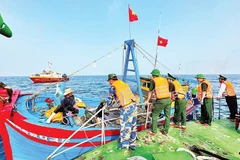
Quang Ngai border guard forces conduct regular sea patrols, strictly handle IUU fishing violations. (Photo: nhandan.vn)

Quang Ngai province records positive progress in combating IUU fishing

Quang Ngai is home to 4,846 fishing vessels, all of which have been registered and fully updated on the VNFishbase system. Of these, all 4,748 vessels currently in operation have been granted fishing licences, accounting for 100%. Meanwhile, 98 other vessels, or about 2% of the registered fleet, remain ineligible for the issuance or renewal of licences.