Legal trading platforms to make digital asset market transparent

Vietnam has an estimated 17 million digital asset holders, with annual cryptocurrency transactions valued at around 105 billion USD. However, blockchain experts believe this figure is only the tip of the iceberg as actual participation is likely much higher.

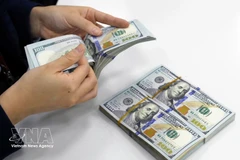
Cryptocurrency is highly attractive to Vietnamese investors (Photo: Shutterstock)

Hanoi (VNA) – The underground flow of hundreds of billions of US dollars into Vietnam’s cryptocurrency and digital asset market is set to be legalised as the country prepares to launch a series of official trading platforms, which are expected to serve as not only attractive investment channels but also potential fundraising avenues for businesses.

Vietnam has an estimated 17 million digital asset holders, with annual cryptocurrency transactions valued at around 105 billion USD. However, blockchain experts believe this figure is only the tip of the iceberg as actual participation is likely much higher. The recent exposure of multiple fraudulent crypto platforms has indicated the risk of operating without official exchanges.

The Hanoi Department of Public Security recently dismantled a network led by Dang Quoc Thang, who established Maxx Group to promote cryptocurrency projects such as Wingstep and Game Naga Kingdom. The company raised about 7.86 million USD from over 3,000 investors by promising high commissions and extraordinary returns before collapsing and misappropriating all funds.

Similarly, the Department of Public Security in Phu Tho province cracked down on a pyramid scheme disguised as digital currency investment. The group, led by Nguyen Chanh Dang, persuaded thousands of investors to buy TCIS tokens through the website https://tcis.ai, creating more than 4,000 accounts and raising over 2 million USD in just over a year.

Earlier, in May, police of Dong Nai province uncovered Matrix Chain (MTC), a large-scale cryptocurrency network defrauding tens of thousands of people of nearly 10 trillion VND (379.7 million USD).

Experts warn that the absence of a legal framework has left investors vulnerable.

Cryptocurrency is highly attractive to Vietnamese investors, but without proper regulations, the market has been stifled and prone to fraud, General Secretary of the HCM City Blockchain Association Tran Xuan Tien was quoted by Dau tu (Vietnam Investment Review) newspaper as saying. He urged investors to equip themselves with basic blockchain knowledge to recognise risks and avoid being swayed by exaggerated promises.

Nguyen The Vinh, CEO of Ninety Eight, noted that the number of Vietnamese holding digital assets far exceeds stock market investors, underscoring the appeal of this type of asset. However, he cautioned against platforms offering “unrealistic” returns since no legitimate business model can guarantee such high profits.

Transparency needed to protect investors

Several domestic enterprises and banks, including SSI Securities, TCBS Securities, and Military Bank (MB), are preparing to engage in the digital asset market. Vietnam is expected to establish about five exchanges linked to international platforms, with around 50 digital assets available for trading. The plan also allows the issuance of asset-backed tokens for fundraising, restricted to foreign investors.

Huynh Quoc Nam, Business Development Director of OKX Global – a large cryptocurrency exchange operator, perceived that licensed platforms will bring greater transparency and reduce fraud risks by enforcing customer identification through Know Your Customer (eKYC). They will also generate tax revenue for the State and promote related industries.

Blockchain firms hope that official exchanges will encourage Vietnamese start-ups to return home instead of relocating to Singapore, while attracting foreign capital and building a fintech ecosystem aligned with global trends.

At a Government press conference in early August, Deputy Finance Minister Nguyen Duc Chi announced that the ministry is drafting a decree on piloting digital asset transactions, drawing on regional and international experience. The draft will soon be finalised and submitted to the Government for approval, possibly within this month.

Calls for swift action

Tien stressed the urgent need for such platforms, warning that if Vietnam does not open digital asset exchanges in the next one to two years, the country will be left behind. He suggested that domestic exchanges should manage liquidity and data, while international platforms should be allowed to participate to ensure competition, knowledge transfer, and stronger risk management.

Experts emphasised that the top principle in operating digital asset exchanges is transparency in trading volumes, costs, and liquidity to prevent manipulation and protect investors. Exchanges must also prioritise cybersecurity and strictly separate company assets from client holdings, they noted.

For investors, experts warned that while the crypto market is highly attractive, it is also extremely risky.

Without knowledge and experience, the more you invest, the more you stand to lose, Vinh said, adding that beginners should proceed with caution and take it slow./.

VNA

See more

Vietnamese Ambassador to Brazil Bui Van Nghi (right) meets with President of the Brazilian Association of Soybean Producers (Aprosoja) Mauricio Buffon in Brasilia. (Photo: VNA)

Vietnam, Brazil boost agri-trade cooperation

The Vietnamese ambassador expressed the country’s desire to increase the export of aquatic products, cashews, wood items, processed farm produce, apparel, mobile phones, computers, and electronic components to Brazil.

A dancing performance at the opening ceremony of the 2025 K–Vietnam Pop-up Festa in Dalat on November 8 (Photo: VNA)

K-Market Vietnam 2025 held in Lam Dong

The event features a series of cultural and trade exchange activities between Vietnam and the Republic of Korea (RoK), with more than 100 Lam Dong and Korean enterprises showcasing typical products from both sides.

Workers handle the preliminary processing of sea grapes before production. (Photo: VNA)

Company brings Vietnamese sea grapes to the world

The Tri Tin Seaweed Company, founded by Le Ben, has pioneered a new path for the province’s aquaculture sector by establishing a fully integrated production chain, applying high-tech processes, and adhering strictly to international standards.

Prime Minister Pham Minh Chinh addresses the 21st meeting of the State steering committee for national key projects in the transport sector. (Photo: VNA)

Entire Cao Bang - Ca Mau expressway must be inaugurated on December 19: PM

PM Chinh, who is head of the steering committee, asked all parties involved to strive hard to achieve the goal of putting 3,000 kilometres of expressways and approximately 1,700 kilometres of coastal roads into operation in 2025, thus creating momentum to welcome the 14th National Party Congress and meeting the travel needs of the people during New Year 2026 and the Lunar New Year Festival.

Prime Minister Pham Minh Chinh (C) presides over the 21st meeting of the State steering committee for national key projects in the transport sector. (Photo: VNA)

Government leader presides over meeting on national key transport projects

Noting that there are less than two months left until December 19 - the date set for the simultaneous ground-breaking and inauguration ceremonies of major projects, the PM emphasised that this is a crucial period to accelerate progress and make breakthroughs in the implementation of key projects and works.

Harvesting cage-farmed tilapia (Photo: VNA)

Vietnam exports first shipment of tilapia to Brazil

This shipment is one of 32 containers, totalling 700 tonnes of tilapia, ordered and imported by JBS Group from Vietnam. The products will first be distributed through HORECA supermarket and distribution network, and showcased in JBS's product display centre in Brazil.

Road leading to VSIP Can Tho at the intersection with National Highway 80 (Photo: VNA)

Green industry lures more FDI to Mekong Delta

The Mekong Delta region, having earned the monikers of the rice bowl, fruit and seafood basket of the country, and following the restructuring of administrative units, is now standing at the threshold of becoming a modern, sustainable industrial centre.

The codification of Resolution 42 into the law, effective from mid this month, is an important step, marking a key milestone in completing Vietnam’s NPL resolution process. (Photo: thoibaonganhang.vn)

Bad debt settlement fully benefits from new policy from H2 2026

Resolution 42, enacted in 2017 to pilot bad debt settlement for credit institutions, was introduced in response to a sharp rise in non-performing loans (NPLs). It empowered credit institutions to seize and liquidate collateral assets, expediting debt recovery. After more than six years of implementation, the resolution delivered certain results but expired last year.

The total retail sales of goods and consumer service revenue were estimated at 5.7 quadrillion VND for the first 10 months of the year. (Photo: VNA)

Retail sales growth remains stable over 10 months

With the current recovery momentum, the trade and services sector is expected to continue being a bright spot in Q4, driving GDP growth and ensuring a balance between domestic consumption and exports amid ongoing global economic fluctuations.

Delegates at the event (Photo: Ministry of Finance)

ASEAN meeting to drive regional cooperation, growth by removing barriers

Running from November 5–11, CCS 111 focuses on advancing service liberalisation and facilitation in ASEAN by removing barriers, enhancing transparency, reducing policy risks, and simplifying administrative procedures to enable businesses and service providers to operate more efficiently.

Goods at Hai Phong Port in northern port city of Hai Phong. (Photo: VNA)

Vietnam determined to build transparent global trade system

The Government of Vietnam on November 6 updated the World Trade Organisation (WTO)’s Committee on Rules of Origin (CRO) on adjustments to the agencies and organisations authorised to issue certificates of origin (C/O), as well as on the application of QR codes in the C/O issuance process.