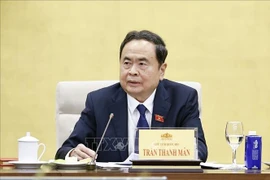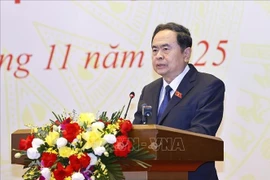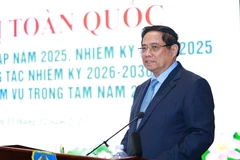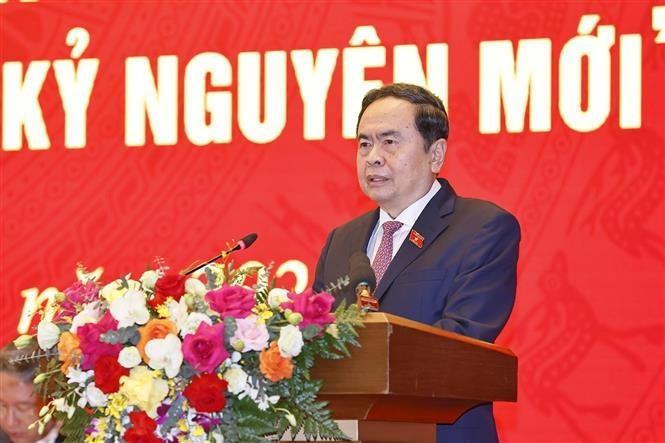
Hanoi (VNA) - The 15th National Assembly (NA) has undergone many remarkable reforms, demonstrated a pioneering institutional role and affirmed its central position in shaping the legal system, NA Chairman Tran Thanh Man has stated.
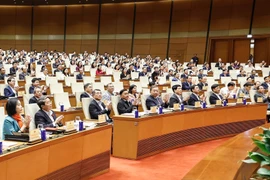
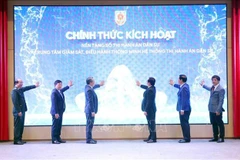
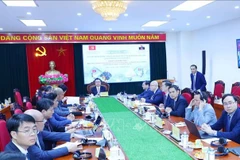
The top legislator was addressing the first-ever lawmaking forum held in Hanoi on November 22 by the NA Standing Committee under the theme “Improving institutions and legislation to meet national development requirements in the new era,” which he described as a chance to objectively assess legislative performance and propose solutions to continue refining institutions and laws for the new period.
He emphasised that lawmaking is a fundamental, consistent and regular task of the NA. Over nearly 80 years since the first general election, the NA’s legislative work has achieved significant progress, with an increasingly comprehensive and coherent legal framework that supports national development, said the NA Chairman.
He noted that the unanimous approval of amendments and supplements to the 2013 Constitution underscored its timely institutionalisation of Party policies and broad public consensus.
For the first time, the legislature developed orientations for the lawmaking programme for an entire term and submitted them to the Politburo. It promptly revised the Law on the Promulgation of Legal Documents and adopted Resolution No. 197 to advance lawmaking reform.
A large number of laws and resolutions were passed, many of them landmark decisions aimed at removing bottlenecks, supporting socio-economic development, ensuring national defence, security and external relations, and enhancing corruption, wastefulness and negative phenomena prevention and combat efforts. In the last four sessions, the NA also advanced more innovative approaches, incorporating science, technology and artificial intelligence into legislative work and granting greater flexibility to the Government in law enforcement, he said.
The NA responded swiftly to emerging issues, including COVID-19 prevention and fight policies and authorising the Government, in specific urgent cases, to issue resolutions differing from existing laws. These unprecedented legislative innovations reflect the NA’s practical companionship with the Government and the political system, said the NA Chairman.
He added that the NA Standing Committee, for the first time, also held a forum on supervisory activities and numerous explanatory sessions, helping strengthen links between lawmaking and enforcement.
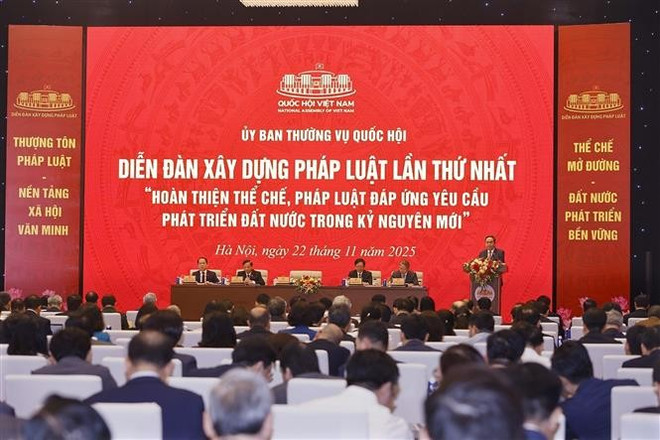
However, NA Chairman Man acknowledged remaining shortcomings, including the fact that institutional reforms have not fully met practical needs; legal provisions have been slow to align with international integration and new issues; and laws still lack coherence or feasibility.
He cited Party General Secretary To Lam’s assessments regarding slow policy implementation, overdue guidance documents, inconsistent decentralisation and persistent bottlenecks in land, capital markets and skilled labour. Policy communication, in some cases, remains insufficient, he added.
He urged delegates to identify solutions to existing limitations and propose tasks and measures to meet future legislative demands.
The top legislator emphasised the importance of fully implementing Politburo Resolution No. 66 dated April 30, 2025, on reforming lawmaking and enforcement.
He pointed to the need to strictly adhere to legislative procedures, preventing negative phenomena and group interests, and enhancing coordination among the NA, the Government, the Vietnam Fatherland Front, judicial bodies and relevant agencies. All legislation, he affirmed, must originate from national interests and the legitimate aspirations of the people, he underscored.
The NA Chairman also underlined the need to renew legislative thinking so that the legal system becomes a competitive advantage. He called for reviewing and addressing loopholes and obstacles, ensuring coherence, stability and practicality, while laying a long-term legal foundation for sustainable development, international integration and digital transformation./.