NA’s Standing Committee pushes ahead digital transformation in tax management

The draft Law on Tax Administration plans to cut 96 administrative procedures, or 44% of the current total, and simplify 63 others. It spotlights a clear direction toward completely abolishing lump-sum taxation for household and individual businesses from 2026, while creating a favourable legal framework for these entities to transition into enterprises.

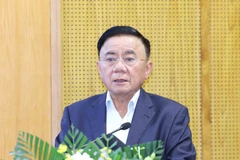
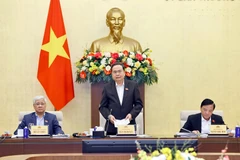
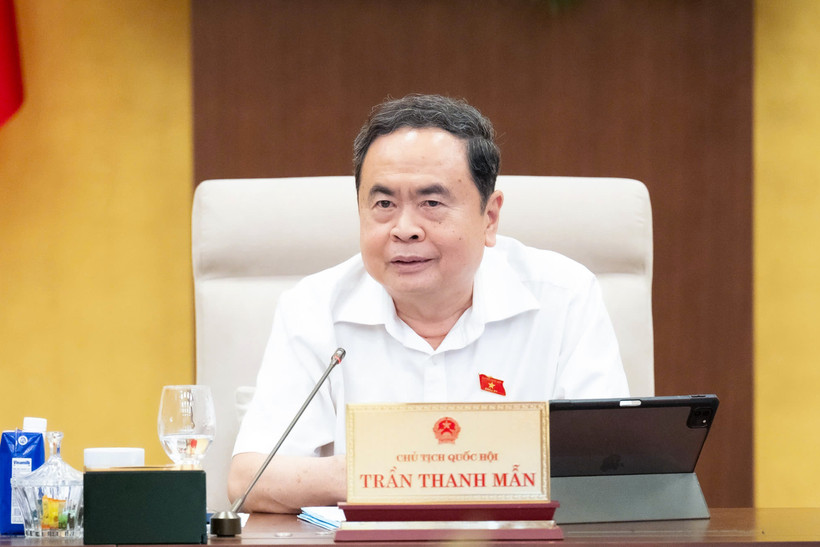
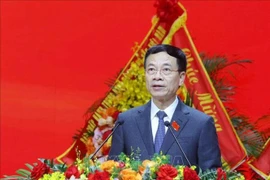
NA Chairman Tran Thanh Man speaks at the 50th session of the NA's Standing Committee on October 13, 2025. (Photo: VNA)

Hanoi (VNA) – The National Assembly (NA)’s Standing Committee continued its 50th session on October 13 afternoon to deliberate the revised bills on personal income tax and tax administration, highlighting comprehensive digital transformation in tax management.

Presenting the draft Law on Personal Income Tax, Deputy Minister of Finance Cao Anh Tuan said the bill focuses on several major revisions, including taxable income categories and calculation methods, tax exemption, personal income tax for individual business owners, deductions based on family circumstances and charitable contributions, and adjustments to the minimum taxable amount for lottery winnings, copyright royalties, franchise, inheritances, and gifts, raising it from 10 million VND (nearly 380 USD) to 20 million VND.
hai.jpg
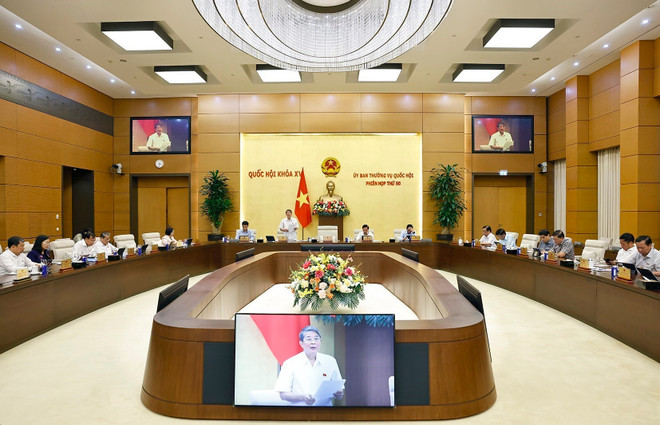
NA Vice Chairman Nguyen Duc Hai speaks at the meeting (Photo: VNA)

He added that the bill also introduces new taxable income groups such as earnings from transferring Vietnamese national domain names (.vn), carbon credits, vehicle licence plates obtained via auction, and digital asset transactions such as virtual goods or gold bars. The Government will detail other taxable categories to ensure flexibility and alignment realities.

Presenting the preliminary verification report, Chairman of the NA’s Economic and Financial Committee Phan Van Mai agreed with the scope and structure of the draft law. He underscored the need to evaluate the law’s budgetary impacts, particularly regarding changing tax obligations for household and individual businesses.

Concluding the discussion, NA Vice Chairman Nguyen Duc Hai requested the Government to fully incorporate the opinions from the NA’s Standing Committee and verification agency into tax law reforms, ensuring constitutional compliance and consistency across legal frameworks. He stressed that personal income tax must serve as an effective tool for income redistribution, toward social equity.

Later the same afternoon, the session turned to the draft Law on Tax Administration, which, Deputy Minister Tuan said, aims to drive comprehensive digital transformation across the tax sector through three pillars of facilitating taxpayers, enhancing management efficiency, and digitising operational processes. Besides, the law is expected to cut administrative procedures and reduce compliance costs, while promoting data sharing and inter-sectorial coordination.

The bill introduces a chapter on digital transformation, risk management, and compliance monitoring, with clear principles for applying advanced technologies such as big data and AI in tax administration. Accordingly, taxpayers will be no longer required to present paper-based documents if their data already exists in national databases. The Ministry of Finance will establish a set of technical and IT infrastructure standards and develop a tax database to national systems, with tax authorities allowed to access, use, and purchase commercial data for risk analysis and revenue forecasting.

According to Tuan, the draft plans to cut 96 administrative procedures, or 44% of the current total, and simplify 63 others. It spotlights a clear direction toward completely abolishing lump-sum taxation for household and individual businesses from 2026, while creating a favourable legal framework for these entities to transition into enterprises.

NA Chairman Tran Thanh Man underscored the need to shift from a control-based model to a service-oriented tax administration, leveraging digital technologies and AI to enhance efficacy and fairness.

He noted several crucial innovations in the draft law, including classifying taxpayers by risk and industry sectors to enable AI-powered automated assessments, eliminating lump-sum taxation for household businesses from 2026, building an electronic tax ecosystem with data connectivity, and strengthening international cooperation, particularly in combating transfer pricing./.
VNA

See more

Prime Minister Pham Minh Chinh addresses the working session with Thanh Hoa officials on November 9. (Photo: VNA)

PM urges Thanh Hoa to optimise potential growth pillars

With favourable natural conditions and strategic transport connectivity, Thanh Hoa should capitalise on its geo-strategic position and fully tap into the potential of its forests, sea, rivers and mountains for economic development, PM Pham Minh Chinh noted.

Officials at the launch of the National Law Portal on November 7, 2025. (Photo: VNA)

Vietnam Law Day: Turning law into development engine in new era

When every citizen abides by law, every organisation respects it, and every public servant acts according to it, the rule of law will truly become a source of internal strength — a solid foundation for a strong, prosperous, and everlasting Vietnam.

Ambassador Nguyen Thi Van Anh (R), Permanent Representative of Vietnam to UNESCO, at the 43rd session of the UNESCO General Conference held in Samarkand, Uzbekistan. (Photo published by VNA)

UNESCO General Conference adopts draft resolution proposed by Vietnam

The draft, proposed by Vietnam and other co-authors and supported by 71 countries, recommends that the United Nations General Assembly consider launching an “International Decade on Culture for Sustainable Development” as soon as possible, with priority given to the 2027–2036 period.

Vietnam congratulates Cambodia on 72nd National Day

Vietnam congratulates Cambodia on 72nd National Day

The Central Committee of the Communist Party of Vietnam (CPV) cabled a message of congratulations to the Central Committee of the Cambodian People’s Party (CPP), while General Secretary of the CPV Central Committee To Lam sent congratulatory flowers to King Norodom Sihamoni and President of the CPP Samdech Techo Hun Sen.

An overview of the Government's regular meeting on November 8. (Photo: VNA)

Prime Minister chairs regular government meeting connected with 34 provinces and cities

In that difficult context, thanks to the efforts of the entire political system and the entire people under the leadership of the Party, the Politburo, the Secretariat, headed by General Secretary To Lam, the socio-economic situation continued to see steady progress, with better results recorded month after month and in the first 10 months of 2025 as compared to the period last year.

Permanent Member of the Party Central Committee’s Secretariat Tran Cam Tu speaks at the handover ceremony in Hanoi on November 7. (Photo: VNA)

Chairmanship of PCC's Inspection Commission handed over to newly appointed official

Permanent Member of the Party Central Committee’s Secretariat Tran Cam Tu extended his congratulations to Nguyen Duy Ngoc, former chairman of the commission and now Secretary of the Hanoi Party Committee, as well as Tran Sy Thanh, the new chairman, on earning the trust of the Party Central Committee and the Politburo to assume their new posts.

Chairman of the National Assembly Tran Thanh Man speaks at the ceremony in response to the Vietnam Law Day. (Photo: VNA)

Law-making identified as “breakthrough of all breakthroughs”: NA Chairman

Chairman Man emphasised that over the years, the Party and State have paid great attention to law-making. During the 13th term of the Party Central Committee and the 15th tenure of the legislature, the law building work has become increasingly rigorous, with enhanced coordination between the Government and the NA.

Three former officials expelled from Party

Three former officials expelled from Party

The three's wrongdoings led to very serious consequences, stirred public concern, and caused very negative impact on the Party organisations and agencies they worked for.