New defence mindset underpins safeguarding of Fatherland in new era: minister

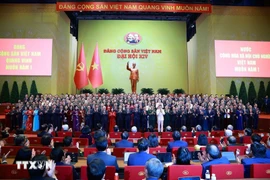
The 14th National Party Congress thoroughly discussed and made decisions on strategic orientations for national defence based on a renewed mindset and perceptions, said Defence Minister Gen. Phan Van Giang.

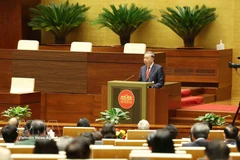
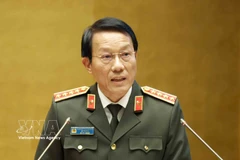
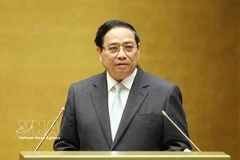
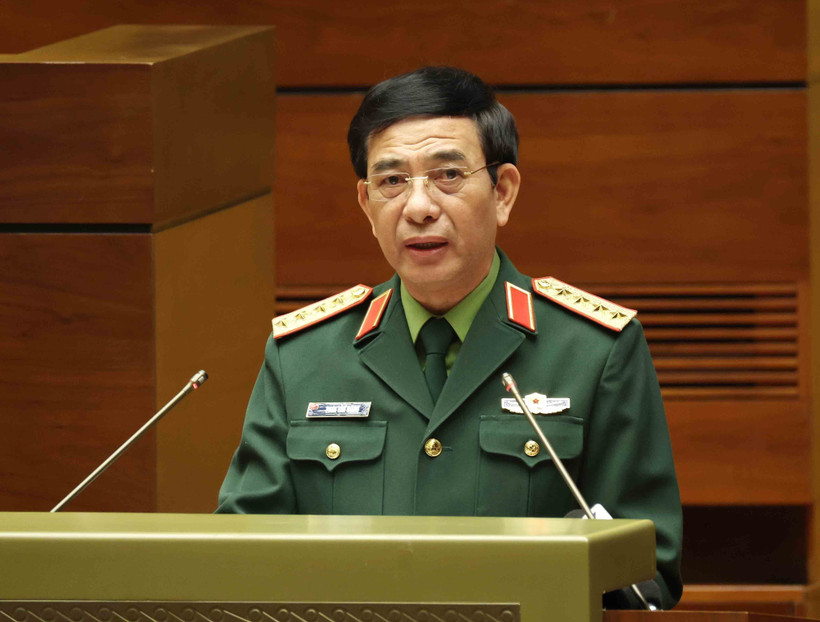
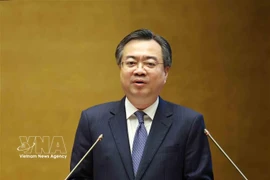
Politburo member, Deputy Secretary of the Central Military Commission and Minister of National Defence General Phan Van Giang speaks at the conference. (Photo: VNA)

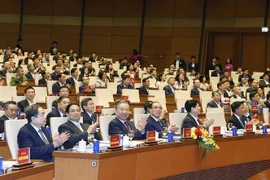
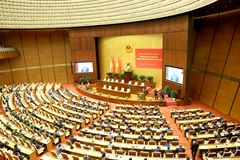
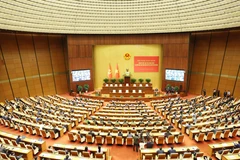
Hanoi (VNA) – Politburo member, Deputy Secretary of the Central Military Commission and Minister of National Defence General Phan Van Giang on February 7 delivered a report on the new new mindset and perceptions on national defence and Fatherland protection at the 14th National Party Congress.

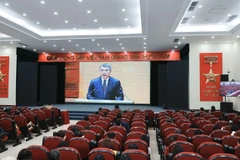
At the national conference held to disseminate and implement the Resolution of the 14th National Party Congress, Giang affirmed that national defence is to safeguard the country through the combined strength of the entire nation, with the people’s armed forces playing the core role. He stressed that the viewpoint on national defence and Fatherland protection forms an important part of the Party's viewpoints and leadership line, serving as the lodestar for the entire Party, people and armed forces in safeguarding the Fatherland.

Based on a comprehensive review of the reality and an objective assessment of global, regional and domestic developments, the 14th National Party Congress outlined breakthrough strategic orientations on national defence, reflecting the Party’s determination to advance national development in the new era while renewing mindset and and perceptions on safeguarding the nation amid increasingly complex and unpredictable security dynamics.

According to Giang, after 40 years of Doi moi (Renewal), Vietnam’s national strength, international standing, and public confidence have continued to grow, laying important prerequisites for national construction and defence. At the same time, the streamlining of the political system’s organisational apparatus and major strategic decisions are opening up historic opportunities and a turning point for the country’s strong development in a new era, including advances in human resources as well as in the art and science of military and defence technology.

However, alongside these opportunities, the task of safeguarding the nation also faces significant challenges as hostile forces persist in attempts to sabotage the Party, the State and the political regime while traditional and non-traditional security threats – particularly cyber insecurity, terrorism, natural disasters and epidemics – remain extremely complex and unpredictable.

He noted that the 14th National Party Congress thoroughly discussed and made decisions on strategic orientations for national defence based on a renewed mindset and perceptions.

Regarding national defence and Fatherland protection goals, the Congress stressed the requirement to ensure national interests at the highest level; steadfastly safeguard independence, sovereignty, unity and territorial integrity; and protect the Party, the State, the people and the socialist regime, Giang said.

It also supplemented and further developed new contents, including the protection of human security, economic security and cyber security; safeguarding the country’s international prestige and position; and strengthening the all-people national defence posture and proactive defence; and maintaining a peaceful environment for national development.

The Congress further reaffirmed that strengthening national defence and security in tandem with promoting foreign affairs and international integration is a key and regular task. Other critical tasks include building strong and modern all-people national defence; aligning defence postures with socio-economic development under new conditions and administrative boundaries; adapting to new forms of warfare and modern combatant methods; and effectively carrying out civil defence tasks, with adequate preparedness in forces, equipment and plans for the military to perform its peacetime missions.

Regarding force building, the 14th National Party Congress set the goal of developing a revolutionary, regular, elite and modern people’s army. The army will continue to effectively perform its three core functions – a combat force, a working force and a production force – while improving training quality, mastering modern weapons and equipment, and developing high-quality human resources.

The Congress also underscored the necessity for breakthroughs in developing an autonomous, self-reliant and modern defence industry with dual-use capacity; stepping up international integration and defence diplomacy; and proactively and efficiently participating in UN peacekeeping operations, humanitarian assistance, and disaster relief and recovery efforts in a proactive, flexible, substantive and effective manner, across both bilateral and multilateral frameworks.

In his concluding remarks, Giang said the new mindset and perspectives on national defence and Fatherland protection set in the documents of the 14th National Party Congress hold long-term strategic significance, providing a solid foundation for the Party, people and armed forces to carry out defence tasks in a coordinated and effective manner, firmly safeguard the Fatherland, and maintain political stability and a peaceful environment for national development in the new era./.

VNA
See more

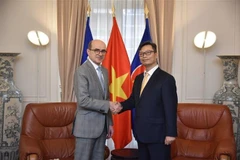
Vietnamese Ambassador Nguyen Thi Van Anh (L), Permanent Representative of the State President to the Permanent Council of La Francophonie, and Administrator of the International Organisation of La Francophonie (OIF) Caroline St-Hilaire at theri meeting in Paris on March 12. (Photo published by VNA)

OIF Administrator praises Vietnam’s role, contributions

The two sides discussed cooperation in French-language education in the Southeast Asian country, ways to encourage young people to choose French, and the development of French-speaking human resources, including language training for civil servants and for Vietnamese military and police personnel participating in United Nations peacekeeping operations.

Dr Julia Roknifard, senior lecturer in international relations at Taylor’s University in Malaysia (Photo: VNA)

Legislature proves strong support to Vietnam’s development, integration: Scholar

Dr Julia Roknifard, senior lecturer in international relations at Taylor’s University in Malaysia, shared her assessment of the role of Vietnam’s highest legislative body in promoting economic development and strengthening multilateral cooperation amid a rapidly changing global landscape in in an interview with Vietnam News Agency correspondents in Kuala Lumpur.

The election of deputies to the 16th National Assembly and People’s Councils at all levels for the 2026–2031 tenure is scheduled for May 15, 2026 (Photo: VNA)

General election helps strengthen overseas Vietnamese engagement with national development

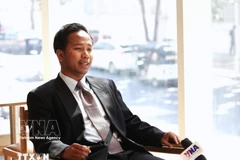
According to Nguyen Duc Thang, Executive Committee member of the Germany–Vietnam Association and President of the October Arts Club, the 16th National Assembly election continues Vietnam’s electoral tradition dating back to the 1946 General Election and subsequent milestones in parliamentary development. Selecting capable, responsible and visionary representatives will help reinforce democratic foundations, ensure the people’s right to mastery, and enhance the effectiveness of the country’s highest state authority.

Lao ambassador highlights significance of Vietnam’s 16th National Assembly election

Lao ambassador highlights significance of Vietnam’s 16th National Assembly election

The Lao Ambassador voiced her confidence that Vietnam’s new-tenure National Assembly and People’s Councils would continue to deepen parliamentary cooperation between the two countries, while enhancing policy oversight and creating favourable conditions for expanded cooperation in trade, investment, infrastructure connectivity and people-to-people exchanges.

Speakers at the dialogue. (Photo: VNA)

Vietnam hosts dialogue on improving access to justice for women, youth

The dialogue brought together Deputy Minister of Home Affairs Nguyen Thi Ha, head of the Vietnamese delegation, ambassadors and delegation leaders attending the session, as well as representatives from UN agencies, international organisations, non-governmental organisations and scholars.

Pham Thi Minh Huong, Standing Committee member of the General Association of Vietnamese in Laos, Vice President of the Business Association of Overseas Vietnamese (BAOOV), and Chairwoman and CEO of the Gold Phuc Company (Photo: VNA)

Vietnamese businesses in Laos express confidence in national political system ahead of general elections

Pham Thi Minh Huong, Standing Committee member of the General Association of Vietnamese in Laos, Vice President of the Business Association of Overseas Vietnamese (BAOOV), and Chairwoman and CEO of the Gold Phuc Company, said the Vietnamese business community in Laos closely follows major political developments at home while contributing to socio-economic development and social welfare activities in Laos, particularly support for disadvantaged and disabled groups.

Nguyen Thi Thuy Linh, a third-year student majoring in Chinese language at Beijing Language and Culture University, speaks in an interview with a Vietnam News Agency correspondent in Beijing. (Photo: VNA)

Vietnamese students in China anticipate election with great hope

Many Vietnamese students in China said that although they are studying abroad, they remain deeply connected to their homeland and aspire to contribute their knowledge and international experience to the country’s development. For them, the upcoming election represents not only a significant political event at home but also an opportunity for overseas Vietnamese to place their confidence in Vietnam’s next phase of growth

The appointment decision handover ceremony is held in Hanoi on March 12. (Photo: VNA)

PM appoints new leader for Vietnam’s top science academy

PM Pham Minh Chinh asked the VAST to continue to serve as the Party and State’s strategic advisory body on science – technology in key areas such as artificial intelligence, energy, marine economy, water security, and aerospace, alongside building a national sci-tech database.