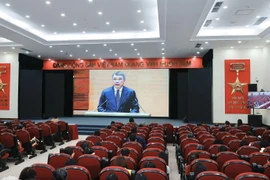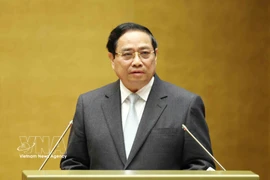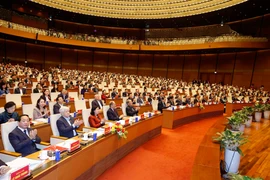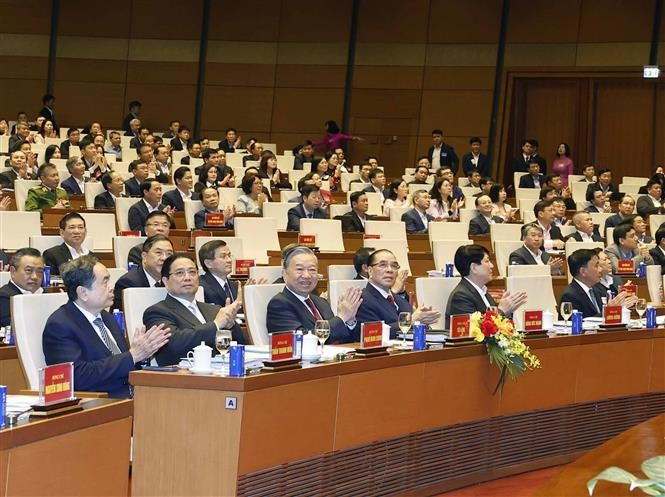
Hanoi (VNA) – Trinh Van Quyet, Politburo member, Secretary of the Party Central Committee and Chairman of its Commission for Information, Education and Mass Mobilisation, on February 7 delivered a report on some new and core issues and lessons learned from 40 years of Doi Moi (renewal) in the documents of the 14th National Party Congress.
The report, presented at the national conference disseminating and implementing the Congress Resolution, highlighted the role, significance and success of the 14th National Party Congress; innovations in the formulation of its documents; core issues in the documents; and some fundamental requirements for the implementation of the Resolution.
Elaborating the special significance of the 14th National Party Congress, Quyet underscored that the event marked a development turning point, shaping a new development mindset and establishing a depth and quality-based growth model driven by science – technology, innovation, and knowledge, to replace the capital-, resource- and low-cost labour-based growth model.
It set a long-term strategic vision, targeting Vietnam’s transformation into a developing country with modern industry and upper-middle income status by 2030, and a developed, high-income nation by 2045, supported by a set of comprehensive measures covering institutional perfection, science – technology breakthrough, culture and human development.
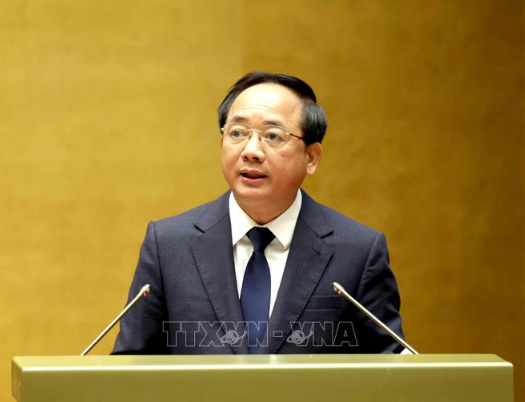
The Congress marked an all-round success in both theory and practice courageously facing realities and clearly pointing out existing bottlenecks, Quyet said.
Its Resolution reflect a strong renewal in leadership thinking, shifting from a "policy-based mindset” to that of governance and implementation, he noted, adding that three major documents were integrated into a unified Political Report, helping address overlap and fragmentation while facilitating dissemination and implementation.
The documents' transition from reviewing a tenure to designing a long-term development strategy serves as a “strategic roadmap”, closely linking resolutions with concrete action plans, he noted.
The official went on to say that the Congress identified six strategic pillars in the new era – refining theoretical foundations for the Doi moi (renewal) path; establishing the mindset of "strategic autonomy"; regarding the perfection of development institutions as the "breakthrough of all breakthroughs"; adopting a new growth model based on science, technology, innovation and digital transformation; promoting internal strength with people at the centre, culture as the foundation, education as a national priority, and the private sector as the most important driver; and reinforcing national defence and security while elevating foreign affairs on par with the country's stature.
Regarding implementation, Quyet called for turning the Resolution into substantive action, focusing on building consensus by shifting from formalistic study to discussions on concrete measures so that the Resolution truly resonates with the people; treating swift and synchronous institutionalisation as a breakthrough step; reforming governance towards modernity based on data and KPI; making science – technology, innovation and digital transformation the primary mode of action; and developing a contingent of cadres with strategic vision who dare to think and act.
The overarching spirit emphasised is to take decisive and effective action, with no tolerance for inertia or evasion of responsibility, with the implementation of the Resolution to be measured by economic growth, the people’s quality of life, public trust, and the nation’s standing in the international arena, the official stressed./.