New era in protecting all infants against RSV infection from the earliest days of life with long-acting monoclonal antibody Nirsevimab

According to experts, RSV is the leading cause of lower respiratory tract infections such as bronchiolitis and pneumonia that require hospitalization in young children.

HCM City (VNA) - As part of the seminar series titled “A New Era in RSV Prevention with Monoclonal Antibodies for All Infants”, held in Ho Chi Minh City and Hanoi in early October 2025, experts emphasized the importance of proactively preventing lower respiratory tract infections caused by Respiratory Syncytial Virus (RSV) in all newborns and infants under 12 months of age through the use of long-acting monoclonal antibodies.

The seminars, held on October 2 and 3, 2025, were organised by the Tam Anh Research Institute with sponsorship from Sanofi Aventis Vietnam Co., Ltd., a subsidiary of the French pharmaceutical group Sanofi. Experts focused on updating and discussing the disease burden of RSV in infants, current prevention strategies, and highlighted the protective efficacy of the long-acting monoclonal antibody Nirsevimab in reducing hospitalizations due to lower respiratory tract infections (including bronchiolitis and pneumonia) in newborns and infants.
1-5193.png
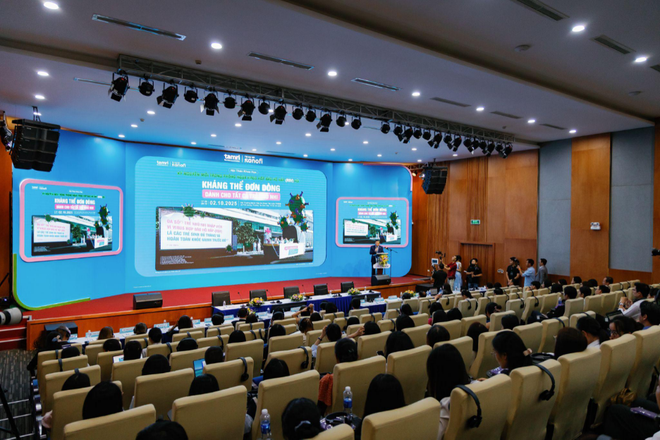
The seminar series “A New Era in RSV Prevention with Monoclonal Antibodies for All Infants” attracted a large number of attendees.

According to experts, RSV is the leading cause of lower respiratory tract infections such as bronchiolitis and pneumonia that require hospitalization in young children. Infected infants may develop complications such as respiratory failure, requiring oxygen therapy, mechanical ventilation, or intensive care. Nearly 70% of infants under 12 months of age contract RSV during their first year of life. Physicians cannot accurately predict which infants will develop severe disease. Data from international studies and major pediatric hospitals in Vietnam show that 70–90% of infants hospitalized for RSV-related lower respiratory tract infections were full-term and previously healthy. RSV symptoms often begin mildly with cough, sneezing, nasal discharge, and irritability, but may progress to high fever, feeding refusal, rapid breathing, chest retractions, cyanosis, respiratory failure, and death. Furthermore, infants infected with RSV during the first year of life may face increased risks of persistent wheezing, otitis media, or asthma in subsequent years.

Therefore, proactive prevention is critically important to protect the health of all infants from birth.
2.png
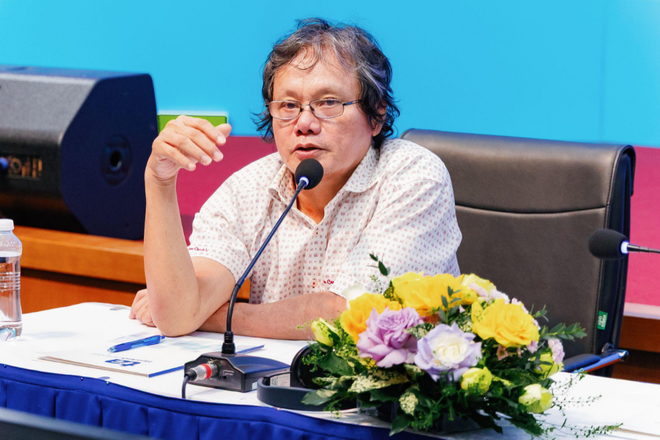
Dr. Khanh Huu Truong, Vice President of the Ho Chi Minh City Infectious Diseases Society, speaks at the seminar series.

Discussing RSV prevention strategies, Dr. Khanh Huu Truong, Vice President of the Ho Chi Minh City Infectious Diseases Society, stated that the long-acting monoclonal antibody Nirsevimab has been approved by the U.S. Food and Drug Administration (FDA), the European Medicines Agency (EMA), and numerous countries worldwide, and is recommended for use to protect newborns and infants from the significant disease burden caused by RSV.

RSV prevention strategies demonstrate that immunizing all infants with the long-acting monoclonal antibody Nirsevimab effectively prevents the majority of lower respiratory tract infections requiring medical care, including both inpatient and outpatient treatment.

“Nirsevimab provides rapid and direct antibody protection with a long duration of action. A single dose can protect infants throughout their first year of life. This is considered an advanced solution to effectively protect newborns and infants from serious complications caused by RSV, including pneumonia and bronchiolitis,” Dr. Khanh added.

Dr. Chinh Thi Bach, Medical Director of VNVC Immunization System, stated that Nirsevimab has been approved in 56 countries, including Vietnam, and is recommended for use in infants by numerous medical associations worldwide. It is the first RSV prevention solution developed and studied across diverse infant populations, including preterm infants, those with underlying conditions, and healthy full-term infants.

“Nirsevimab allows physicians to flexibly choose the timing of administration and can be given as early as immediately after birth. It can be co-administered with other pediatric vaccines. Studies show that Nirsevimab has high viral neutralization capacity and does not depend on the maturity of the infant’s immune system, thereby providing effective protection for all infants during their first RSV season and for high-risk infants during the second season”, Dr. Chinh explained.

Prof. Dr. Chau Quy Ngo, Deputy General Director for Medical Affairs and Respiratory Advisor at Tam Anh General Hospital in Hanoi, stated that RSV causes a significant annual disease burden, affecting the healthy and comprehensive development of infants during their first year of life. There is currently no specific antiviral treatment for RSV, management is primarily supportive to alleviate symptoms. Public awareness of RSV remains low, resulting in missed opportunities for early disease prevention. Therefore, enhanced communication and counseling from healthcare professionals are essential.

Professor Chau emphasised: “Providing immunity from birth with the long-acting monoclonal antibody Nirsevimab is a novel approach that helps reduce hospitalizations and mortality due to RSV-related respiratory illness, while conserving healthcare resources for families, the health system, and society at large”./.


VNA

See more

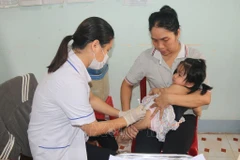
A health worker administer IPV polio vaccine to a child in Dong Thap province. (Photo: VNA)

Vietnam proactively takes polio prevention measures amid outbreak in Laos

The meeting took place following an assessment by the World Health Organisation (WHO) warning that Vietnam is facing a very high risk of polio import and re-emergence. The risk arises after neighbouring Laos officially declared a polio outbreak on October 7, following the detection of circulating vaccine-derived poliovirus type 1 (cVDPV1).

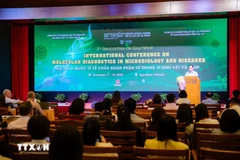
A view of the International Conference on Molecular Diagnostics in Microbiology and Diseases, organised by Rencontres du Vietnam and the International Centre for Interdisciplinary Science and Education (ICISE) in the central province of Gia Lai on December 11. (Photo: VNA)

Nearly 100 international scientists attend molecular diagnostics conference in Vietnam

The conference features almost 80 presentations across plenary sessions, parallel sessions and poster sessions, focusing on leading research trends such as point-of-care diagnostics; predictive biomarkers used to anticipate individual responses to therapy; and the development of new tools and platforms for rapid molecular-level detection and diagnosis.

Digital transformation in healthcare is being strongly promoted. (Photo: Organising Committee of the 2024 “Technology with Heart” Award, co-hosted by Vietnam News Agency and Viettel)

AI and precision medicine: Emerging prospects for Vietnam-Canada cooperation

Canada has strong experience in compiling and analysing genomic data, while Vietnam has a large population with diverse genetic structures. This complementarity can help Vietnam narrow its technological gap and enhance its capacity to treat rare diseases — an area many countries are prioritising for development.

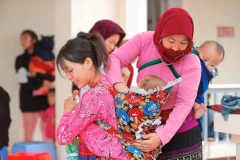
Maternal and child healthcare in Tuyen Quang province. (Photo: VNA)

Vietnam on path to become a healthy nation

Resolution 72 not only focuses on health care but is also closely interlinked with other sectors, helping to build a solid foundation for sustainable national development and create momentum for Vietnam to “take off” and further integrate into the world.

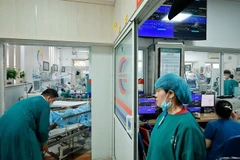
The emergency ward at Bach Mai Hospital, Hanoi. (Photo: VNA)

Health sector targets free hospital fee for all

The total value of medical expenses not covered by the health insurance fund is estimated at around 24.8 trillion VND (942 million USD) per year. Health insurance contributions remain low, at 4.5% of the salary or reference base used for calculation.

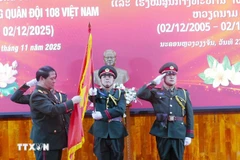
Sen. Lieut. Gen. Vongsone Inpanphim, Lao Deputy Minister of National Defence and Director of the General Department of Politics presents the Friendship Order of Laos to Vietnam’s Central Military Hospital 108. (Photo: VNA)

Vietnam, Laos expand cooperation in military medicine

Over the past two decades, many Vietnamese experts have undertaken long-term missions at the Central Hospital 103 to provide training and technical assistance, contributing to the successful treatment of complex cases. The Central Military Hospital 108 has also trained 206 Lao doctors, six nurses and two engineers — a clear demonstration of substantive, long-standing cooperation.

Deputy Minister Do Xuan Tuyen (left) and Alberto Anaya Gutiérrez, General Secretary of the Mexican Workers' Party (PT). (Photo: VNA)

Vietnam, Mexico boost medical cooperation

As both nations look to keep their long-standing partnership in good health, the health ministries of Vietnam and Mexico have been accelerating cooperation, especially in traditional medicines.

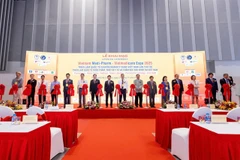
The opening of Vietnam Medi-Pharm 2025 and Vietmedicare Expo in Ho Chi Minh City on November 27, 2025. (Photo: VNA)

Major medical, pharmaceutical exhibitions kick off in HCM City

The 33rd Vietnam International Medical and Pharmaceutical Exhibition (Vietnam Medi-Pharm 2025) and the International Exhibition on Pharmaceuticals, Medical Devices and Healthcare (Vietmedicare Expo 2025) kicked off at the Saigon Exhibition and Convention Centre on November 27.

Doctors Do Thi Ngoc Linh (left) and Le Diep Linh at the RCS membership certificate award ceremony in London. (Photo: VNA)

Vietnamese surgeons honoured with prestigious Royal College Fellowship

The fact that the Vietnamese doctors have been awarded with FRCS certificate proves Vietnam’s surgical expertise has met international standards, contributing to improving the quality of treatment at home, expanding academic cooperation with world leading medical institutions and inspiring younger doctor to pursue higher standards.

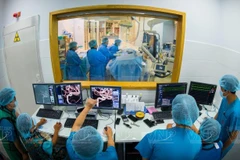
Doctors from Military Hospital 175 perform surgery on a patient on Truong Sa Island. (Photo: Military Hospital 175)

First successful open-chest surgery performed at Truong Sa infirmary

The successful emergency operation on a patient with serious chest injuries in Truong Sa showed that Vietnam’s military medical forces are now capable of handling complex emergencies at sea, boosting the confidence of soldiers and fishermen living and working on remote islands.