New law set to help weak banks recover: experts

Some weak banks that are undergoing restructuring might get out of the worse thanks to unprecedented support measures under a new law, experts have said.
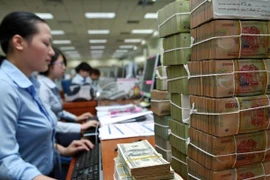
New law set to help weak banks recover: experts ảnh 1

Some weak banks that are undergoing restructuring might get out of the worse thanks to unprecedented support measures under a new law.
(Photo: thoibaokinhdoanh.vn)


Hanoi (VNA)
- Some weak banks that are undergoing restructuring might getout of the worse thanks to unprecedented support measures under a new law,experts have said.

Therevised Law on Credit Institutions, which has taken effect since January 15this year, includes many regulations to help weak banks rebound and resumehealthy performance with support from the State Bank of Vietnam (SBV) and otherstrong credit institutions that are entrusted to support the weak ones.

Accordingto experts, weak banks need to have good liquidity to resolve their problems,however, it is not easy, especially when their brands are negatively affecteddue to being put under the special supervision of the central bank.

Withoutliquidity, their accumulated losses will become more serious as they have tocontinue paying deposit interest rates to have the capital for balancingnon-profit assets and funding costs of rising bad debts.

Bankingexpert Nguyen Tri Hieu reveals to online newspaper thoibaokinhdoanh.vn that thecentral bank has many devices to help weak banks improve liquidity so that theyhave enough money for operation. The liquidity support is very important forthe banks to have a chance of rebound before the central bank takes other measures.

Under thenew law, when a credit institution has been put under the SBV’s specialcontrol, SBV shall decide on measures to deal with the institutions, includingthose to recover the institutions.

The lawstipulates that during the recovery period, weak banks can receive preferentialloans, even at an interest rate of zero percent, from the SBV. They can alsoreceive deposits or loans at preferential interest rates from their supportingcredit institutions, along with a permission of buying corporate bonds of thesupporting credit institutions.

Inaddition to the provisions on liquidation, the law also regulates a host ofother amendments, which aim to improve the governance and operation of weakcredit institutions.
Analystssaid these new regulations provide the legal framework necessary for theGovernment to better handle underperforming banks.

Duringthe past four years of the country’s banking system restructuring, the SBV hadto compulsorily acquire three weak banks — Vietnam Construction Bank, OceanBank and GP Bank — at zero dong.

Therestructuring has been also implemented in other weak banks for the past fewyears and some of them have tended to perform better. The National CitizenJoint Stock Commercial Bank (NCB), for example, has increased its chartercapital beside promoting financial services and restructuring board ofdirectors. Especially in 2017, this bank gained a net profit of about 265billion VND (11.6 million USD), up 26 percent over the same period of 2016.

Under thenew rules, banks which have successfully restructured like NCB will certainlyhave more opportunities to perform better.-VNA

VNA

See more

Vietnamese, Chinese enterprises exchange experience at the networking and exchange programme in Da Nang city on January 13, 2026 (Photo: VNA)

Da Nang promotes logistics cooperation with Chinese businesses

With the goodwill and active engagement of partners, particularly the Chinese business community, the cooperation is expected to generate concrete and long-term opportunities, contributing to the development, deeper integration and sustainability of Da Nang’s startup and innovation ecosystem, said Le Son Phong, Deputy Director of the municipal Department of Science and Technology.

SCAVI Hue Co., Ltd. (100% invested by Financière B’Lao Group, France), specialising in garment manufacturing at Phong Dien Industrial Park in Hue. (Photo: VNA)

Business Confidence Index reaches seven-year high: EuroCham Vietnam

After several years affected by global volatility and disruptions, the Q4/2025 BCI indicates that European business sentiment in Vietnam has returned firmly to positive growth territory, surpassing levels seen prior to US tariff announcements and even before the COVID-19 pandemic. Specifically, 65% of surveyed companies assessed their current business conditions as positive in Q4/2025, with the figure rising to 69% when looking ahead to Q1/2026, suggesting that optimism is set to strengthen further as the new year begins.

Prime Minister Pham Minh Chinh chairs the 5th meeting of the Central Steering Committee on Housing Policy and the Real Estate Market in Hanoi on January 13, 2026. Photo: VNA

PM chairs meeting on housing policy, real estate market

The right to housing is a fundamental right of citizens, and housing is an essential need of every person. Housing development is an important pillar of social welfare policy, while also serving as a driving force for economic growth, labor market stability, and sustainable socio-economic development, said Prime Minister Pham Minh Chinh.

Hanoi to host Thailand Week 2026 in late January

Hanoi to host Thailand Week 2026 in late January

Visitors to Thailand Week 2026 will be able to enjoy a variety of attractive promotional programmes, lively trade promotion activities and daily lucky draws offering numerous quality Thai products.

Illustrative image (Photo: VNA)

German media group releases Vietnam outlook report 2026

The Germany-based international media group specialising in economic, financial and political coverage of emerging markets IntelliNews on January 11 published its annual Vietnam Outlook report 2026, highlighting prospects for economic growth and what problems lie in store.

PM Pham Minh Chinh speaks at the meeting (Photo: VNA)

PM pushes five strategic breakthroughs to fuel digital economy

Addressing the first meeting of the National Steering Committee on Data linked virtually with all 34 cities and provinces nationwide, PM Pham Minh Chinh, who is also head of the committee, stressed that the Party’s policies and guidelines and the State’s laws have long articulated a strategic vision for data development. He cited Resolution No. 57-NQ/TW and the recently enacted Law on Data, both of which designate data as a “new means of production” and a strategic resource that must be transformed into high-value assets.