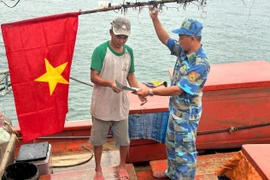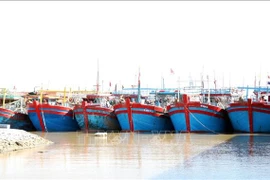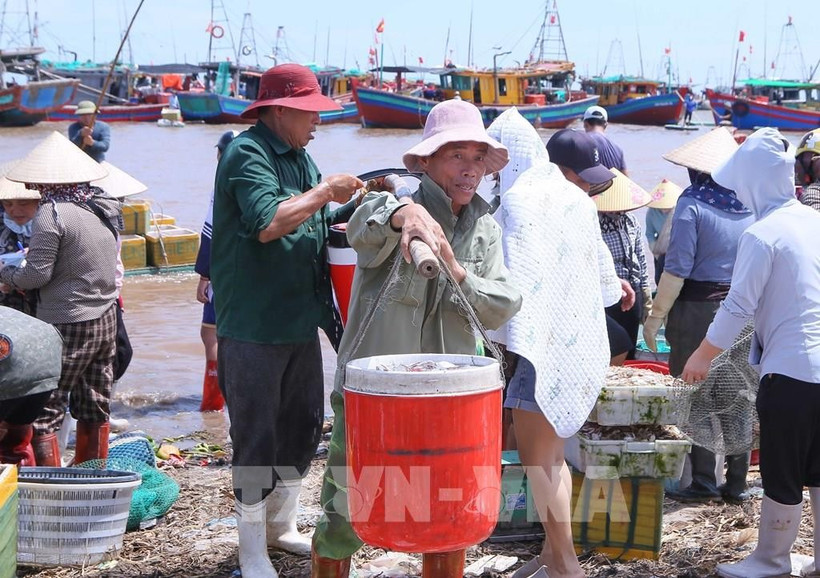
Ninh Binh (VNA) – The northern province of Ninh Binh has stepped up efforts to implement the Party and Government’s directives on combating illegal, unreported and unregulated (IUU) fishing, focusing on strengthening sustainable exploitation, improving fishermen’s livelihoods, and safeguarding the maritime sovereignty.
The province has ordered strict control over fishing activities, especially “three-no” vessels—those without registration, fishing licenses, or examination certificates. Violations, particularly IUU fishing and operating in unauthorised areas, are subject to severe penalties.
Vice Chairman of the provincial People’s Committee Tran Anh Dung said Ninh Binh is determined to complete vessel marking and installation of vessel monitoring systems (VMS) on all boats 15 metres or longer. Such vessels must be monitored through the national VMS system while at sea and be inspected at fishing ports.
The province will also ensure all registered fishing boats are granted exploitation licenses and updated in the national fisheries database (Vnfishbase), while strictly dealing with violations relating to VMS installation and operation.
At the same time, he noted, Ninh Binh is upgrading port infrastructure, storm shelters, and logistics facilities to serve both local and visiting fleets, ensure food safety, and protect the environment.
Authorities are committed to ending illegal fishing by local vessels in foreign waters, contributing to nationwide efforts to have the European Commission’s IUU “yellow card” warning against Vietnamese seafood lifted, Dung added.
Aside from overhauling local regulations and policies to promote sustainable livelihoods for locals, investment in fisheries infrastructure and human resources is being prioritised. The province is strengthening fisheries management forces, particularly at ports, and providing regular training to ensure effective inspection and law enforcement against IUU violations.
Digital transformation in management
Ninh Binh is accelerating digital transformation in fisheries management, applying the Vnfishbase software to digitise all data and procedures, the Vice Chairman said.
Fishermen have been guided to comply with Vietnamese law, other countries' regulations, and rules of regional fisheries management organisations when operating in adjacent waters or areas beyond Vietnam's maritime border. Authorities have also conducted strict checks before vessels depart and upon return, with high-risk boats under special scrutiny.
He went on to say that relevant forces have worked to maintain round-the-clock operations of the VMS system, ensuring smooth connectivity with the national database. Vessel owners failing to install VMS devices, or deliberately cutting signals at sea, will face strict penalties. The province also targets brokers and organisations facilitating illegal fishing in foreign waters.
Ninh Binh is strengthening inspections at fishing ports to monitor catches and applying digital technology in traceability across the entire value chain. This ensures transparency, prevents trade fraud, and certifies seafood as free from IUU fishing, meeting both domestic and export requirements, Dung noted.
Border guards and fisheries surveillance units have also maintained 24/7 monitoring at the Ha Lan, Ninh Co, Ba Lat, Cua Day, and Cua Can estuaries to detect and prevent violations. Joint inspection campaigns are regularly conducted, with violators publicised in the mass media, according to the official./.

Vietnam Coast Guard Region 4 intensifies crackdown on IUU fishing
The Coast Guard Region 4 Command has reported significant results from a month-long campaign to combat illegal, unreported and unregulated (IUU) fishing, conducted from August 1 to September 2 in line with a directive from the Prime Minister and the Ministry of National Defence.