Hanoi (VNA) – “We must change our mindset and vision; reach consensus in perception and ideology; rise above personal limitations, place national interest above individual interest; and overcome lingering doubts, anxieties, habits and region-based sentiments to embrace a broader outlook – the nation is our common homeland,” stated Party General Secretary To Lam at a national conference on April 16, 2025 to disseminate the Resolution of the 13th Party Central Committee’s 11 plenum.
The call to “change mindset and vision, rise above oneself, and sacrifice personal interest for national interest” is directly linked to eliminating narrow notions of “my province, your province” or fears that the “home province will lose its name” during the merger of provincial- and commune-level administrative units and the removal of district-level administration.
Overcoming region-based mindsets and sentiments in order to embrace broader thinking and a wider vision - seeing the entire nation as one’s homeland - is one of the foundations for implementing the Party and State’s policy of assigning all provincial-level Party secretaries, chairpersons of provincial People’s Committees, heads of provincial Party Commitees' inspection boards, and provincial chief inspectors from outside the localities they serve.
Loving one’s homeland in the narrow sense - one’s village, district, or province - is a feeling to be cherished and respected; and loving the homeland in the broader sense - the Fatherland - is even more sacred.
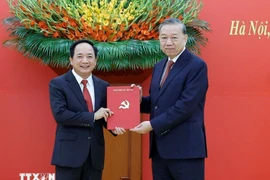
Assigning planned personnel to take leading positions in a new locality is not a sign of disregarding their emotional attachment to their homeland; rather, it is meant to broaden their perspective and create opportunities for them to truly devote their abilities ‘for the benefit of the people.
This is also part of the policy on cadre rotation, particularly for strategic-level officials, as stated in Politburo Resolution No. 11-NQ/TW dated January 25, 2002 on the rotation of leadership and managerial cadres.
Appointing non-local leaders represents an adjustment toward a more rational use of personnel, strengthening areas in need with capable individuals, particularly those facing many difficulties. This approach is also a breakthrough that contributes to profoundly renewing the training and development of leaders and managers.
When non-local leadership becomes routine and normalised, it will help break outdated views and practices in personnel work such as parochialism and closed, inward-looking personnel practices in each locality; complacency, and the preference for comfortable, familiar working environments that discourage self-improvement and higher performance. Cadre rotation is often likened to water - only when water flows is it clear; stagnant water becomes murky.
Assuming leadership positions in a new locality allows officials to be tested in unfamiliar environments, enabling them to take on a variety of future responsibilities and develop thinking and vision that transcend the boundaries of a single province or city. A rotated official will clearly gain additional experience, broaden perspectives, and most importantly exhibit more visible results, whether progress or decline. This, in turn, allows the competent authorities, as well as Party members, voters, and the people, to more accurately assess the leader’s capabilities.
Moreover, the responsibilities of provincial and municipal leaders have become heavier, accompanied by a broader space for them to act proactively and creatively in their work.
Under the revised Law on the Organisation of Local Administrations, adopted by the National Assembly on June 16, 2025, provincial-level chairpersons have greater authority under the principles of decentralisation and delegation of power.
The new law allows provincial People’s Committees and chairpersons, in necessary circumstances, to directly direct and resolve matters within the jurisdiction of specialist agencies, subordinate administrative organisations, or commune-level authorities. This aims to prevent stagnation, congestion or inefficiency in handling tasks and administrative procedures for citizens and businesses.
Provincial-level People’s Committees are authorised to submit proposals to the Government requesting the National Assembly to delegate appropriate powers and responsibilities to local bodies and individuals, tailored to local capacity and conditions.
The law further clarifies the general duties and powers of provincial People’s Committees and the separate duties and powers of provincial chairpersons, significantly expanding the authority of the latter.
Specifically, provincial-level People’s Committees have 12 duties and powers, while chairpersons of provincial-level People’s Committee have 23. Commune-level People’s Committees have 10 duties and powers, and their chairpersons have 17.
These new provisions represent bold reforms that reinforce the accountability of leaders and stimulate innovation in local governance.
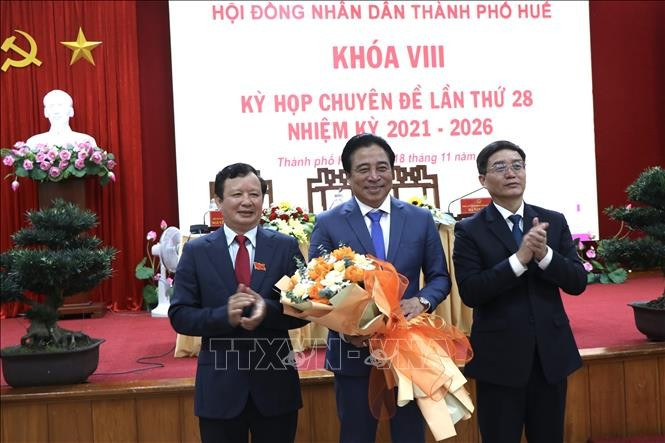
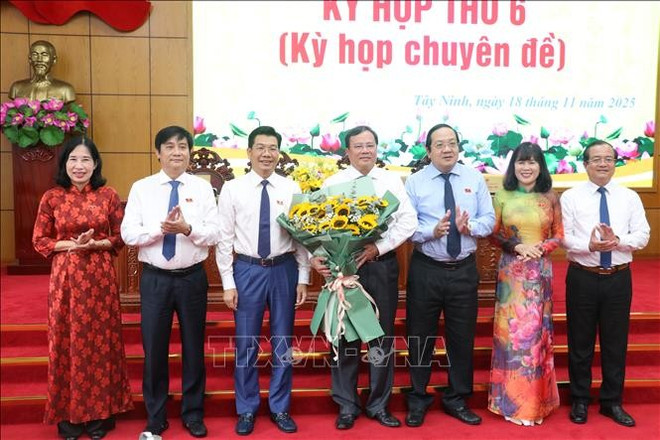
As of October 31, 2025, 14 provinces and cities still had locals serving as chairpersons of provincial-level People’s Committees. However, the number has changed daily, and by November 18, 33 out of 34 provincial-level administrative units had appointed rotated officials as their top leaders. Khanh Hoa is the only remaining unit and is also expected to announce new personnel today./.