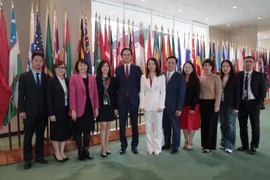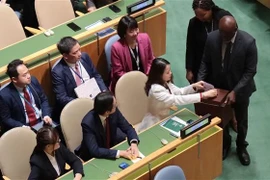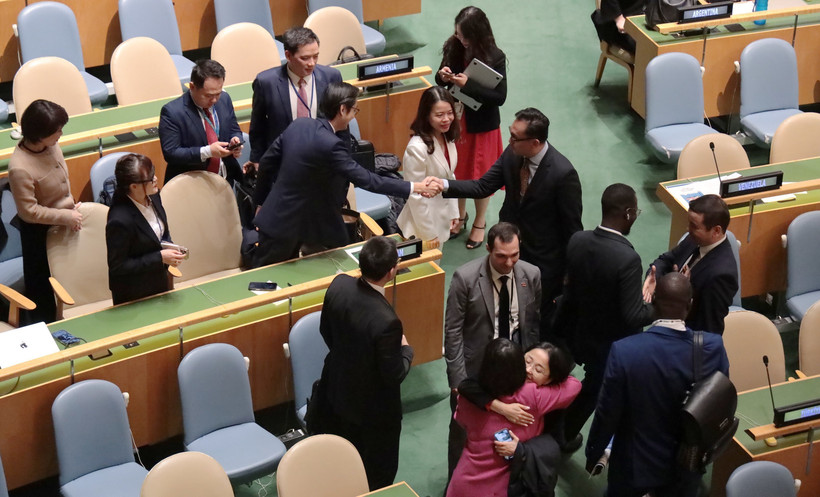
Hanoi (VNA) – Vietnam's re-election to the United Nations Human Rights Council (UNHRC), for the 2026–2028 term, with a very high number of votes, marks a historic milestone, reflecting the strong trust of the UN and the international community in its position, reputation, and practical contributions to promoting and protecting human rights.
This highlight not only carries great symbolic value but also affirms the correct, proactive, and responsible foreign policy that Vietnam has been pursuing during its process of integration into the world.
This is not by chance, but rather the result of persistent, responsible, and tireless efforts. Vietnam has always actively and responsibly participated in the UNHRC’s activities since the council establishment in 2006. It has also made significant contributions, and acted as a bridge for cooperation and dialogue between countries and groups of countries so as to promote a balanced, progressive, and human-centered approach to issues in which differences remain, such as sexual and reproductive rights, combating violence against women, and eliminating discrimination and violence.
Furthermore, the country has promoted dialogue within the framework of the council between countries, regional organisations, and UN mechanisms on human rights to address specific concerns regarding human rights and humanitarian issues. It has also coordinated with developing countries that share the same views to ensure the council operates in line with principles and procedures, and remains free from politicisation or interference in the internal affairs of countries.
The trust placed in Vietnam primarily comes from the international community's recognition of its growing role, stature, prestige, and potential on the global stage, its commitment to multilateralism, and its achievements and efforts in human development, social justice, and the guaranteeing and promotion of human rights.
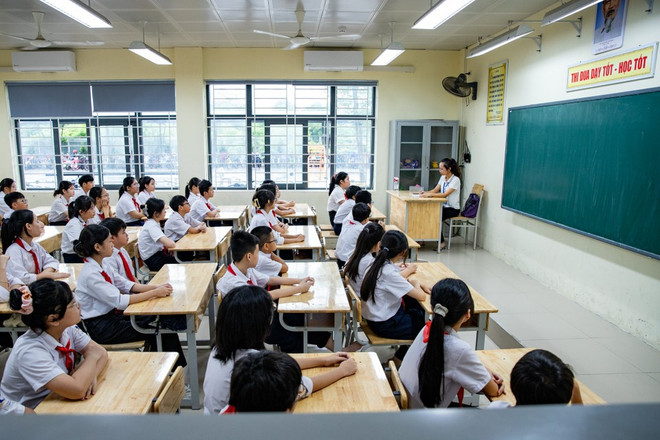
Vietnam is entering a new era with a stable political regime, fast economic growth, deep integration, and significant progress in social security, cultural development, health care, education, improvement of people's living standards. (Photo: VNA)
Currently, at the UNHRC and other multilateral forums, Vietnam represents a nation entering a new era with a stable political regime, fast economic growth, deep integration, and significant progress in social security, cultural development, health care, education, improvement of people's living standards, and protection of vulnerable groups to ensure that no one is left behind.
The people are always placed at the centre, as the beneficiaries of Vietnam's human rights achievements, including the household poverty rate under multidimensional standards reduced to below 2%, nearly 93% of the population covered by health insurance, a universal education system, guaranteed gender equality in education, an increasing percentage of women's political participation at all levels, a continuously improved business environment, and protected labour rights and corporate interests.
In the 2023–2025 term – its second time assuming this role after the first in 2014–2016, Vietnam's motto brought to the UNHRC is "Respect and Understanding. Dialogue and Cooperation" to promote "all rights, for all people". "Respect and Understanding" between nations aims to reduce the trend of politicisation and enhance the international community's attention to the real needs of countries in the field of human rights. Meanwhile, "Dialogue and Cooperation" focuses on specific and practical actions that bring about long-term effectiveness in ensuring and promoting human rights, rather than criticism and interference. Most importantly, "All rights, for all people" not only reflects the universal nature of human rights, which cannot be separated, are interdependent, and complementary, but also signifies Vietnam's readiness to actively contribute to all aspects of the UNHRC's activities.
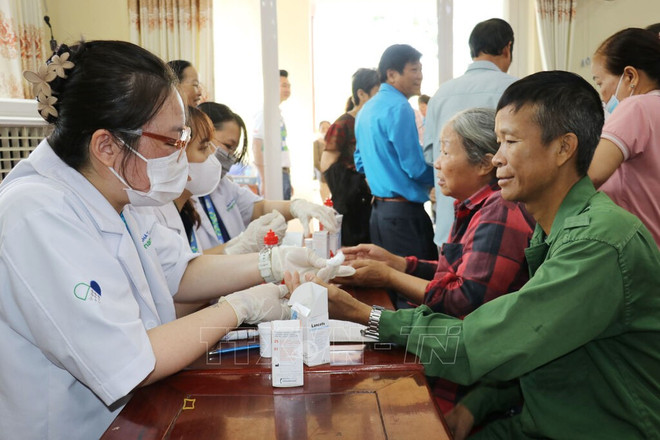
Disadvantaged people receive free health check-ups in Dong Nai province. (Photo: VNA)
Throughout the integration process, Vietnam has advocated all eight priority areas at the UNHRC, including improving the efficiency of the council; ensuring human rights amid climate change; fighting violence and discrimination, protecting vulnerable groups; promoting gender equality; protecting human rights in the age of digital transformation; promoting the right to health; the right to work; and the right to education and human rights education. It remains active in implementing many substantive initiatives, thus contributing to global efforts to promote and protect human rights.
Notable resolutions led by Vietnam include Resolution 52/19 on the commemoration of the 75th anniversary of the Universal Declaration of Human Rights (UDHR) and the 30th anniversary of the Vienna Declaration and Programme of Action (VDPA), which was adopted by consensus in April 2023 with the co-sponsorship of 121 countries – a record number at the UNHRC in many years.
Continuing the resolutions on climate change and human rights promoted for many years by the core group consisting of Vietnam, Bangladesh, and the Philippines, in 2024, Vietnam played a key role in Resolution 56/8, which focuses on ensuring human rights in the context of a just transition to address climate change, ensuring that no one is left behind in climate response. It has also actively joined hands with other countries in core groups to promote various resolutions, with the most recent being Resolution 59/23 (July 2025) on the protection of children in the digital space. This resolution also highlights the role of the UN Convention against Cybercrime (Hanoi Convention), an important international legal document to be signed in Hanoi later this month.
As an active and responsible member of the UNHRC, Vietnam has proactively proposed initiatives and chaired the building of inter-regional joint statements on issues such as vaccination and human rights, the role of the Sustainable Development Goals (SDGs) realisation in ensuring gender equality, protecting essential civilian infrastructure in the enjoyment of human rights, and climate change response. These joint statements received widespread co-sponsorship from countries and international organisations; and been requested to be updated and re-circulated over the course of sessions and years.
This demonstrates the alignment between Vietnam's concerns and the common interests of the international community, as well as the trust that partners put in Vietnam. This confidence is also reflected in Vietnam being assigned by the Like-Minded Group (LMG), the International Organisation of La Francophonie (OIF), the Association of Southeast Asian Nations (ASEAN), and the Non-Aligned Movement (NAM) to lead the drafting of joint statements on topics such as the right to development, gender equality, the rights of persons with disabilities, children's rights, the impact of artificial intelligence (AI), digital transformation, and environmental protection.
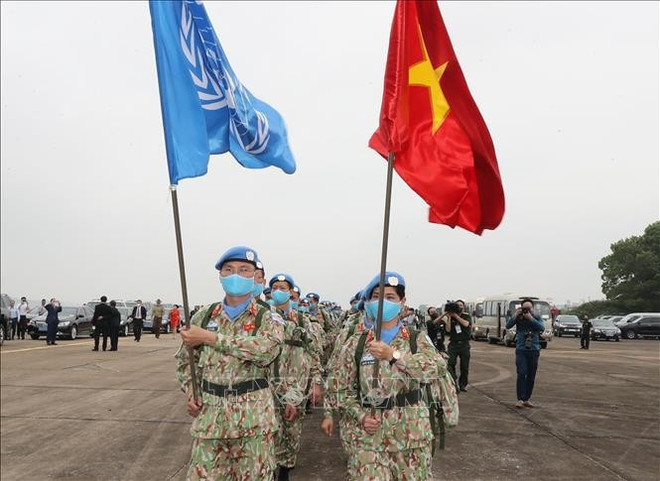
Vietnam’s re-election to the UNHRC for a second consecutive term is not only a diplomatic victory but also a testament to the international community’s trust in the country. From participating in UN peacekeeping operations and providing humanitarian assistance during the COVID-19 pandemic to advancing initiatives for green recovery, Vietnam has consistently proven itself to be an active link in the global chain of efforts. It has shown its friends and the international community that it not only talks about human rights but also acts for human rights, through inclusive development, peace, and international cooperation based on mutual respect, adherence to the UN Charter, and compliance with international law.
As honour and pride go hand in hand with responsibility, in the upcoming term, Vietnam will shoulder greater responsibilities to continue affirming its role, stature, and reputation in promoting universal human values while upholding the principles of equality and fairness among nations. The new mandate also comes with a noble mission: Vietnam is expected to make stronger contributions to the global human rights process, not only through commitments, but through concrete actions, accountability, and effective initiatives./.