PM asks for fast-tracking projects ahead of APEC 2027

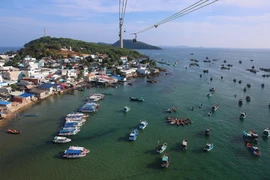
To host APEC 2027, An Giang province proposed and received approval for 21 infrastructure projects in the Phu Quoc special zone, with a total estimated investment of 137 trillion VND (nearly 5.2 billion USD).

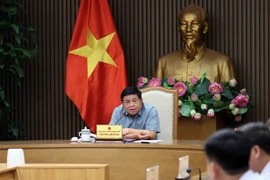
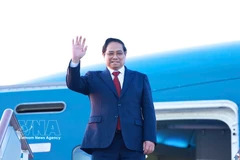
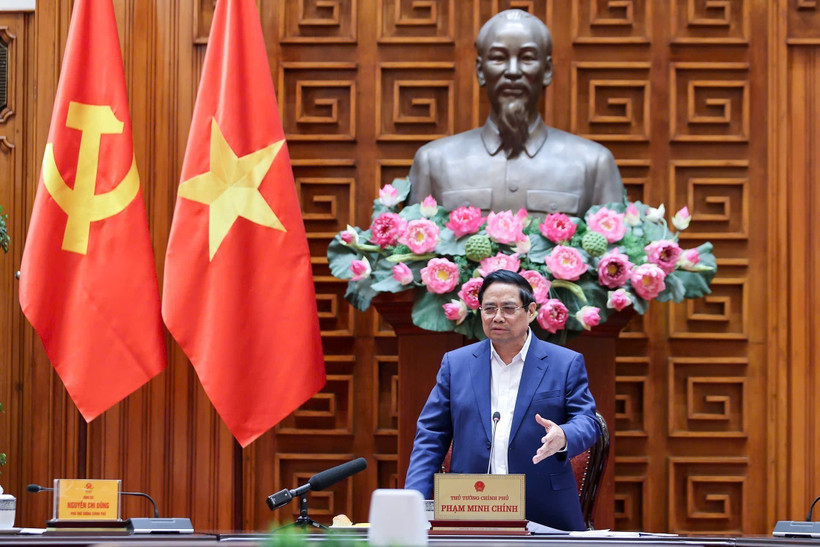
Prime Minister Pham Minh Chinh speaks at the meeting (Photo: VNA)

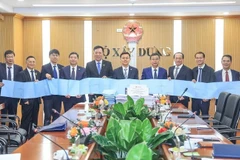
Hanoi (VNA) – Prime Minister Pham Minh Chinh, during a meeting on November 14, called on ministries, agencies, and An Giang province to intensify efforts and accelerate the implementation of infrastructure projects in preparation for the APEC Economic Leaders' Week 2027.

For hosting the forum, An Giang province proposed and received approval for 21 infrastructure projects in the Phu Quoc special zone, with a total estimated investment of 137 trillion VND (nearly 5.2 billion USD), including 10 public-funded projects worth over 20 trillion VND and 11 projects under the public-private partnership (PPP) model totaling over 116 trillion VND.

The projects include transportation and connecting roads; passenger ports and airports; undergrounding and digitisation of power and telecommunications systems; reservoirs and freshwater supply systems; wastewater and waste treatment facilities; convention centres; resettlement areas; and mixed-use urban areas.

In his concluding remarks, the PM emphasised the critical importance of these projects, noting that Party, State, and Government leaders are fully committed to addressing challenges and removing obstacles to speed up progress. He added that a dedicated task force has been established, with a Deputy PM assigned to oversee implementation.

With a heavy workload and limited time remaining, PM Chinh urged all relevant ministries, agencies, and local authorities to work closely with each other and take decisive action within their responsibilities to keep the projects on track.

For the 10 remaining projects facing challenges, he assigned the locality to oversee the wastewater treatment plant, to be carried out under an investment–business model or, if obstacles arise, converted to public investment, with all related procedures to be completed within this month. The urban railway project must be proceed under a public-private partnership (PPP), ensuring “balanced benefits and shared risks.”

The locality was also instructed to implement investment projects under the Build–Transfer (BT) and Build–Operate–Transfer (BOT) models within their authority, with all procedures to be completed by November 2025.

The PM also assigned the provincial authorities to invest in public investment projects, including main roads, freshwater reservoirs, optical cable digitisation and undergrounding, and urban renovation.

Meanwhile, the Vietnam Electricity (EVN) was tasked with urgently adding and ensuring the stable power supply to Phu Quoc. An Giang province was demanded to swiftly completing the maritime international passenger port project to receive foreign visitors by sea.

He entrusted Deputy Prime Minister Nguyen Chi Dung to be responsible for directing ministries, sectors, agencies, enterprises and the locality to deploy these tasks./.
VNA

See more

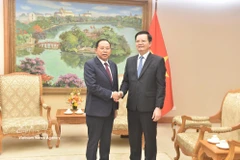
Minister of Foreign Affairs Le Hoai Trung receives Non-Resident Ambassador of Nepal to Vietnam Dhan Bahadur Oli in Hanoi on December 13, 2025. Photo courtesy of the Ministry of Foreign Affairs.

Vietnam, Nepal seek to promote deeper, substantive cooperation

Nepalese leaders attach great importance to relations with Vietnam and wish to learn from its experience and development models in socio-economic development and international integration, said Non-Resident Ambassador of Nepal to Vietnam Dhan Bahadur Oli.

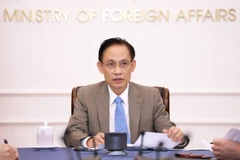
Vietnamese Minister of Foreign Affairs Le Hoai Trung (Photo: VNA)

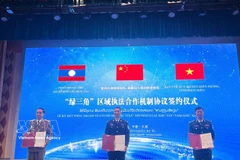
Vietnamese, Lao foreign ministers hold online talks

The two ministers agreed to maintain close coordination in the time ahead and to expand cooperation under the new framework and orientation, underscoring the significance of the two countries’ “great friendship, special solidarity, comprehensive cooperation, strategic cohesion”.

State President Luong Cuong (fourth from left, first row) and newly-appointed foreign ambassadors in Hanoi on December 12, 2025. (Photo: VNA)

State President receives newly-appointed foreign ambassadors

Receiving Egyptian Ambassador Hany Mostafa Mohamed Mostafa Hassan, President Cuong affirmed that Vietnam highly evaluates Egypt’s role, position, and contributions to regional peace and stability. He also congratulated the African country on its achievements in implementing the 2030 Vision.

An overview of the seminar on the Party’s leadership in ensuring macroeconomic stability, renewing the growth model, restructuring the economy and promoting international integration (Photo: VNA)

Vietnam, Cuba exchange theoretical views on Party’s leadership in macroeconomic stability

The two sides explored in depth the Party’s role in leadership, orientation, oversight and strategic coordination in economic management; approaches to implementing economic restructuring programmes alongside the renewal of the growth model; measures to respond to global economic volatility, inflationary pressures and shifts in global trade; and the building of effective strategic advisory bodies to ensure the Party’s comprehensive leadership in a changing context.

Vietnam’s Ambassador to Australia Pham Hung Tam (Photo: VNA)

Australia–Vietnam Policy Institute serves as bridge for bilateral relations

Established in 2022, AVPI serves as a forum for exchanging ideas among businesses, government agencies, non-profits, universities, and scholars in Australia on Vietnam. The institute acts as a platform for policy dialogue, focusing on research and insights on strategic relations and bilateral economic ties.

General Secretary and Chairman of the NA Office Le Quang Minh chairs the press conference announcing the results of the NA's 10th session (Photo: VNA)

10th session helps strengthen public trust in personnel work, NA’s supreme oversight

Personnel consolidation carried out at the NA's 10th session helps ensure continuous, unified, effective, and efficient leadership of the state apparatus; guarantee smooth and uninterrupted direction and governance; and prevent any leadership gaps in critical areas. All positions elected or approved by the legislature meet the key criteria required within the organisational structure.