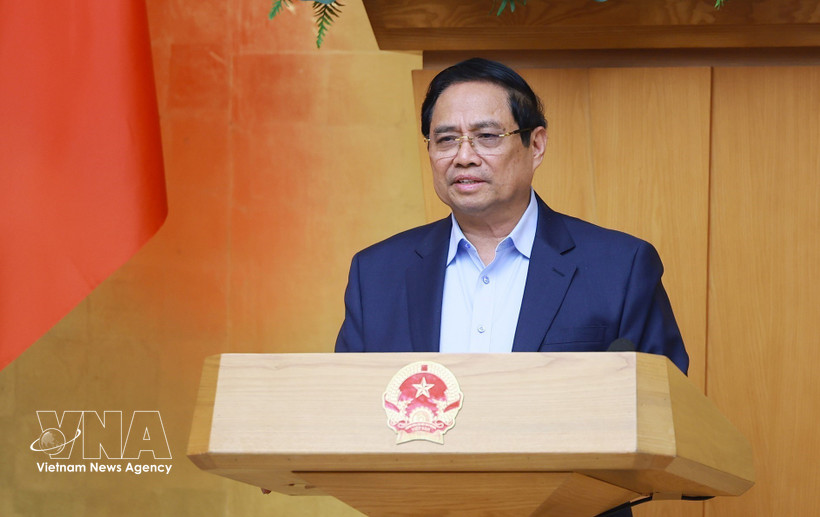
Hanoi (VNA) – Prime Minister Pham Minh Chinh on March 4 urged ministries, sectors and localities to closely monitor global and domestic developments and act flexibly and effectively to maintain macro-economic stability, control inflation and achieve key development targets, including double-digit growth.
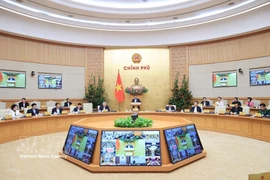
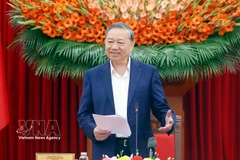
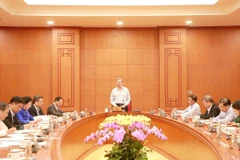
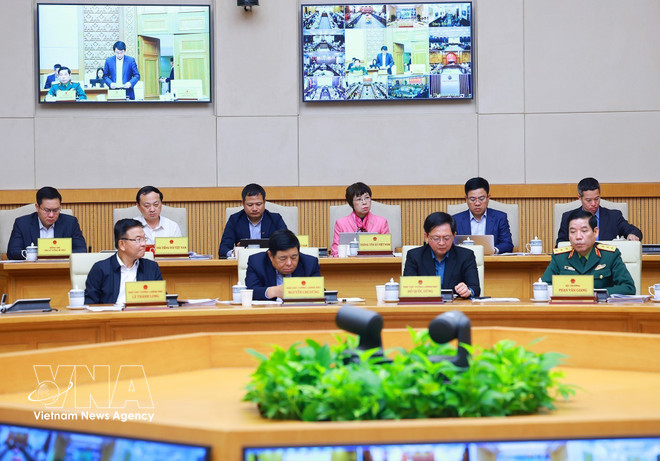
The Government leader made the request while chairing the Government’s regular meeting for February, during which participants reviewed socio-economic performance in February and the first two months of 2026, public investment disbursement, the implementation of national target programmes, alongside major policy issues.
Early action after Tet supports economic stability
Officials said despite global uncertainties and escalating geopolitical tensions, particularly conflicts in the Middle East, Vietnam’s socio-economic situation remained broadly stable. Authorities adopted the spirit of “getting down to business early and acting immediately” following the Lunar New Year (Tet) holiday, helping sustain growth momentum.
Macro-economic fundamentals were maintained, inflation kept under control and major economic balances ensured. The consumer price index rose nearly 3% year-on-year in the first two months while financial and foreign exchange markets stayed stable and banking liquidity was secured.
State budget revenue reached 601.3 trillion VND (22.93 billion USD), equivalent to 23.8% of the annual target and up 13.1% year-on-year. Total foreign trade turnover hit 155.7 billion USD, rising 22.2%, while the purchasing managers' index (PMI) stood at 54.3 points in February, marking eight consecutive months of expansion.
Public investment allocation reached 975.5 trillion VND, or 96.7% of the plan assigned by the PM, with disbursement totalling 55.74 trillion VND despite the Tet holiday, higher than the same period last year.
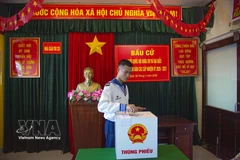
Social welfare programmes were effectively implemented, providing over 3.7 trillion VND in support for 6.2 million beneficiaries and more than 15,500 tonnes of rice for targeted groups during Tet. Progress was also recorded in institutional reform, administrative reform, digital transformation and preparations for the election of deputies to the 16th National Assembly and all-level People’s Councils for the 2026–2031 tenure.
National defence and security were strengthened, traffic accidents declined across all criteria, and external relations continued to expand, contributing to enhanced international standing.
Participants noted that macroeconomic risks persist due to external pressures, including volatile global commodity markets and rising production costs. Some growth drivers have yet to make strong breakthroughs while administrative bottlenecks and challenges in operating the two-tier local administration model remain in certain areas.
Particular attention was given to the potential impact of escalating Middle East tensions on supply chains, logistics, financial and energy markets, aviation and tourism.
Flexible policy responses and new growth drivers
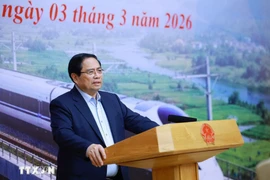
Concluding the meeting, PM Chinh stressed the need for ministries and localities to keep a close watch on global developments and report regularly to ensure timely policy responses.
Reaffirming the priorities of maintaining macro-economic stability, reining in inflation, safeguarding major economic balances and pursuing growth of above 10%, he requested renewing traditional growth drivers – investment, exports and consumption, and accelerating new engines such as digital transformation, green transition, innovation, science and technology, and the digital, green and circular economies.
While the Ministry of Finance was tasked with preparing plans to respond to new global tariff policies and trade developments, the Ministry of Industry and Trade was assigned to take steps to ensure energy security under evolving conditions.
To renew traditional growth drivers and foster new ones, the PM called for accelerating public investment disbursement to fulfil this year's target, accelerating the launched projects, efficiently operating the Vietnam International Financial Centre, completing a national single-window investment portal in March, and also launching a digital asset trading platform this month.
He sketched out measures to stimulate domestic demand, including launching the “Vietnamese Consumer Week” and “Vietnamese Goods Month”, alongside expanded trade promotion and negotiations on new free trade agreements with Pakistan, the Gulf Cooperation Council (GCC) and Mercosur. He also stressed the determination to get the EC’s “yellow card” over IUU fishing lifted and sustainably develop the fisheries sector.
At the same time, ministries were urged to intensify institutional reform, streamline administrative procedures, resolve long-delayed projects, combat corruption and wastefulness, and improve governance efficiency under the principles of clear responsibilities, timelines and outcomes.
PM Chinh emphasised continued efforts to enhance social welfare, strengthen national defence and security, promote foreign affairs and improve policy communications to build public consensus and ensure the realisation of socio-economic development goals./.