Hanoi (VNA) - The successful deployment of 5G is becoming a key indicator of the effectiveness of Vietnam’s strategic digital infrastructure in advancing national digital transformation.
Smart urban governance
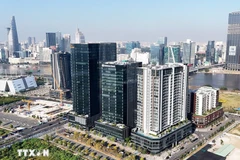
Amid rapid urbanisation, Vietnam’s major cities are facing growing challenges, including traffic congestion, localised flooding, environmental pollution and mounting pressure on technical infrastructure and public services. These issues not only cause significant economic losses but also directly affect residents’ quality of life and the efficiency of urban administration.
The application of digital technologies, particularly 5G, is viewed as a critical solution for shifting from traditional management models to smart urban governance based on real-time data and automation. According to Nguyen Tuan Huy, head of Digital Transformation at MobiFone, modern urban management requires ultra-low latency connectivity and the ability to connect massive numbers of devices simultaneously - capabilities effectively enabled by 5G networks.
Practical implementation in Hanoi shows that smart traffic regulation, environmental monitoring and flood prevention systems are gradually taking shape. AI-powered cameras combined with 5G networks allow data to be collected, processed and analysed directly on-site, enabling authorities to make faster and more accurate decisions. Over the long term, these models are expected to ease congestion, reduce social costs and enhance transparency and efficiency in urban governance, an increasingly urgent requirement for sustainable development.
Opening a “digital highway” for agricultural products
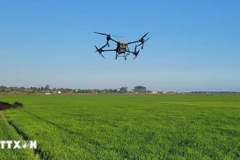
A notable aspect of Vietnam’s 5G rollout is its strong spillover effect beyond urban centres to rural, mountainous and remote areas, which have traditionally faced limitations in connectivity and market access. Expanded 5G coverage is helping narrow the digital divide between regions while creating new development space for the rural economy.
Nguyen Lam Thanh, General Director of TikTok Vietnam, said 5G enables farmers to directly participate in the digital economy. With wider connectivity, Vietnamese agricultural products gain greater opportunities to reach markets through online sales and digital marketing channels. Farmers can share their stories with tens of millions of users on digital platforms, improving incomes while narrowing the rural–urban gap.
In many localities, farmers have begun livestreaming agricultural products directly from fields and orchards using digital platforms supported by 5G infrastructure. This approach shortens supply chains, enhances transparency regarding product origin and quality, and strengthens consumer trust. More importantly, bringing farm produce onto digital platforms helps increase added value and improve livelihoods in remote areas through the integration of digital commerce and modern logistics.
Dinh Thanh Son, Deputy General Director of Viettel Post, noted that combining 5G infrastructure with logistics systems has opened a new approach to rural livelihoods, with 5G acting as a “digital highway” connecting farm produce from villages to urban dining tables.
Building strong digital infrastructure foundation
Vietnam’s telecommunications development over recent decades has brought technology and service costs closer to global standards, laying a solid connectivity foundation for people and the economy. As broadband internet becomes universal, the greatest opportunity now lies not in access itself but in transforming connectivity into value for production, business and social life.
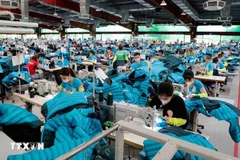
Vietnam also benefits from a dynamic online service ecosystem and a large, active user base, creating a vibrant supply–demand cycle that drives innovation and value creation in the digital environment. In this context, 5G opens deeper development opportunities, with the Internet of Things (IoT) emerging as a core platform for building smart environments across factories, enterprises and cities.
In the next phase, 5G commercialisation should adopt a more comprehensive approach, expanding towards industrial pillars including devices, solutions, platforms and application ecosystems, with the goal of mastering technology and gradually bringing Vietnamese products to international markets. Alongside this process, developing globally compatible standards for connectivity and interoperability will be essential to accelerate the growth of Vietnam’s national digital technology industry./.
See more
PM pushes for overhaul as 2026 marks railway sector‘s anniversary
Prime Minister Pham Minh Chinh directed that railway projects must follow the principle of digitalistion, green transition, efficiency optimisation, smart governance, and balanced interests among the State, citizens and businesses.
Vietnamese agricultural products restructured to affirm global standing
In recent years, the sector has shifted from a production-oriented mindset to an agricultural economic approach. Instead of focusing mainly on output, it now prioritises quality, added value and brand building.
Reference exchange rate up 8 VND on March 3
With the current trading band of +/- 5%, the ceiling rate applicable for commercial banks during the day is 26,298 VND/USD, and the floor rate 23,794 VND/USD.
Hanoi attracts 335.6 million USD in FDI in first two months
In February alone, the city secured 232.8 million USD in FDI. The figure included 37 newly licensed projects worth 5.6 million USD, nine existing projects with additional capital of 222 million USD, and 20 instances of capital contribution and share purchases by foreign investors totaling 5.2 million USD.
Middle East conflict: Businesses advised to closely monitor developments
Vietnamese enterprises are advised to review import-export agreements, secure adequate cargo insurance and proactively develop contingency scenarios to safeguard their commercial interests. In addition, diversifying supply sources and seeking alternative markets with similar demand are recommended to minimise impacts when exports to the Middle East face sustained difficulties.
Ho Chi Minh City: All workers in key factories return in full force
To attract and retain workers after the holiday, numerous companies have offered salary, bonus, and allowance packages, with extra perks for those who showed up right after Tet.
Large private banks aim to maintain high credit growth in 2026
In a recent forecast for 2026, Vietcombank Securities Company projected credit growth across the entire banking sector of around 16 to 18%, exceeding the SBV’s 15% target.
Party chief urges master blueprint for double-digit growth through 2045
A resolution outlining strategic solutions to achieve double-digit economic expansion tied to a new growth model must serve as a “master blueprint” for Vietnam’s double-digit economic growth model through 2045.
Resolution 68 expected to spur growth model renewal
Dr. Ly Dai Hung from the Institute of Vietnam and World Economy under the Vietnam Academy of Social Sciences (VASS) described Resolution 68 as a key policy framework to mobilise and allocate resources more effectively.
Gov’t plans to borrow 37 billion USD, repay debts of 20 billion USD in 2026
The loans are expected to come from government bond issuance, ODA loans, preferential foreign loans, international bond issuance, and other legitimate financial sources.
An Giang province tightens IUU control ahead of EC's fifth inspection
Vice Chairman of the provincial People’s Committee Ngo Cong Thuc described the upcoming inspection as an urgent and top-priority task. Authorities from provincial to grassroots levels have mobilised all available resources to implement comprehensive and decisive measures to resolve outstanding problems in IUU prevention and control.
Remittances – Trust capital, a catalyst for development
Chairman of the municipal People’s Committee Nguyen Van Duoc said that with roughly 2.8 million people maintaining direct or indirect ties to the city, the overseas Vietnamese community represents a highly valuable resource in terms of expertise, management experience, technology, finance and international networks.
Ho Chi Minh City targets high-quality FDI inflows
The goal of 11 billion USD in FDI this year comes amid rising registered capital and the emergence of billion-USD projects that are injecting fresh momentum into the investment landscape.
YADEA inaugurates 100 million USD smart factory in Bac Ninh
YADEA Vietnam on March 1 launched its flagship electric model, the YADEA Osta, tailored for the Vietnamese market, at a ceremony to inaugurate its smart manufacturing plant with over 100 million USD in first-phase investment at Tan Hung Industrial Park in Bac Ninh province.
Reference exchange rate drops at week’s beginning
The State Bank of Vietnam set the daily reference exchange rate at 25,038 VND/USD on March 2, down 6 VND from the working day of the previous week.
Vietnam International Furniture and Home Accessories Fair attracts 650 exhibitors
VIFA Expo 2026 has drawn nearly 650 enterprises from 14 provinces and cities across Vietnam and 18 countries and territories. Exhibitors will showcase their products across 2,500 booths covering a total exhibition area of 45,000 sq.m.
Investors eye Vietnam's hotel market
Vietnam's hospitality investment market benefits from the country's strategic location, rapidly growing middle class, and government initiatives promoting tourism development.
PM inspects key transport projects in central region
Inspecting sections passing through Duc Pho and Binh De tunnels, the PM visited and presented gifts to engineers and workers at the construction sites. He expressed appreciation for their dedication, noting that many had forgone family time and worked continuously through the Lunar New Year holiday to accelerate progress and bring the projects to early completion.
CAAV orders full safety lockdown as Middle East conflict escalates
Vietnamese and foreign carriers operating to, from, or transiting Middle East airspace affected by the conflict have been urged to continuously track military developments, especially those involving Iran and nations that have imposed airspace closures.
Property identification code seen as catalyst for real estate digitalisation
In the long term, the mandatory identification of real estate assets is seen as an essential step toward sustainable development. As data becomes the foundation of market operations, confidence is expected to improve, transaction costs decline and resources be allocated more efficiently, helping Vietnam’s property market move closer to international practices.