Resolution 68 expected to spur growth model renewal

Dr. Ly Dai Hung from the Institute of Vietnam and World Economy under the Vietnam Academy of Social Sciences (VASS) described Resolution 68 as a key policy framework to mobilise and allocate resources more effectively.

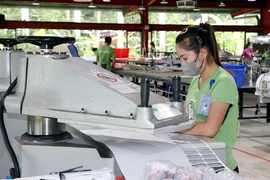
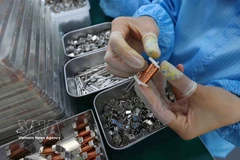
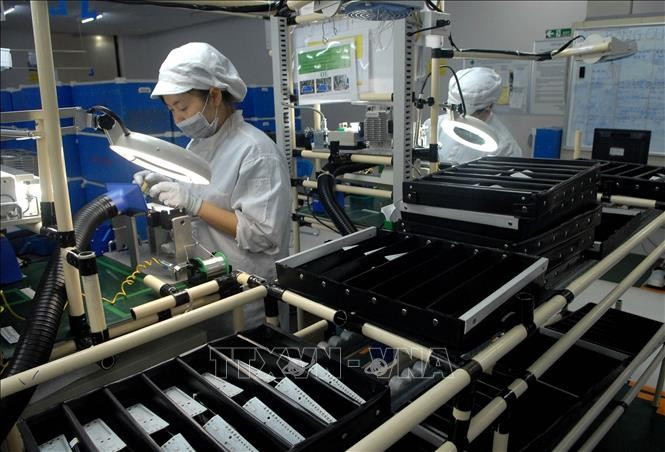
A production line for electronic devices and automotive and motorcycle lighting equipment at Vietnam Stanley Electric Co., Ltd, a Japanese-invested company in Hanoi. (Photo: VNA)

Hanoi (VNA) – As Vietnam strives to become a developing country with modern industry and upper-middle income by 2030 and a high-income, developed nation by 2045, Resolution No. 68-NQ/TW dated May 4, 2025 of the Politburo on private sector development is expected to provide fresh momentum for growth model renewal.

Experts said achieving these goals requires not only rapid expansion but also deeper institutional reform, improved human resources and innovation in development governance.

High growth targets

Dr. Ly Dai Hung from the Institute of Vietnam and World Economy under the Vietnam Academy of Social Sciences (VASS) noted that the 2030 target is measured by gross national income (GNI) per capita in current US dollars.

According to the World Bank, the upper-middle income threshold ranges from 4,496 USD to 13,935 USD, while Vietnam’s GNI per capita reached about 4,490 USD in 2024. Although the gap is narrowing, crossing the threshold will require sustained high growth over many years.

Since the adoption of the Doi moi (Renewal) process, Vietnam’s highest growth rate was 9.45% in 1995, close to the 10% mark, according to the National Statistics Office. Maintaining an average annual growth rate of around 10% in the coming period would therefore signal a major shift in economic structure and growth drivers.

Hung said the foundation for pursuing this target lies in Vietnam’s strong potential, ongoing economic restructuring and deepening international integration. However, the “window of opportunity” is narrowing as population ageing accelerates, making effective use of the remaining demographic dividend crucial to boosting income and productivity.

To sustain high growth, the investment-to-GDP ratio must remain high. Over the past three decades, the ratio averaged over 32%, supporting annual growth of more than 6%. Yet, meeting new targets will require improved capital efficiency and a shift from expansion to productivity gains.

Human resources are equally decisive, he stressed. Workforce quality determines the economy’s ability to absorb technology and drive innovation. Aligning education and training with market demand is essential to translate resources into tangible growth.

Hung described Resolution 68 as a key policy framework to mobilise and allocate resources more effectively. Removing bottlenecks in institutions, infrastructure and human resources would create a stronger foundation for sustained expansion, he said.

Reforming development governance model

Dr. Nguyen Cao Duc, Deputy Director of the Institute of European and American Studies under VASS, emphasised that reforming the development governance model is central to breakthrough growth.

Amid rapid digital transformation and global volatility, traditional governance approaches are no longer sufficient, he said, proposing a multi-layered integrated model based on “optimal institutional layering” to balance stability and innovation.

The model comprises four functional layers, from ensuring administrative discipline and efficiency to enhancing connectivity and reinforcing the State’s strategic leadership in development.

Vietnam has made progress in consolidating governance foundations through administrative reform, apparatus streamlining and regulatory improvements, contributing to a more favourable business environment and stronger enforcement.

Greater coordination among ministries, sectors and localities would reduce policy fragmentation and improve resource allocation, enabling more synchronised mobilisation of social resources, according to the scholar.

A core feature of the new model is the State’s enabling role. Beyond regulation, it is expected to guide long-term development, foster innovation, promote technology adoption and create conditions for private sector expansion, thereby raising total factor productivity and deepening the growth model.

Duc said Resolution 68 not only sets ambitious targets but also calls for upgrading governance capacity as Vietnam enters a new stage. Initial reforms have laid the groundwork for a more transparent, efficient and data-driven system, enhancing resilience to external shocks.

When governance operates effectively, resources will be better connected, helping lift productivity, strengthen economic resilience and move Vietnam closer to the goal of becoming a high-income developed nation by 2045./.

VNA

See more

An Giang province has set up 10 task forces to conduct inspections of IUU prevention efforts across localities, focusing on preventing any “three Nos” boats that lack proper registration certificates, fishing licences and inspection certifications. (Photo: VNA)

An Giang province tightens IUU control ahead of EC's fifth inspection

Vice Chairman of the provincial People’s Committee Ngo Cong Thuc described the upcoming inspection as an urgent and top-priority task. Authorities from provincial to grassroots levels have mobilised all available resources to implement comprehensive and decisive measures to resolve outstanding problems in IUU prevention and control.

Remittances are an important resource for the economy. (Photo: VNA)

Remittances – Trust capital, a catalyst for development

Chairman of the municipal People’s Committee Nguyen Van Duoc said that with roughly 2.8 million people maintaining direct or indirect ties to the city, the overseas Vietnamese community represents a highly valuable resource in terms of expertise, management experience, technology, finance and international networks.

Delegates at the inauguration ceremony (Photo: VNA)

YADEA inaugurates 100 million USD smart factory in Bac Ninh

YADEA Vietnam on March 1 launched its flagship electric model, the YADEA Osta, tailored for the Vietnamese market, at a ceremony to inaugurate its smart manufacturing plant with over 100 million USD in first-phase investment at Tan Hung Industrial Park in Bac Ninh province.

An image of Hotel Perle D’Orient Cat Ba. (Photo courtesy of Hotel Perle D’Orient Cat Ba)

Investors eye Vietnam's hotel market

Vietnam's hospitality investment market benefits from the country's strategic location, rapidly growing middle class, and government initiatives promoting tourism development.

PM Pham Minh Chinh checks Quang Ngai – Hoai Nhon expressway (Photo: VNA)

PM inspects key transport projects in central region

Inspecting sections passing through Duc Pho and Binh De tunnels, the PM visited and presented gifts to engineers and workers at the construction sites. He expressed appreciation for their dedication, noting that many had forgone family time and worked continuously through the Lunar New Year holiday to accelerate progress and bring the projects to early completion.

A land use rights certificate. (Photo: cafebiz.vn)

Property identification code seen as catalyst for real estate digitalisation

In the long term, the mandatory identification of real estate assets is seen as an essential step toward sustainable development. As data becomes the foundation of market operations, confidence is expected to improve, transaction costs decline and resources be allocated more efficiently, helping Vietnam’s property market move closer to international practices.

The working session between the Ho Chi Minh City People’s Committee and relevant departments, agencies and localities on February 28 (Photo: VNA)

Ho Chi Minh City steps up anti-IUU fishing efforts ahead of EC inspection

Departments and localities were urged to maintain high focus, fully prepare dossiers and data on fleet management, and ensure control of vessels entering and leaving ports, installation and examination of vessel monitoring system (VMS) equipment, seafood traceability and the handling of IUU fishing violations.

A land-rent contract signing between South Korean firm HS Hyosung Quang Nam and the Chu Lai Industrial Zone Authorities on the development of a new polyester curtain fabric plant in Tam Thang Expanded Industrial Park. (Photo courtesy of Da Nang Portal)

RoK's Hyosung to build new plant in Da Nang

HS Hyosung Quang Nam, under Hyosung Group of the Republic of Korea (RoK), has signed a land-rent contract with the Chu Lai Industrial Zone Authorities for an expansion of its investment in central Vietnam, which started with the introduction of its first plant in 2019.

Electronic components are manufactured at the SANYOU VIETNAM Electronic Equipment Co., Ltd. in Tu Ha Industrial Park, Hue city. (Photo: VNA)

Vietnam remains bright spot for FDI inflows: Sputnik

The article said Vietnam attracted its highest level of FDI over the past five years in 2025 and is expected to maintain its appeal in 2026 as international investors regard the country as one of the region’s most promising long-term investment destinations.