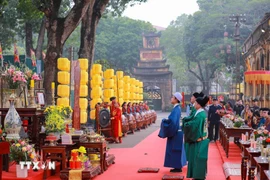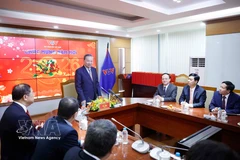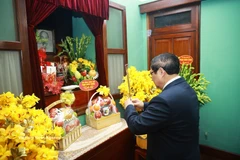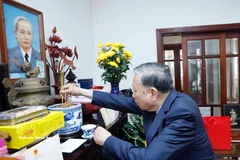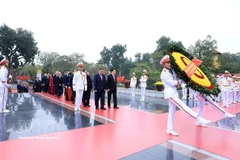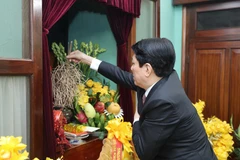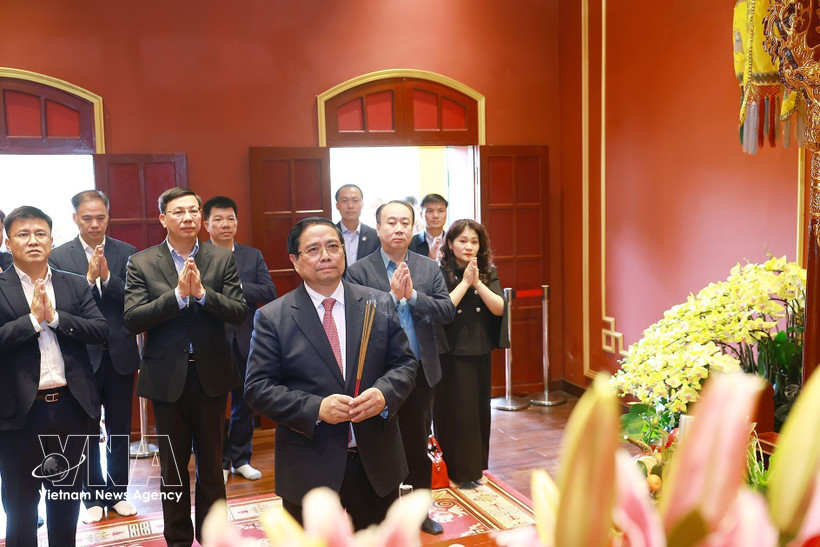
Hanoi (VNA) – Prime Minister Pham Minh Chinh offered incense at Kinh Thien Palace, part of the Thang Long Imperial Citadel in Hanoi, to commemorate kings and those who made contributions to the nation on the morning of February 14, the 27th day of the last lunar month.
Kinh Thien Palace was built in 1428 under the Le dynasty. During the Nguyen dynasty (1802-1945), King Gia Long ordered the construction of a new citadel. The Le-era palace remained the centre of the royal residence complex under the Nguyen, although its scale was reduced. In 1841, the Nguyen dynasty renamed it Long Thien Palace.
At the ceremony, PM Chinh and other delegates prayed for national peace and prosperity, and for the people to enjoy happiness.
Speaking to the staff of the Thang Long–Hanoi Heritage Conservation Centre, the leader commended their efforts in managing, preserving, restoring and promoting the value of the site’s cultural heritage.
Emphasising that the preservation, restoration and promotion of the value of the UNESCO-recognised Thang Long Imperial Citadel is a consistent policy of the Party, the PM called on them to uphold the highest sense of responsibility for the work.
He requested that, alongside state funding, Hanoi in general and the centre in particular mobilise other legal resources to restore, renovate and preserve the site.
The leader also asked for proposals on specific mechanisms and policies, if necessary, to be submitted to the Government for consideration, so that the site will truly stand as a source of pride for the capital city./.
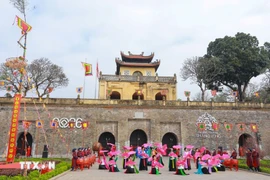
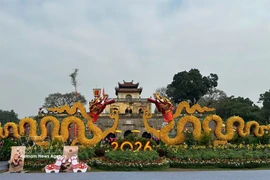
Tet flower street held for first time at Thang Long Imperial Citadel
More than a seasonal attraction, the flower street also functions as a formal cultural venue for receiving ambassadors, their spouses and representatives of diplomatic missions attending the Vietnam Discovery Day 2026 programme. Its linkage with an external event further reinforces the Thang Long Imperial Citadel’s position as a key platform for introducing Vietnam’s cultural identity to international friends.