Russian scholars highlight strategic vision of CPV’s 14th Congress

Professor Vladimir Mazyrin, Director of the Centre for Vietnam and ASEAN Studies, emphasised the significance of Vietnam’s long-term vision. He observed that if the country achieves developed-nation status within the next two decades, it could rank among the world’s top 20 economies by GDP, thereby enhancing its global standing.

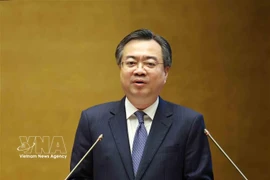
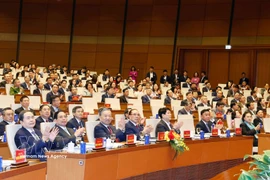
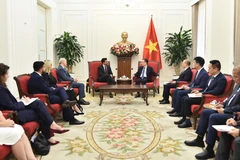
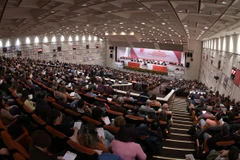
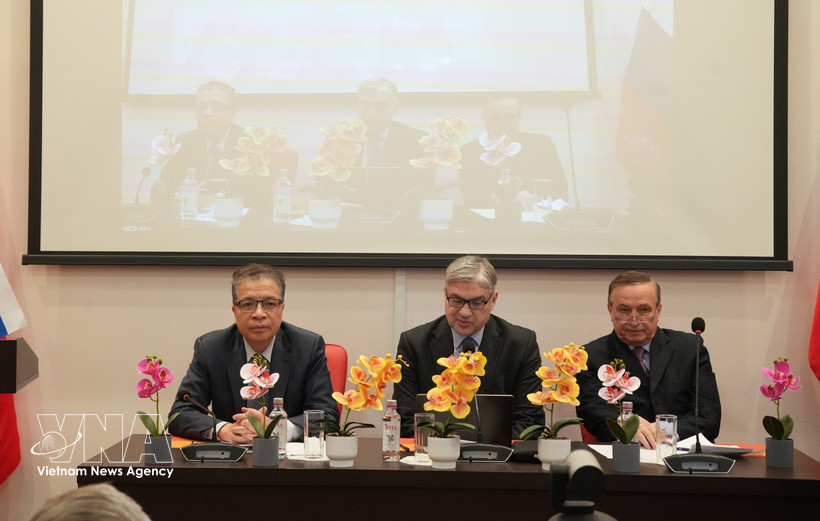
Vietnamese Ambassador to Russia Dang Minh Khoi (L) and other speakers at a plenary session of the international conference on Vietnam. (Photo: VNA)

Moscow (VNA) – The Centre for Vietnam and ASEAN Studies under the Russian Academy of Sciences, in coordination with the Vietnamese Embassy in Russia, held an international conference on Vietnam on February 12–13, during which scholars analysed the outcomes of the recent 14th National Congress of the Communist Party of Vietnam (CPV) through nearly 50 presentations.

In his opening remarks, Ambassador Dang Minh Khoi described the strong turnout, both in person and online, as clear evidence of the Russian academic community’s sustained interest in Vietnam and its development path. He highlighted that the 14th Party Congress adopted concrete development goals for 2030 and 2045, while articulating a long-term strategic vision for the country in a rapidly changing global environment.

Notably, the Congress reaffirmed Vietnam’s consistent foreign policy of independence, self-reliance, multilateralisation and diversification, and proactive international integration. For the first time, Party documents emphasised the foreign policy and international integration, along with defence and security, are key and regular strategic tasks, reflecting an evolution in strategic thinking.

The depth of Vietnam–Russia ties was underscored by congratulations from Russian President Vladimir Putin to Party General Secretary To Lam via a phone call just one day after the Congress. The Russian President affirmed that Russia will continue to work closely with Vietnam to comprehensively strengthen bilateral relations for the benefit of both peoples and contribute to stability and security in the Asia–Pacific region. For his part, General Secretary Lam reiterated that Vietnam has consistently regarded Russia as one of its most important and reliable strategic partners. He expressed a strong desire to further advance friendship and cooperation on the basis of the Comprehensive Strategic Partnership.

On that basis, Ambassador Khoi voiced his hope that the academic community will continue formulating concrete policy recommendations to further consolidate and deepen the Vietnam–Russia Comprehensive Strategic Partnership, thereby contributing to national development, prosperity and the well-being of the two peoples.

Most scholars at the conference focused on the new, outstanding and impactful elements highlighted in the Congress documents. Sergey Uyanaev, Deputy Director of the Institute of China and Contemporary Asia highlighted the Congress’s ambition to elevate Vietnam into a leading high-tech and self-reliant economy.

He noted that Vietnam’s approach combines policy consistency with flexibility, creating conditions for a qualitative leap in development.

Professor Vladimir Mazyrin, Director of the Centre for Vietnam and ASEAN Studies, emphasised the significance of Vietnam’s long-term vision. He observed that if the country achieves developed-nation status within the next two decades, it could rank among the world’s top 20 economies by GDP, thereby enhancing its global standing.

Anton Bredikhin, Doctor of History at the Russian Academy of Sciences, expressed optimism that implementing the Congress’s outcomes will open new opportunities for Vietnam–Russia cooperation. The conference was seen as an important step in generating policy-oriented research to support both countries’ development goals and deepen bilateral ties./.


VNA
See more

Professor Mi Liang, Director of the Centre for Southeast Asian Studies at Beijing Foreign Studies University of China. (Photo: VNA)

14th National Party Congress opens new stage in Vietnam’s growth: Chinese scholar

The professor noted that summarising four decades of experience with Doi Moi is essential for further refining Vietnam’s development model in the coming period. He also suggested that Vietnam should continue strengthening anti-corruption efforts and preventing negative practices and moral degradation among officials to ensure the sustainability of the reform process.

Prime Minister Pham Minh Chinh speaks at a meeting with ministries, agencies and the energy security task force in Hanoi on March 10, 2026. (Photo: VNA)

PM orders no energy shortages under any circumstances

Pham Minh Chinh chaired a meeting with ministries, agencies and the national energy security task force to discuss measures to ensure a proactive energy supply for socio-economic development and support double-digit growth targets amid mounting tensions in the Middle East affecting global energy supply chains.

Vietnamese Minister of Foreign Affairs Le Hoai Trung (C) holds phone talks with his Korean counterpart Cho Hyun on March 10 (Photo: VNA)

Vietnam, RoK seek to boost all-around cooperation

Vietnam consistently attaches great importance to its relationship with the RoK and wishes to further deepen bilateral cooperation in a substantive and effective manner across fields, Minister of Foreign Affairs Le Hoai Trung stated.

Khanh Hoa Party Secretary Nghiem Xuan Thanh inspects election preparations at Polling Station No. 2 in Bac Nha Trang ward. (Photo: VNA)

Khanh Hoa gears up for elections, facilitates voting for tourists

Thanh requested a thorough review of voter lists to ensure all eligible voters can exercise their rights. Polling teams were asked to establish advisory groups to assist voters when needed. He also stressed the need to make arrangements so that tourists visiting Nha Trang can cast their ballots in accordance with regulations.

Party General Secretary To Lam speaks at the conference to announce the Politburo’s decision to establish the Central Theoretical Council for the 2026–2031 tenure. (Photo: VNA)

Central Theoretical Council for 2026-2031 term established

The Party chief noted that in recent years the council has made significant contributions to the Party’s theoretical research and development, particularly in clarifying the path toward socialism in Vietnam and contributing to the preparation of major Party documents, including those presented at national Party congresses.

An overview of the press briefing in Hanoi on March 10 to introduce the 10th Vietnam–China Border Defence Friendship Exchange. (Photo: VNA)

Tenth Vietnam–China border defence friendship exchange to feature innovations

Scheduled for March 18–19 in Quang Ninh province of Vietnam and China’s Guangxi Zhuang Autonomous Region, the exchange aims to realise high-level common perceptions between the two Parties and countries on deepening substantive defence cooperation, strengthening friendship and solidarity, and promoting practical collaboration among border protection forces, local authorities and people in border areas, thereby contributing to building a border of peace, friendship, stability, cooperation and development.

Professor Carl Thayer from the Australian Defence Force Academy at the University of New South Wales speaks to the Vietnam News Agency (VNA)'s resident correspondent in Sydney. (Photo: VNA)

Australian expert hails performance of 15th NA, People’s Councils at all levels

During the 15th term, NA deputies raised a number of critical issues with government ministers during question time regarding environmental protection, land administration, and food safety. Deputies were particularly engaged during discussions on amendments to the 2013 Constitution and the Law on the Organisation of Local Administration.