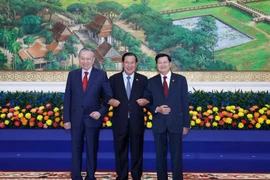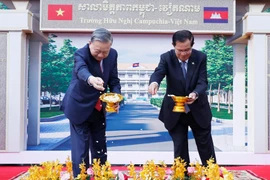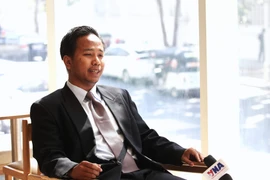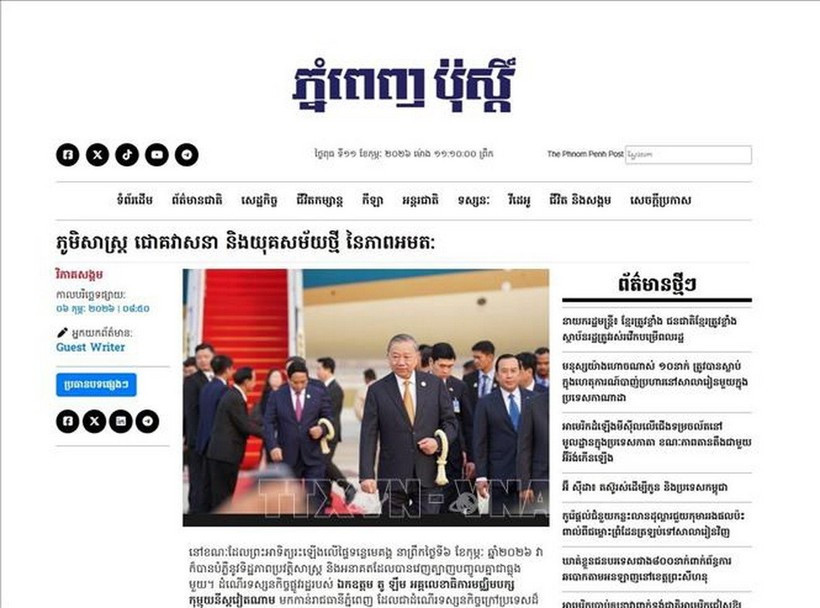
Phnom Penh (VNA) – After General Secretary of the Communist Party of Vietnam Central Committee To Lam and a high-level Vietnamese delegation visited Cambodia on February 6, Phnom Penh Post featured a commentary by Assoc. Prof. Dr Neak Chandarith, Director of the Institute for International Studies and Public Policy at the Royal University of Phnom Penh, highlighting the importance of the visit for shaping bilateral relations in the new context.
According to the Cambodian scholar, the visit goes beyond conventional diplomatic protocol, representing a new strategic turning point in what he described as the “everlasting era of neighbourliness” or “enduring friendship.” He noted that amid evolving regional and global geopolitical dynamics, Vietnam–Cambodia relations should continue to be strengthened on the foundation of “special solidarity,” “brotherhood”, and “traditional friendship.”
The author highlighted how close and naturally connected the two countries are, noting that the stability and growth of one directly impacts the other. As a result, strengthening overall cooperation is seen as a key move for securing the long-term interests and sustainability of both nations.
He also stressed that the parties, governments, and relevant agencies on both sides should uphold their responsibilities to their people, especially the younger generation and future leaders, while further consolidating mutual trust to advance bilateral ties to a new stage.
In this spirit, the scholar underscored that political trust between the Politburo of the Communist Party of Vietnam and the Standing Committee of the Cambodian People’s Party (CPP) is a key factor enabling the two countries to respond effectively to emerging challenges.
He added that strengthening strategic connectivity among Cambodia, Vietnam and Laos would help reinforce regional solidarity and maintain the central role of the Association of Southeast Asian Nations (ASEAN) in the regional architecture.
On the economic front, the Cambodian expert said the shift toward more substantive cooperation is being driven by increasingly deep economic integration between the two countries. Vietnam’s target of achieving an average GDP growth of 10% or higher during the 2026–2030 period, set at the 14th National Congress of the Communist Party of Vietnam, is expected to serve as an important growth driver for the region. In addition, Vietnam’s efforts to accelerate digital transformation and industrialisation are anticipated to generate spillover benefits for Cambodia through market expansion and stronger economic connectivity.
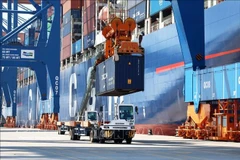
He also noted that enhanced cooperation through infrastructure, logistics and trade connectivity projects not only provides tangible evidence of the “everlasting friendship” between the two countries but also strengthens supply chains and facilitates cross-border commerce. Efforts to raise bilateral trade turnover to 20 billion USD in the coming years are seen as a concrete step to unlock cooperation potential, alongside plans to develop the shared border into a “smart border.”
Concluding the article, the author stressed that deepening substantive cooperation will enable Vietnam and Cambodia to maintain control over their own destinies and move toward a stable and prosperous future for the benefit of their people a well as for peace and development in the region./.