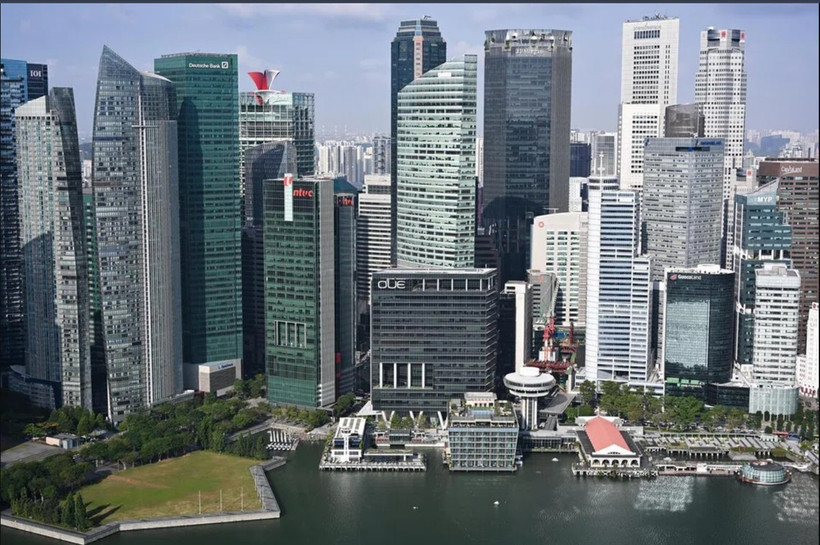
Singapore (VNA) – Singapore’s Ministry of Trade and Industry (MTI) has upgraded the city-state’s full-year economic growth forecast for 2026 to 2–4%, following stronger-than-expected economic performance in the fourth quarter of 2025, the revised projection marks a notable increase from the previous forecast of 1–3%.
The adjustment came after Singapore’s gross domestic product (GDP) expanded by 6.9% year-on-year in the fourth quarter of 2025. The full-year growth estimate for 2025 was also raised to 5% from an earlier projection of 4.8%, while the 2024 figure was revised up to 5.3% from 4.4%. The last time the Singaporean economy recorded higher growth was in 2021, when it rebounded strongly from the COVID-19 pandemic with a 9.8% expansion.
Economic growth in 2025 was mainly driven by the manufacturing, wholesale trade, and finance and insurance sectors. Strong global demand for artificial intelligence (AI)-related electronics supported robust expansion in the electronics industry, including manufacturing as well as machinery, equipment and supplies for wholesale trade.
Most analysts believe that growth momentum from the wave of AI investment will continue. Major global technology firms have recently announced plans to invest more than 660 billion USD in AI infrastructure in 2026, ensuring sustained demand for electronic hardware such as semiconductors, one of Singapore’s key export products. Meanwhile, the finance and insurance sector recorded broad-based growth across segments, supported by generally favourable financial conditions and a relatively low interest rate environment.
MTI noted that its previous forecast, released in November 2025, had assumed slower growth in major economies due to the impact of US tariff measures. However, global economic performance has since exceeded expectations, with most major economies posting stronger-than-anticipated growth in the fourth quarter of 2025.
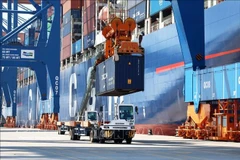
Global trade activity has remained resilient despite US tariffs, reflecting lower effective tariff rates than initially announced, supply chain adjustments, and a surge in AI-related exports that helped sustain trade flows.
The ministry expects the strong growth momentum seen at the end of last year to carry into 2026. Continued investment in AI, expansionary fiscal policies in major economies such as the US, Germany and Japan, and supportive global financial conditions are also expected to underpin global economic growth in the coming quarters./.