Malaysia positions vocational training as pillar of national education system

The National Education Blueprint (RPN) 2026-2035 was launched by Prime Minister Datuk Seri Anwar Ibrahim on Jan 20 in Putrajaya and is jointly led by the Ministry of Higher Education (KPT) through the Malaysia Higher Education Blueprint 2026-2035 and the Ministry of Education through the Malaysia Education Blueprint 2026-2035.

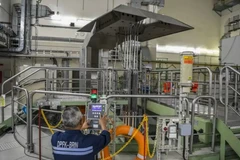
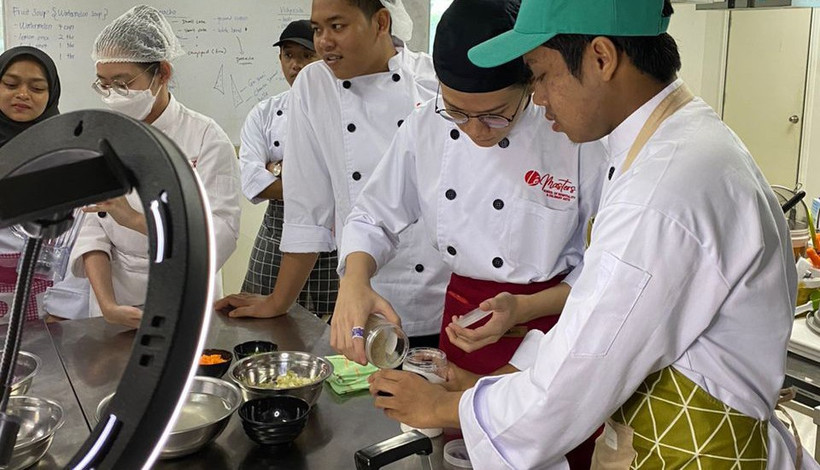
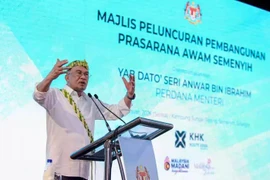
Malaysia positions vocational training as pillar of national education system. (Photo: studymalaysia.com)

Kuala Lumpur (VNA) - The Malaysian Government is identifying Technical and Vocational Education and Training (TVET) as a core pillar of the national education system to develop a highly skilled workforce capable of meeting the demands of the future economy.

The National Education Blueprint (RPN) 2026-2035 was launched by Prime Minister Datuk Seri Anwar Ibrahim on Jan 20 in Putrajaya and is jointly led by the Ministry of Higher Education (KPT) through the Malaysia Higher Education Blueprint 2026-2035 and the Ministry of Education through the Malaysia Education Blueprint 2026-2035.

The key mechanism to achieve the objective is the introduction of the Malaysian Learning Matrix at Year Four and Form Three levels, which enables students’ potential and talents to be identified at an earlier stage. This allows selection into Vocational Colleges, the Upper Secondary Vocational Programme (PVMA) and the Upper Secondary School Industry Apprenticeship Programme (PIMA) to be carried out more systematically, based on students’ genuine abilities rather than chance.

The skills emphasised under the RPN go beyond basic competencies, focusing instead on practical and technical skills that are forward-looking and aligned with future industry needs. These skills require students to operate at the highest levels of thinking, as outlined in Bloom’s Taxonomy, particularly the ability to create innovative and effective solutions to complex problems.

"This is the true spirit of TVET education...one that is application-driven, innovation-focused and oriented towards employability," Dr Muhamad Afzamiman Aripin, a senior lecturer at the Department of Advanced TVET, Faculty of Educational Sciences and Technology, Universiti Teknologi Malaysia (UTM), was quoted by Bernama news agency as saying.

Looking ahead to the 2035 target, Muhamad Afzamiman said Malaysia must prepare through three key phases: reshaping societal perceptions to elevate the prestige of TVET, expanding access to support systems, and strengthening graduate employability through close collaboration with industry.

With the integration of TVET into the mainstream via the Learning Matrix and its early introduction at the primary school level, Malaysia is laying the foundation for a generation that is agile, skilled and resilient in facing increasingly complex global challenges, he said./.
VNA

See more

Indonesia steps up protection of national parks

Indonesia steps up protection of national parks

The President's Special Envoy for Climate and Energy Hashim Djojohadikusumo said the additional personnel will be deployed to 57 national parks currently assessed as having weak security and facing strong pressure from illegal activities.

TikTok confirms long-term investment in Thailand

TikTok confirms long-term investment in Thailand

TikTok confirmed long-term investment plans in Thailand valued at more than 270 billion THB (8.56 billion USD) and outlined proposals to support small and medium-sized enterprises by improving market access and income generation.

Malaysia’s national energy group steps up domestic investment

Malaysia’s national energy group steps up domestic investment

Malaysia's Petroliam Nasional Bhd (PETRONAS) has announced that it aims to maintain domestic production at around two million barrels of oil equivalent per day in the next three years by continued investment in exploration, deepwater development and enhanced oil recovery.

Indonesia moves ahead with 7 GW nuclear power project

Indonesia moves ahead with 7 GW nuclear power project

Over the next 10 years, the Indonesia government is targeting the construction of 70 GW of new power generation capacity, with the majority of the portion coming from new and renewable energy sources, Hashim stated.

A screenshot of the article published by the Vientiane Mai newspaper.

Lao media highlights historic significance of Vietnamese Party leader’s visit

The Lao media described the visit as a diplomatic event of historic significance, marking an important strategic milestone in advancing the great friendship, special solidarity, comprehensive cooperation and strategic cohesion between the two countries into a new stage of more substantive and sustainable development.

The Vietnam–Malaysia–Singapore (VMS) offshore wind initiative is expected to have a capacity of up to 2,000 MW. (Photo: VNA)

Advancing ASEAN cross-border power grid links

With coherent policies, advanced technologies and adequate financing in place, ASEAN partners voiced confidence in building a secure, clean and competitive energy future for the region.

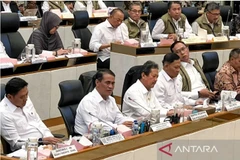
Indonesian Agriculture Minister Andi Amran Sulaiman (second from left) attends a working meeting with House of Representatives (DPR) Commission IV in Jakarta on February 3, 2026. (Photo: ANTARA)

Indonesia ensures secure food stocks for Eid al-Fitr holidays

The Ramadan fasting period, estimated to fall between February and March 2026 with Eid al-Fitr around March 20 or 21, is a momentum for the government to ensure sufficient supply and nationally stable prices for the public, said an Indonesian official.

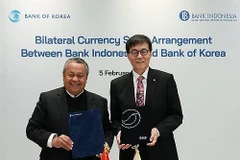
Bank of Korea (BOK) Gov. Rhee Chang-yong (R) and his Indonesian counterpart, Perry Warjiyo, pose for a photo during a signing ceremony for the renewal of the RoK-Indonesia currency swap arrangement in Seoul on February 5. (Photo: provided by the BOK)

RoK, Indonesia to launch cross-border QR payment system

The Bank of Korea (BOK) announced on February 4 that the Republic of Korea (RoK) and Indonesia will roll out a cross-border QR code–based payment system from April, aiming to facilitate cashless payments and travel between the two countries, according to Yonhap News Agency.

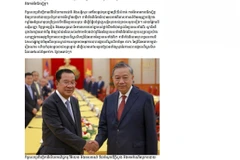
The article on Kampuchea Thmey Daily (Photo: VNA)

Cambodian media highlight upcoming visit by Vietnamese Party leader

In a pre-visit report, the Cambodian News Agency (AKP) stated that General Secretary Lam will pay a state visit to Cambodia on February 6 at the invitation of King Norodom Sihamoni. Following the official welcome ceremony, the King will meet with and host a state banquet in honour of the Vietnamese Party leader and his delegation at the Royal Palace. Queen Mother Norodom Monineath Sihanouk is also expected to receive General Secretary Lam.

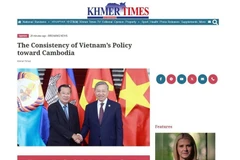
Entitled “The Consistency of Vietnam’s policy towards Cambodia,” the article writes Vietnam regards relations with neighbouring countries as a top priority in its foreign policy. (Photo: VNA)

Cambodian media highlights Vietnam’s consistent foreign policy

Vietnam has consistently reaffirmed its foreign policy of independence, self-reliance, peace, cooperation, and development, as well as diversification and multilateralisation of international relations. Within this framework, relations with neighboring countries, especially Cambodia and Laos, are always identified as top priorities with long-term strategic significance.

Indonesian Coordinating Minister for Economic Affairs Airlangga Hartarto (Photo: scmp.com)

Indonesia commits to accelerating financial reform

Indonesian authorities said they are preparing additional measures to support the market, including changes to the ownership structure of the stock exchange and an increase in the ceiling for insurers’ capital allocation to equities.

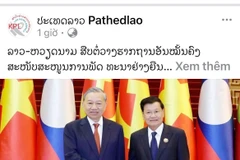
An article on Pathet Lao (Photo: VNA)

Lao media highlight historic significance of Vietnamese Party chief's visit

Articles on the electronic editions of Pathet Lao of the Lao News Agency (KPL), and the Lao Public Security newspaper described the visit as vivid evidence of the close bonds, special attention and personal rapport between General Secretary Lam and other Vietnamese leaders, and General Secretary of the Lao People’s Revolutionary Party (LPRP) and President of Laos Thongloun Sisoulith and other Lao leaders.