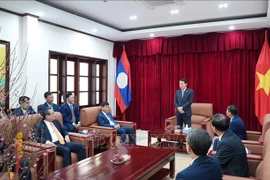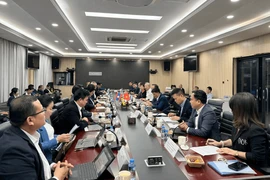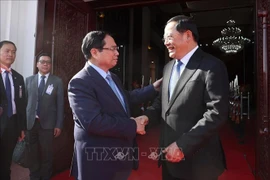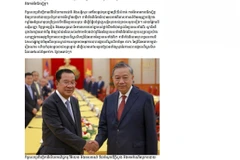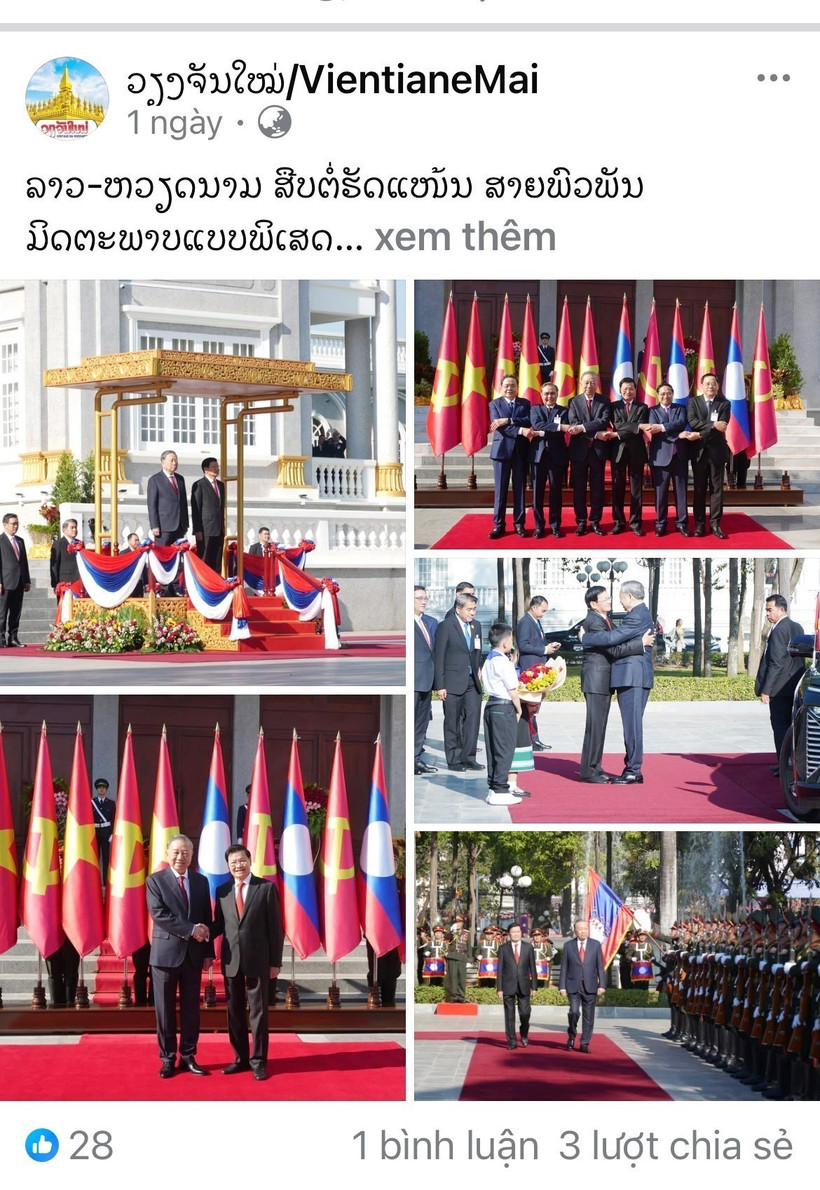
Vientiane (VNA) – Lao media outlets on February 5 and 6 widely covered the state visit to Laos by General Secretary of the Communist Party of Vietnam (CPV) To Lam and a high-level delegation at the invitation of General Secretary of the Lao People's Revolutionary Party (LPRP) and President of Laos Thongloun Sisoulith.
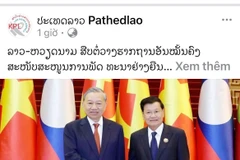
Major newspapers and media organisations, including Pasaxon - the organ of the Lao People’s Revolutionary Party, Pathetlao, published by the Lao News Agency, the English-language Vientiane Times, the Lao People’s Army newspaper Kongthap, the Public Security newspaper, Vientiane Mai, and Lao National Radio – reported extensively on the activities of the Vietnamese delegation. The Lao media described the visit as a diplomatic event of historic significance, marking an important strategic milestone in advancing the great friendship, special solidarity, comprehensive cooperation and strategic cohesion between the two countries into a new stage of more substantive and sustainable development.
Reporting on the welcoming atmosphere in Vientiane, Vientiane Mai wrote that the affection shown by the Lao people towards the Vietnamese leader went beyond diplomatic protocol, reflecting the bond of “brothers who once shared the same trenches and ideals”. The agreement by both sides to begin preparations for the Vietnam-Laos and Laos-Vietnam Friendship and Solidarity Year 2027, commemorating the 65th anniversary of diplomatic relations and the 50th anniversary of their Treaty of Amity and Cooperation, was described as an opportunity to further strengthen ties between the two countries' people.
Pasaxon emphasised that the special solidarity is an objective historical reality, describing the visit as a resounding success that left a deep imprint on the political and diplomatic life of both countries. The newspaper noted that the Vietnamese leader’s extensive talks and meetings in Laos demonstrated a rare level of political closeness in contemporary international relations. The visit, it wrote, was not merely a political alliance but a source of momentum and vitality for the cause of national construction and defence in both countries.
According to the paper, one of the visit’s most significant outcomes was the high level of consensus in both perception and action between the leaders of the two Parties and countries. This strategic coordination reflects both comradeship and shared development goals of improving people’s livelihoods and strengthening socio-political foundations amid increasingly complex regional developments.
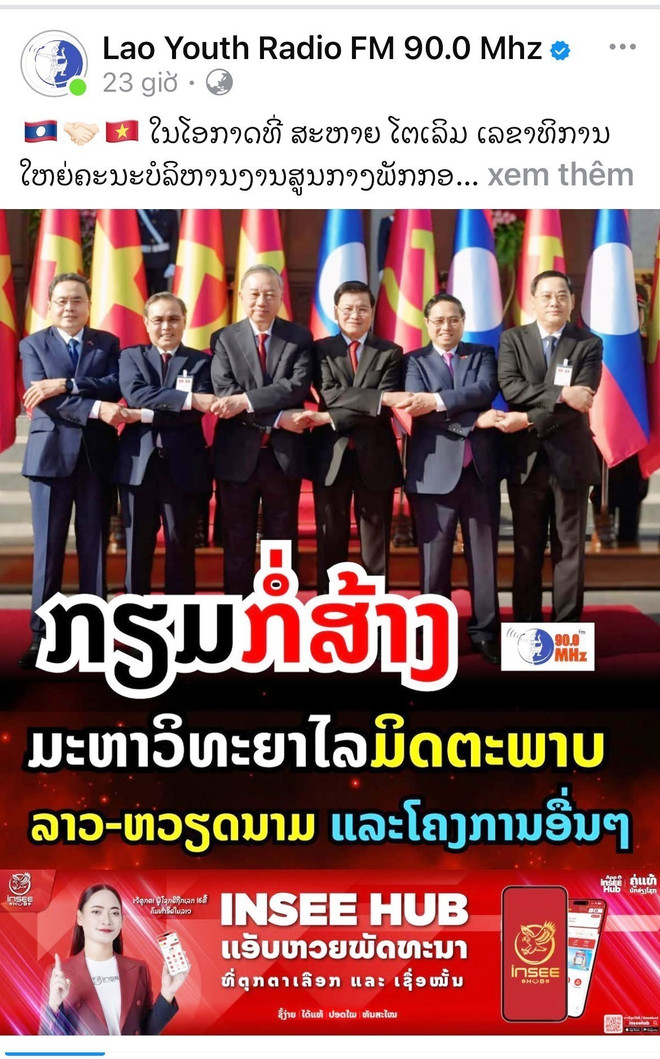
Meanwhile, Pathetlao described the visit as a “lodestar” for practical cooperation, noting that the concept of “strategic cohesion” has taken deeper root and been translated into reality. Linked visions, development policies and infrastructure cooperation have become a firm foundation of bilateral ties. The publication cited Party General Secretary To Lam as recalling the two nations’ solidarity during struggles for independence and stressing the importance of continued cooperation in the new development phase.
The publication also highlighted five key areas of cooperation drawing public attention during the visit: political cooperation through regular high-level exchanges and experience-sharing in Party-building and socio-economic governance; defence and security cooperation as a pillar of political stability and building a peaceful, friendly border; economic cooperation aimed at breakthroughs in trade and investment commensurate with the special relationship; cultural and educational cooperation as a long-term foundation focused on human resource development; and major projects to translate political commitments into tangible results.
The Vientiane Times gave prominent coverage to strategic infrastructure projects, praising Vietnam’s support for Laos in realising its ambition to transform from a landlocked country into a connected nation.
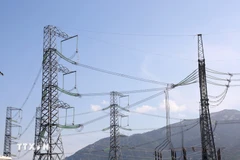
The Lao media also reported extensively on six important documents signed during the visit, including an agreement to build the Laos-Vietnam Friendship University in Laos, alongside priority infrastructure projects such as the Vientiane–Thakhaek–Vung Ang railway, which will facilitate trade and provide Laos with access to the sea; a 500kV transmission line linking northern Laos and northern Vietnam; and a more than 200-kilometre Laos-Vietnam Friendship Road along the border area on the Lao side.
These projects were described as having strong spillover effects, bringing not only economic benefits but also enhancing the self-reliance of both economies and supporting the goal of raising bilateral trade to 5 billion USD in the near future.
The Lao National Radio reported that public opinion in Laos was particularly impressed by the fact that more than 16,000 Lao students are currently studying in Vietnam, describing this as the most sustainable investment for the future. Generations of students and officials trained in Vietnam, it said, would serve as living bridges ensuring that the flow of bilateral friendship continues naturally across generations.
According to Lao media reports, close coordination between the two sides at multilateral forums such as the Association of Southeast Asian Nations (ASEAN) and the United Nations (UN) has helped raise the international standing of both countries while contributing to long-term peace and stability in the region./.