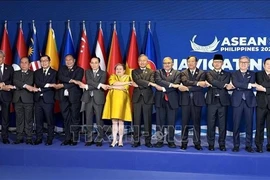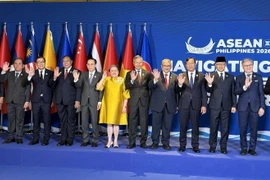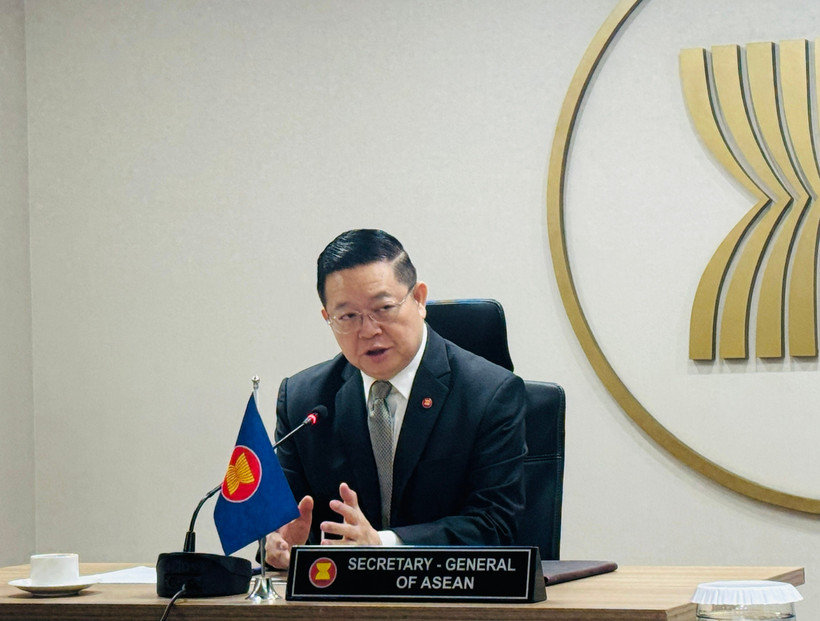
Jakarta (VNA) – The ASEAN Foreign Ministers’ Meeting (AMM) Retreat, which recently concluded in Cebu, the Philippines, reached strong consensus on key strategic priorities aimed at strengthening regional unity and reinforcing the bloc’s central role amid growing regional and global uncertainty, ASEAN Secretary-General Kao Kim Hourn has said.
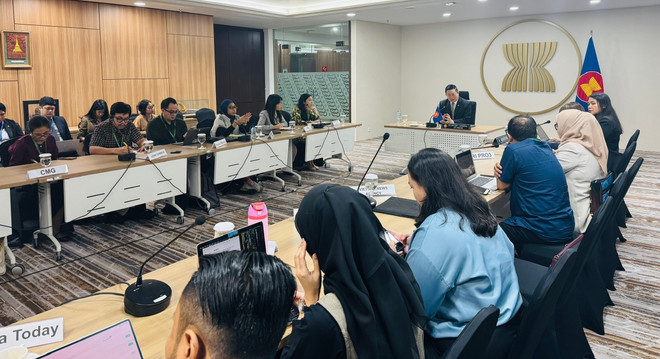
He made the remarks during a media engagement on February 4 at the ASEAN Secretariat headquarters in Jakarta, Indonesia, where he highlighted the outcomes of the meeting and ASEAN’s cooperation in advancing the priorities and objectives of the Philippines during its ASEAN Chairmanship in 2026.
The meeting, he noted, delivered a clear message of action, calling for greater solidarity, coordination and collective responses to regional challenges in an increasingly volatile world.
The Philippines, as ASEAN Chair for 2026, is working to enhance ASEAN centrality by fostering strategic trust through sustained dialogue and adherence to international law, the Secretary-General told the Vietnam News Agency.
This year, Manila’s agenda is structured around three main pillars. The first focuses on peace and security, with particular emphasis on maritime cooperation and efforts to combat transnational crime.
The second pillar seeks to drive economic growth and prosperity through deeper integration. Priorities include strengthening existing ASEAN Economic Community frameworks such as the ASEAN Trade in Goods Agreement (ATIGA), the ASEAN Single Window, and cooperation in the digital economy, with the aim of boosting market connectivity, investment and intra-regional growth.
The third pillar centres on socio-cultural development, with ASEAN placing greater attention on empowering its people, he said. Key issues include the systematic integration of artificial intelligence, youth engagement, and the protection of migrant workers.
During the engagement, the Secretary-General also addressed questions on intra-bloc cooperation and the security challenges affecting the region. He reaffirmed the Five-Point Consensus as the primary framework for resolving the crisis in Myanmar, and touched on peace efforts between Cambodia and Thailand, as well as East Sea-related issues.
He emphasised that, guided by the ASEAN Outlook on the Indo-Pacific (AOIP) and the ASEAN Community Vision 2045, the bloc aims to strengthen a rules-based and resilient regional architecture capable of responding to emerging geopolitical challenges through mutually beneficial strategic cooperation.
Entering the fourth year of his term, Kao said his focus remains on ensuring a smooth transition from the ASEAN Community Vision 2025 towards the initial phase of “ASEAN 2045: Our Shared Future”, particularly as ASEAN marks the 50th anniversary of the Treaty of Amity and Cooperation in Southeast Asia (TAC), a cornerstone of regional peace./.