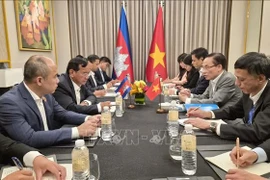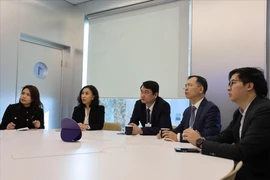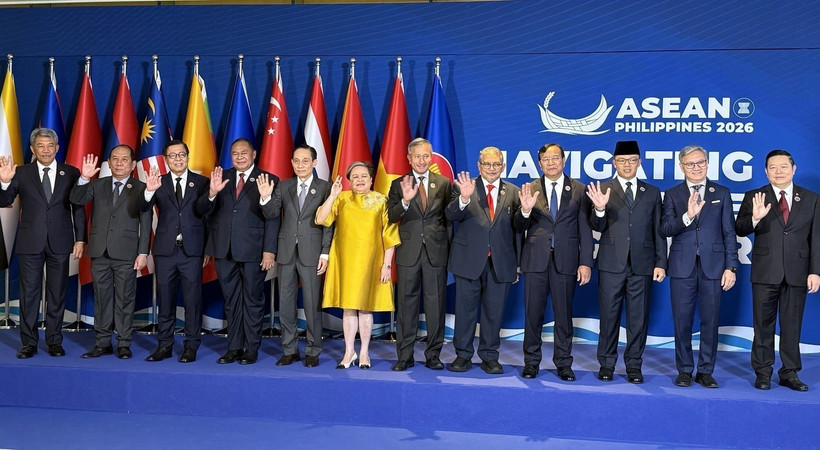
Hanoi (VNA) - Vietnamese Minister of Foreign Affairs Le Hoai Trung joined his counterparts from other ASEAN member countries and the ASEAN Secretary-General at the ASEAN Foreign Ministers’ Retreat (AMM Retreat) that opened in Cebu, the Philippines, on January 29 under the chair of Philippine Secretary of Foreign Affairs Maria Theresa Lazaro.
Addressing the event, Trung briefed participants on the outcomes of the 14th National Congress of the Communist Party of Vietnam, underscoring Vietnam’s consistent policy of strategic autonomy, self-reliance and self-strengthening, inclusive and sustainable development, innovation, digital transformation and green transition, in alignment with the ASEAN Vision 2045.
He affirmed that the Association of Southeast Asian Nations (ASEAN) remains a top priority in Vietnam’s foreign policy and that Vietnam is committed to contributing to a united and resilient ASEAN Community.
Welcoming the Philippines’ 2026 Chairmanship priorities and commending Malaysia’s achievements during its 2025 Chairmanship, the Vietnamese FM stressed the importance of reinforcing ASEAN unity and centrality, upholding international law, multilateralism and ASEAN’s core principles.
In light of rapid and complex regional and global changes, Trung called on ASEAN to proactively adapt with unity, strategic vision and collective action, including reviewing and improving confidence-building, preventive diplomacy and dispute-settlement mechanisms, as well as exploring the establishment of a consultation mechanism among legal advisers on international law.
He highlighted the need to deepen economic integration and innovation, prioritising connectivity in infrastructure, energy and digital domains, harnessing new growth drivers such as green transition and digital transformation and artificial intelligence, accelerating the conclusion of the ASEAN Digital Economy Framework Agreement (DEFA), and strengthening supply chains.
Trung proposed fostering a more people-centred ASEAN Community through enhanced people-to-people exchanges, youth engagement and subregional development.
On external relations, Trung emphasised promoting more substantive and balanced cooperation with partners, ensuring alignment with ASEAN priorities while leveraging partners’ strengths. In this regard, he affirmed Vietnam’s active role as Coordinator for ASEAN-New Zealand and ASEAN-UK relations for 2024–2027, including co-organising activities to mark the fifth anniversary of the ASEAN–UK Dialogue Partnership in 2026.
The Vietnamese FM reiterated ASEAN’s central role in maintaining a peaceful and stable environment for development.
On the East Sea, he reaffirmed commitment to building a region of peace, stability and cooperation and to advancing the Code of Conduct in the East Sea (COC) negotiations consistent with international law, particularly the 1982 UN Convention on the Law of the Sea (UNCLOS).
Regarding the Myanmar situation and Cambodia–Thailand tensions, he reiterated Vietnam’s support for ASEAN’s efforts under the Five-Point Consensus and expressed Vietnam's readiness to cooperate with ASEAN to support Cambodia and Thailand in quickly restoring peace and stability and providing humanitarian assistance to affected people.
On this occasion, the minister announced that Vietnam will host the third ASEAN Future Forum (AFF) 2026 in the second quarter this year, thanked ASEAN members for their support of previous forums, and invited the nations to send high-level representatives to the event.
At the meeting, ASEAN foreign ministers welcomed the Philippines’ 2026 Chairmanship theme, “Navigating Our Shared Future”, and its priorities of strengthening peace and security, expanding corridors of prosperity and promoting people empowerment. They affirmed their support for, and close coordination with the Philippines in implementing these priorities, thereby sustaining regional cooperation and integration and effectively advancing ASEAN Vision 2045.
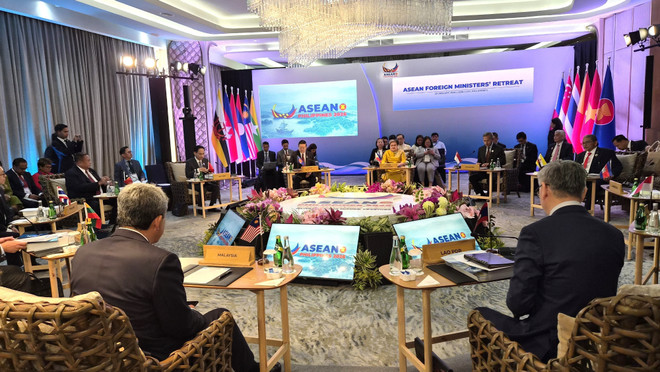
They shared the view that the international and regional situation is undergoing profound changes, marked by intensifying strategic competition among major powers, armed conflicts in various regions and increasingly complex transnational challenges. In this context, they stressed the need for ASEAN to strengthen unity, uphold its centrality, enhance intra-bloc cooperation, and reinforce self-strengthening and strategic autonomy, while deepening relations with partners to expand cooperation space and mobilise resources for ASEAN Community building.
Discussing regional and international issues, including the East Sea, Myanmar, Cambodia–Thailand tensions and emerging challenges, the ministers reaffirmed their commitments to maintaining peace, stability and cooperation in the East Sea and to accelerating efforts to conclude an effective and substantive COC in line with international law, including the 1982 UNCLOS.
They reiterated support for ASEAN-led efforts to address the situation in Myanmar based on the Five-Point Consensus, promote dialogue and reconciliation, and sustain humanitarian assistance, while welcoming Cambodia's and Thailand’s commitment to implementing the ceasefire agreement dated December 27, 2025, and continuing dialogue towards a durable solution consistent with international law and ASEAN's principles.
Also on January 29, on the sidelines of the AMM Retreat, Trung had meetings with his Singaporean counterpart Vivian Balakrishnan and Timor-Leste’s Minister of Foreign Affairs and Cooperation Bendito dos Santos Freitas.
At the meeting with the Singaporean FM, both sides expressed satisfaction with the strong development of the Vietnam–Singapore Comprehensive Strategic Partnership and agreed to effectively implement the 2025–2030 Action Programme, prioritising economic, trade and investment cooperation, including upgrading second-generation Vietnam–Singapore Industrial Parks (VSIP), with a target of 30 VSIPs by 2026.
Trung welcomed the positive progress in Vietnam–Singapore cooperation in emerging growth areas, particularly clean energy, carbon credits, science and technology, and digital transformation. He proposed the two sides work closely to refine the legal framework, creating favourable conditions for businesses to accelerate the implementation of renewable energy projects and the export of clean electricity to Singapore, while promoting defence and security cooperation as a substantive pillar of the newly upgraded partnership.
Concurring with Trung’s proposals, Balakrishnan noted that amid increasingly complex global geopolitical developments, the two countries should enhance coordination and build a peaceful, stable and prosperous region. He also highlighted the need to create positive synergy in 2027, when Vietnam will host APEC and Singapore will serve as ASEAN Chair. The Singaporean FM expressed his pleasure in accepting an invitation to visit Vietnam in 2026, possibly on the occasion of the ASEAN Future Forum, and invited Trung to pay an official visit to Singapore at a mutually convenient time.
At his meeting with Timor-Leste’s Minister of Foreign Affairs and Cooperation Bendito dos Santos Freitas, both sides expressed satisfaction with the positive progress in bilateral relations and agreed to explore cooperation mechanisms, like a joint committee on economic and trade cooperation or a joint trade subcommittee.
They also agreed to accelerate negotiations and the signing of cooperation agreements, particularly a visa exemption agreement for holders of ordinary passports, to provide a legal framework for more substantive cooperation and elevate the bilateral relations to a new level.
Trung informed Vietnam’s plan and called for Timor-Leste's support for the establishment of a Vietnamese embassy in Dili and creating favourable conditions for Vietnamese enterprises to expand investment, especially in telecommunications, digital technology, energy, oil and gas, fisheries and food processing. He noted that such cooperation will contribute to Timor-Leste’s socio-economic development and strengthen intra-ASEAN economic connectivity.
Agreeing with Vietnam’s proposals, the Timor-Leste minister once again expressed appreciation for Vietnam’s consistent and practical support throughout Timor-Leste’s accession process to ASEAN, and voiced his hope for continued assistance from Vietnam to help Timor-Leste participate more effectively in ASEAN cooperation mechanisms and prepare for its future ASEAN Chairmanship.
Earlier, on January 28, Deputy Minister of Foreign Affairs Dang Hoang Giang, Head of ASEAN SOM Vietnam, attended the ASEAN Senior Officials’ Meeting to finalise preparations for the AMM Retreat./.