Vietnam hopes for stronger cooperation with European Union: PM

Welcoming EC President Costa, PM Chinh said the visit is of particular significance as Vietnam and the EU have just elevated their relations to a Comprehensive Strategic Partnership. He described the upgrade as a historic milestone reflecting a new stage of development in the bilateral ties and conveying a strong message in support of cooperation at the regional and global levels.

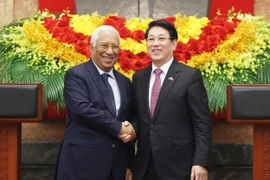
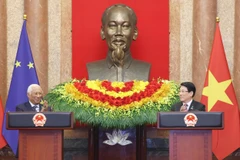
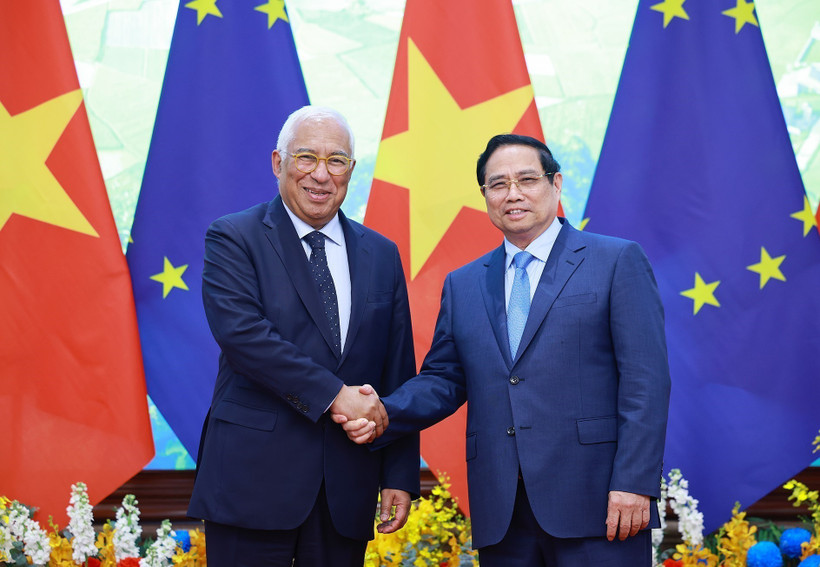
Prime Minister Pham Minh Chinh (R) meets with President of the European Council (EC) António Costa in Hanoi on January 29. (Photo: VNA)

Hanoi (VNA) - Prime Minister Pham Minh Chinh had a meeting in Hanoi on January 29 with visiting President of the European Council (EC) António Costa, during which he expressed his hope for stronger cooperation between Vietnam and the European Union (EU).

Welcoming EC President Costa, PM Chinh said the visit is of particular significance as Vietnam and the EU have just elevated their relations to a Comprehensive Strategic Partnership. He described the upgrade as a historic milestone reflecting a new stage of development in the bilateral ties and conveying a strong message in support of cooperation at the regional and global levels.

The Government leader affirmed that Vietnam highly evaluated the EU’s global role and standing and wished to further strengthen relations with the bloc, one of Vietnam’s leading partners in economy, trade and investment, as well as a pioneer in promoting sustainable development, green growth, circular economy, digital transformation, clean energy and free trade.

Briefing his guest on Vietnam’s socio-economic development, PM Chinh noted that after 40 years of Doi moi (Renewal), Vietnam has risen from a war-ravaged, underdeveloped country to a developing economy with a GDP of around 510 billion USD, ranking 32nd globally. Vietnam’s exports have reached nearly 500 billion USD, supported by 17 free trade agreements with international partners, placing the country among the world’s top 20 economies in terms of trade scale and investment attraction.

In 2025 alone, Vietnam’s GDP growth exceeded 8.02%, among the highest in the region and the world, while macroeconomic stability was maintained, inflation kept under control and major balances ensured. GDP per capita reached 5,026 USD, officially placing Vietnam in the group of upper-middle-income countries, while the national happiness index rose by 37 places over five years.

The PM underlined that following the 14th National Party Congress, Vietnam has entered a period of acceleration and breakthrough in socio-economic development, focusing on transforming its growth model, building a socialist rule-of-law State, and steadfastly pursuing a foreign policy of independence, self-reliance, self-strengthening, peace, cooperation and development, multilateralisation and diversification of external relations, together with the “four no’s” defence policy.

Regarding the implementation of the Vietnam-EU Comprehensive Strategic Partnership, PM Chinh proposed both sides increase high-level exchanges and dialogue, make full use of existing cooperation mechanisms, and swiftly implement the Joint Statement to ensure the partnership develops in a substantive, effective and in-depth manner. He reaffirmed Vietnam’s commitment to further improving the investment climate to facilitate foreign investors, including EU businesses, to operate in the country.
vna-potal-thu-tuong-pham-minh-chinh-hoi-kien-chu-tich-hoi-dong-chau-au-antonio-costa-8558310.jpg
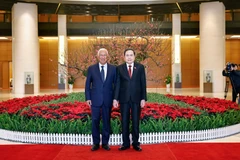
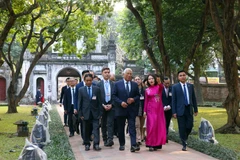
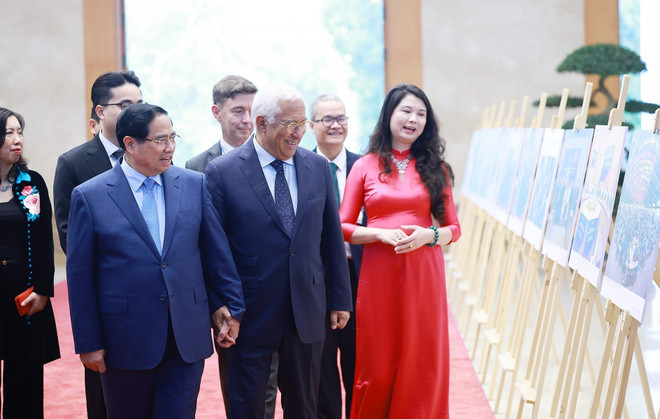
Prime Minister Pham Minh Chinh and EC President António Costa visit a photo exhibition on Vietnam-EU relations held by the Vietnam News Agency. (Photo: VNA)

Thanking the EU for its support for Vietnam’s sustainable fisheries development, the PM urged the union to soon dispatch an inspection delegation to Vietnam to conduct an objective assessment of Vietnam’s serious and effective efforts against illegal, unreported and unregulated (IUU) fishing, taking into account the newly upgraded Comprehensive Strategic Partnership, with a view to promptly lifting the “yellow card” imposed on Vietnamese seafood.

He also called on the EU to continue supporting Vietnam in modernising and sustainably restructuring its fisheries sector, while creating favourable conditions for the Vietnamese community in Europe to contribute to host societies and promote ties between Vietnam and EU member states.

Congratulating Vietnam on the successful 14th National Party Congress, EC President Costa expressed his strong impression of Vietnam’s comprehensive socio-economic achievements, particularly amid ongoing global and regional uncertainties.

He highly appreciated Vietnam’s long-term development goals and strategies, affirming that Vietnam is an important partner of the EU in the Indo-Pacific region and within ASEAN, while reiterating the EU’s role as a reliable partner committed to accompanying and supporting Vietnam’s development process.

EC President Costa stressed that the establishment of the Comprehensive Strategic Partnership created major opportunities to boost trade, diversify markets and supply chains, develop the maritime economy and promote essential infrastructure development, laying a solid foundation for both sides to work together towards a shared future and stronger bilateral cooperation.

The two leaders agreed to closely coordinate in effectively implementing the EU–Vietnam Free Trade Agreement (EVFTA), accelerating the ratification of the EU–Vietnam Investment Protection Agreement (EVIPA), and promoting cooperation in investment, trade, science and technology, green transition, digital transformation, marine economy, clean energy, and high-quality human resources development.

They pledged to encourage closer links among research institutes, universities and enterprises from both sides to foster innovation ecosystems and enhance Vietnamese firms’ participation in the EU’s high-tech value chains.

Within the ASEAN–EU cooperation framework, the two leaders agreed to step up coordination to advance negotiations on an ASEAN–EU Free Trade Agreement, while effectively harnessing new growth drivers through a balanced and inclusive approach aligned with regional priorities.

Exchanging views on international and regional issues, the two sides shared a common vision of striving for a peaceful and stable environment conducive to sustainable development and shared prosperity.

They reaffirmed their commitments to multilateralism, respect for international law and the peaceful settlement of disputes in accordance with the UN Charter, while underscoring the importance of maintaining peace, stability, freedom of navigation and overflight, and the rule of law in the East Sea as well as the Indo-Pacific region./.
VNA

See more

Leaders of Tay Ninh and the Cambodian provinces of Tbong Khmum, Svay Rieng and Prey Veng at the signing ceremony. (Photo: VNA)

Tay Ninh fosters partnership with three Cambodian localities

Chairman of the People’s Committee of Tay Ninh Le Van Han outlined four key areas of cooperation with the Cambodian localities for the 2026–2030 period - economy; agriculture, fisheries and environmental protection; culture, society and tourism; and border management, border demarcation, and security and order maintenance.

Leaders of both sides sign a joint communiqué on the results of the conference held in Vietnam's central province of Nghe An (Photo: VNA)

Vietnam, Laos map out priorities for border management in 2026–2028

The two sides consented to boost communication and education to raise public awareness, especially among young people and students, about the exemplary traditional ties between the Vietnamese and Lao peoples. These efforts are meant to inspire pride and a sense of responsibility in preserving and promoting this special bond.

Vietnamese Minister of Foreign Affairs Le Hoai Trung (fifth, left) and Foreign Ministers from ASEAN member countries at the AMM Retreat. (Photo: VNA)

Vietnam attends ASEAN Foreign Ministers’ Retreat in Philippines

Trung briefed participants on the outcomes of the 14th National Congress of the Communist Party of Vietnam, underscoring Vietnam’s consistent policy of strategic autonomy, self-reliance and self-strengthening, inclusive and sustainable development, innovation, digital transformation and green transition, in alignment with the ASEAN Vision 2045.

Vietnamese State President Luong Cuong (right) and President of the European Council António Costa chair a joint press conference to brief on the outcomes of their talks. (Photo: VNA)

Vietnam, EU seek to deepen bilateral relations

President Cuong stressed that Vietnam views the EU as one of its key global partners and seeks to deepen bilateral relations, noting that the two sides discussed concrete steps to implement the Vietnam–EU Comprehensive Strategic Partnership and addressed regional and international matters of mutual concern.

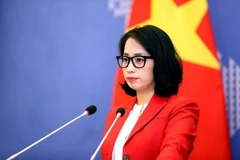
Spokeswoman of the Ministry of Foreign Affairs Pham Thu Hang (Photo: Ministry of Foreign Affairs)

Vietnam welcomes all efforts to bring lasting peace to Gaza Strip: Spokeswoman

Vietnam will actively cooperate with members of the Board of Peace in implementing the peace plan, thereby ending the conflict in the Gaza Strip and promoting sustainable peace in the Middle East on the basis of a two-state solution in line with international law, the UN Charter, and relevant UN resolutions, said Spokeswoman of the Ministry of Foreign Affairs Pham Thu Hang.

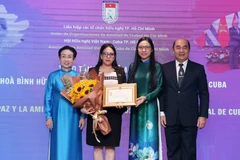
Cuban Consul General in Ho Chi Minh City Ariadne Feo Labrada (second, left) receives the “For peace and friendship among nations” insignia of the Vietnam Union of Friendship Organisations at the event (Photo: VNA)

Cuban Revolution’s victory marked in Ho Chi Minh City

Vietnam and Cuba are brotherly nations that have built a special, sincere and mutually supportive relationship, serving as a model in international relations. She added that the spirit of solidarity has been a binding force enabling the two peoples to overcome injustice and safeguard their right to self-determination and national sovereignty.

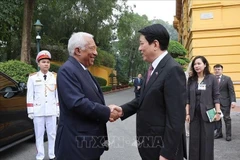
State President Luong Cuong (R) hosts an official welcome ceremony in Hanoi on January 29 morning for President of the European Council (EC) António Costa (Photo: VNA)

Vietnamese State President chairs official welcome ceremony for EC President

The European Union and Vietnam officially established diplomatic relations on November 28, 1990. Since then, their ties have grown positively, with frequent high-level meetings and exchanges, both bilaterally and on the sidelines of multilateral forums. The two sides coordinate closely in international organisations, particularly within the framework of ASEAN–EU, the Asia-Europe Meeting, and the UN.

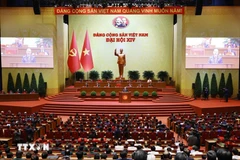
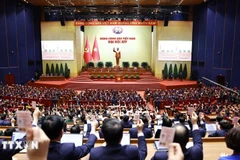
Delegates vote to adopt the resolution of the 14th National Congress of the Communist Party of Vietnam. (Photo: VNA)

14th National Party Congress brings new vitality to international community: French senator

According to Hélène Luc, Honorary Senator and Honorary President of the France–Vietnam Friendship Association, the 14th National Congress of the Communist Party of Vietnam (CPV) demonstrated that the world can indeed choose a different way of living – one based on peaceful coexistence, the promotion of multilateralism, mutual respect among nations, and the use of science, knowledge and social wealth as foundations to serve humanity and human-centred development.

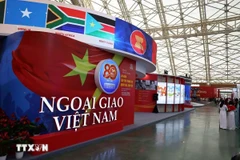
The exhibition space of the Ministry of Foreign Affairs at the exhibition showcasing national achievements, titled "80-Year Journey of Independence – Freedom – Happiness” (Photo: VNA)

Stepping up diplomacy, int’l integration is shared mission of entire Party, people, armed forces: FM

To elevate Vietnam’s comprehensive foreign strategy to a new level, the diplomatic sector will focus on safeguarding a peaceful and stable environment in close coordination with defence, security and other sectors; mobilising external resources, especially through economic and technology diplomacy, to serve socio-economic development and long-term national goals; and enhancing the Party’s and the country’s international standing, enabling Vietnam to play a more prominent role in global politics, the world economy and human civilisation.