Thailand’s House of Representatives election sees 2 million voters cast early ballots

Over 50 million Thai voters will elect a total of 500 members of the House of Representatives, among whom 400 will be elected from local constituencies and the remaining 100 will be allocated to political parties based on the proportion of their popular votes.

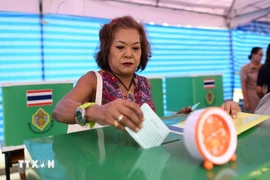
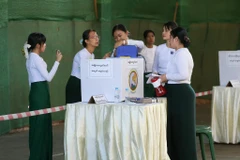
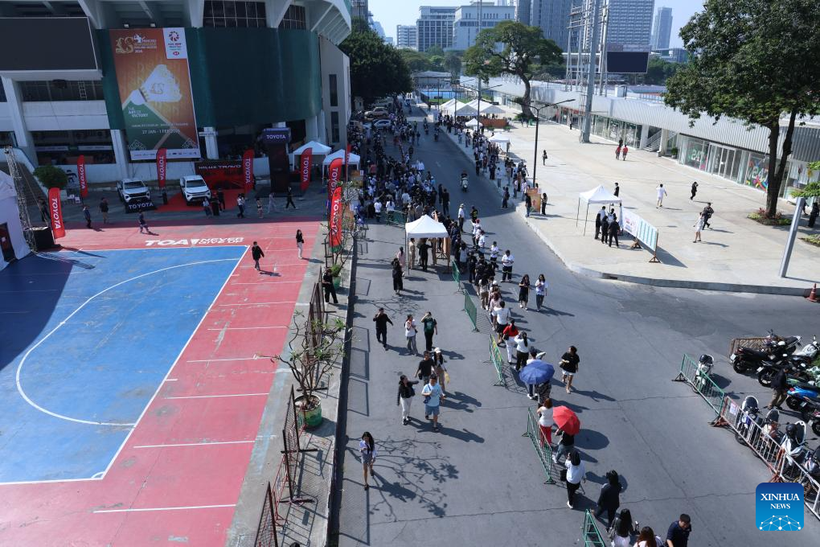
Voters line up to cast their ballots at a polling station during an early voting for Thailand's House of Representatives election at the National Stadium in Bangkok, Thailand, on Feb. 1, 2026. (Photo: Xinhua)

Bangkok (VNA) - Early voting for Thailand's House of Representatives election started at 8:00 (local time) on February 1 with more than 2 million eligible voters unable to cast their ballots on the official polling day of February 8 participating in the process.

Voters taking part in early voting received two ballot papers at polling stations: one to elect a constituency candidate for the House of Representatives, and the other to vote for their preferred political party. The early voting concluded at 17:00 on the same day, and all ballots will be counted together after February 8.

Over 50 million Thai voters will elect a total of 500 members of the House of Representatives, among whom 400 will be elected from local constituencies and the remaining 100 will be allocated to political parties based on the proportion of their popular votes.

According to statistics from the Election Commission of Thailand, 57 political parties are contesting the House seats and have nominated over 90 candidates for the prime ministerial post. The final official vote count results are required to be released no later than April 9. The new parliament must convene a session within 15 days to elect a speaker, after which the House of Representatives will vote to select the new prime minister.

In the run-up to the election, participating parties as well as their candidates for parliamentary seats and the premiership have held campaign rallies across the country, with campaign advertisements lining the streets and alleys.

Pre-election opinion polls by multiple institutions show that the conservative Bhumjaithai Party, led by caretaker Prime Minister Anutin Charnvirakul, is neck-and-neck in support rate with the People's Party, the successor to the progressive Move Forward Party, which won the most seats in the last general election. The populist Pheu Thai Party, backed by the family of former Prime Minister Thaksin Shinawatra, follows closely in the polls.

Mainstream public opinion analysis in Thailand holds that no single party is likely to secure an overwhelming majority of seats, and the formation of the new government will ultimately depend on post-election negotiations between political parties.

Thailand's last general election was held in May 2023, and incumbent caretaker Prime Minister Anutin is the third prime minister since then./.
VNA

See more

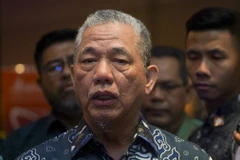
Malaysian Deputy Prime Minister Fadillah Yusof (Photo: themalaysianreserve.com)

Malaysia unveils National Food Security Policy 2030

Fadillah warned that heavy reliance on external supply chains has increased countries’ vulnerability to global economic shocks, stressing that Malaysia therefore requires a long-term and comprehensive policy to ensure food availability, affordability and sustainability.

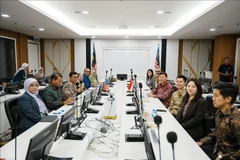
The meeting between Malaysian Minister of Economy Akmal Nasrullah Mohd Nasir and Singaporean Minister for National Development Chee Hong Tat on January 29. (Photo: VNA)

Malaysia, Singapore eye stronger economic ties

The JS‑SEZ was established on January 11, 2024, and a JS‑SEZ agreement was signed between the two countries on January 7, 2025. According to The Business Times, in the first nine months of 2025, the JS‑SEZ pact locked in 68 billion MYR (17 billion USD) in approved investments, marking a staggering leap from the 48.5 billion MYR recorded for the whole of 2024.

The Laos–Thailand Friendship Bridge. (Illustrative photo: laotiantimes.com)

Laos and Thailand strengthen cooperation to ensure border security

At the January 28 meeting, the two sides briefed each other on recent activities and exchanged views on a range of key issues, including ensuring that measures against illegal entry and exit are conducted in accordance with the laws of both countries, preventing illicit drug trafficking, and strengthening close coordination at all levels in border inspections to jointly safeguard security, safety and order in their respective border areas.

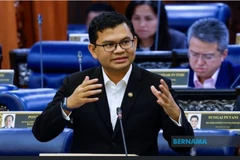
Malaysia's Minister of Economy Akmal Nasrullah Mohd Nasir. (Photo: Bernama)

Malaysia takes proactive steps to address population ageing

Malaysia’s population stood at 34.2 million in 2025 and is projected to rise to 36.4 million by 2030 and 38.3 million by 2035. However, marriage rates have shown a declining trend, falling from 6.6 marriages per 1,000 people in 2022 to 5.7 per 1,000 in 2023. This shift is expected to shorten reproductive periods and further contribute to lower fertility rates.

ADB approves 149 mln USD for sustainable development projects in Laos

ADB approves 149 mln USD for sustainable development projects in Laos

ADB Country Director for Laos Shanny Campbell stated that the bank is committed to partnering with the Lao government to achieve inclusive growth and sustainable development. The projects will focus on strengthening the food system, primary healthcare, skills training for a green economy, and responsible forest management.

Medical staff work in an isolation ward at a hospital in Kochi, India. (Photo: ANI/VNA)

Philippines alerts public on Nipah virus

The Philippines Department of Health noted that proactive border screening measures continue to be enforced to protect the public from the entry of infectious diseases, including online health declarations before travel, on-arrival thermal scanning, and trained observation of travelers at ports of entry.