Malaysia unveils National Food Security Policy 2030

Fadillah warned that heavy reliance on external supply chains has increased countries’ vulnerability to global economic shocks, stressing that Malaysia therefore requires a long-term and comprehensive policy to ensure food availability, affordability and sustainability.

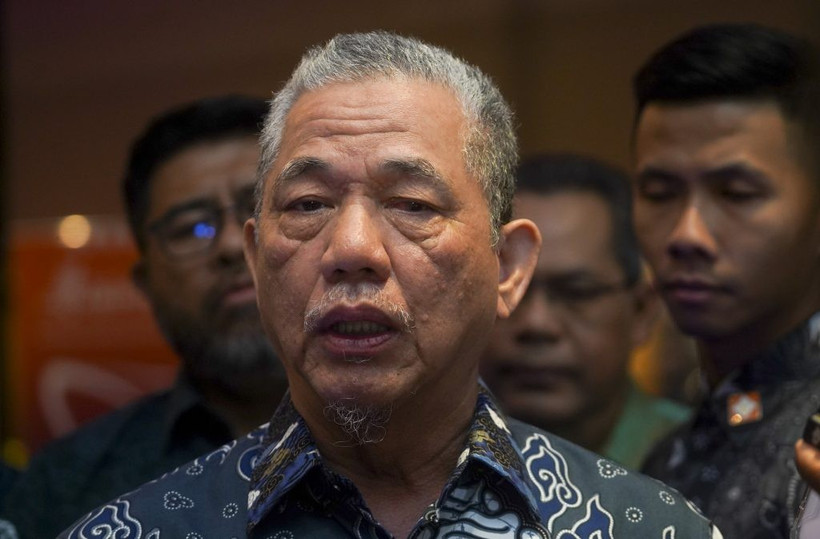
Malaysian Deputy Prime Minister Fadillah Yusof (Photo: themalaysianreserve.com)

Kuala Lumpur (VNA) - Malaysia’s newly-launched National Food Security Policy 2030 (DKMN 2030) is intended to serve as the country’s main framework for strengthening food supply resilience amid climate volatility, geopolitical tensions and disruptions to global supply chains, according to Deputy Prime Minister Fadillah Yusof.

Speaking at the policy launching ceremony, Fadillah said the initiative is not merely a policy document but a strategic direction for Malaysia’s national food security agenda. He noted that the global food system is currently facing what he described as a “perfect storm”, driven by extreme climate events, pest and disease outbreaks, geopolitical conflicts and land-use pressures, all of which have contributed to higher logistics costs and rising food inflation worldwide.

Fadillah warned that heavy reliance on external supply chains has increased countries’ vulnerability to global economic shocks, stressing that Malaysia therefore requires a long-term and comprehensive policy to ensure food availability, affordability and sustainability.

Despite the challenging global environment, he said Malaysia’s food security situation remains relatively stable, with strong self-sufficiency ratios in several key sectors. In 2024, poultry and eggs recorded self-sufficiency ratios of 92.9% and 107%, respectively, while fruits and tropical vegetables also maintained healthy levels, although rice and milk production remained at moderate levels.

However, Fadillah cautioned that current achievements cannot guarantee future security, noting that DKMN 2030 is designed to future-proof the agri-food sector through structural reforms and innovation.

Under the policy, the government will focus on five core pillars, including sustainability and resilience, farmer welfare, economic growth, food safety and quality, and reducing food loss and waste.

The policy also places strong emphasis on digitalisation through smart agriculture, including the application of drones, Internet of Things systems and artificial intelligence to boost productivity and attract younger generations to the sector.

Fadillah also underscored that food security requires a whole-of-government and whole-of-society approach, involving multiple ministries, state governments, the private sector and research institutions. At the regional level, he said Malaysia has demonstrated leadership by helping secure consensus on the ASEAN Vision for Food, Agriculture and Forestry towards 2045.

He added that the government is currently drafting a National Food Security Act to provide a strong legal foundation for safeguarding the country’s food sovereignty in the long term./.

VNA

See more

The meeting between Malaysian Minister of Economy Akmal Nasrullah Mohd Nasir and Singaporean Minister for National Development Chee Hong Tat on January 29. (Photo: VNA)

Malaysia, Singapore eye stronger economic ties

The JS‑SEZ was established on January 11, 2024, and a JS‑SEZ agreement was signed between the two countries on January 7, 2025. According to The Business Times, in the first nine months of 2025, the JS‑SEZ pact locked in 68 billion MYR (17 billion USD) in approved investments, marking a staggering leap from the 48.5 billion MYR recorded for the whole of 2024.

The Laos–Thailand Friendship Bridge. (Illustrative photo: laotiantimes.com)

Laos and Thailand strengthen cooperation to ensure border security

At the January 28 meeting, the two sides briefed each other on recent activities and exchanged views on a range of key issues, including ensuring that measures against illegal entry and exit are conducted in accordance with the laws of both countries, preventing illicit drug trafficking, and strengthening close coordination at all levels in border inspections to jointly safeguard security, safety and order in their respective border areas.

Thailand steps up preventive measures against election-related crime

Thailand steps up preventive measures against election-related crime

Police have been instructed to maintain heightened readiness ahead of both the advance voting on February 1 and election day on February 8, which will coincide with a national referendum, said deputy national police chief Pol Gen Samran Nualma, who also serves as director of the election security and order centre at the Royal Thai Police.

Malaysia's Minister of Economy Akmal Nasrullah Mohd Nasir. (Photo: Bernama)

Malaysia takes proactive steps to address population ageing

Malaysia’s population stood at 34.2 million in 2025 and is projected to rise to 36.4 million by 2030 and 38.3 million by 2035. However, marriage rates have shown a declining trend, falling from 6.6 marriages per 1,000 people in 2022 to 5.7 per 1,000 in 2023. This shift is expected to shorten reproductive periods and further contribute to lower fertility rates.

ADB approves 149 mln USD for sustainable development projects in Laos

ADB approves 149 mln USD for sustainable development projects in Laos

ADB Country Director for Laos Shanny Campbell stated that the bank is committed to partnering with the Lao government to achieve inclusive growth and sustainable development. The projects will focus on strengthening the food system, primary healthcare, skills training for a green economy, and responsible forest management.

Medical staff work in an isolation ward at a hospital in Kochi, India. (Photo: ANI/VNA)

Philippines alerts public on Nipah virus

The Philippines Department of Health noted that proactive border screening measures continue to be enforced to protect the public from the entry of infectious diseases, including online health declarations before travel, on-arrival thermal scanning, and trained observation of travelers at ports of entry.