Engagement at ASEAN Foreign Ministers’ Retreat reaffirms Vietnam’s strategic commitment to ASEAN: diplomat

Vietnam’s participation left three clear imprints, marking a qualitative shift from “deep integration” to “full integration,” with a more proactive, constructive, and responsible role in addressing regional and global issues.

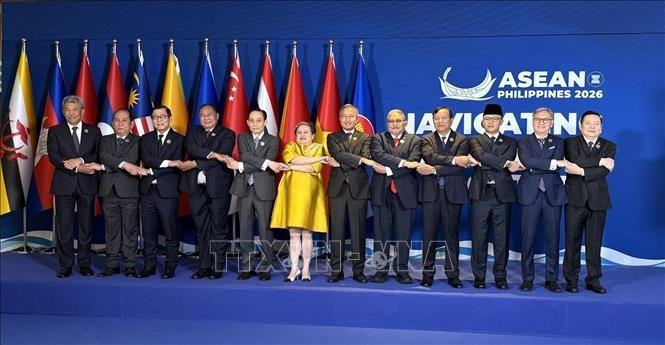
Vietnamese Foreign Minister Le Hoai Trung (fifth from left) poses for a group photo with ASEAN foreign ministers ahead of the ASEAN Foreign Ministers’ Retreat in Cebu, the Philippines. (Photo: VNA)

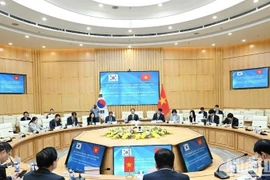
Hanoi (VNA) - Vietnam’s engagement at the ASEAN Foreign Ministers’ Retreat on January 28–29 in Cebu, the Philippines, underscored its strategic commitment to ASEAN and its determination to translate foreign policy orientations into concrete action, contributing to peace, stability, and sustainable development in Southeast Asia, according to Deputy Minister of Foreign Affairs Dang Hoang Giang.

The Vietnamese delegation to the retreat was led by Politburo member and Minister of Foreign Affairs Le Hoai Trung.

Vietnam’s participation left three clear imprints, marking a qualitative shift from “deep integration” to “full integration,” with a more proactive, constructive, and responsible role in addressing regional and global issues.

First, it reaffirmed Vietnam’s strategic commitment. Minister Trung underscored the country’s consistent foreign policy of independence, self-reliance, multilateralisation, and diversification, while reaffirming ASEAN as Vietnam’s top strategic priority and common home. The positive response from other member states reflected broad recognition of Vietnam’s growing role and credibility.

Second, the country demonstrated a strong action-oriented mindset. Actively contributing to the shaping of priorities for 2026 and beyond, the minister emphasised the need for ASEAN to stay ahead of change, strengthen unity and centrality, and maintain its role as a regional anchor of peace and stability. He also called for deeper intra-bloc connectivity in infrastructure, energy, knowledge, and innovation to enhance resilience and competitiveness.

Third, Vietnam highlighted its sense of responsibility for common affairs, with Minister Trung proposing the review of ASEAN’s confidence-building and conflict-management mechanisms, including the establishment of consultations among ASEAN legal advisers, to strengthen the bloc’s institutional and legal foundations. Maintaining a balanced and constructive approach, Vietnam helped preserve ASEAN consensus and, as coordinator for ASEAN–UK and ASEAN–New Zealand relations, promoted practical cooperation aligned with ASEAN’s development priorities.

Assessing the outcomes of the retreat, Giang said the meeting went beyond the routine start of a new cooperation year, helping to shape ASEAN’s collective response to profound global and regional changes. With higher expectations placed on ASEAN’s role, responsibility, and contribution, the retreat conveyed a clear action-oriented message: ASEAN remains committed to unity, coordination, and proactive engagement, rather than being drawn into intensifying global competition.

Under the theme “Navigating Our Future, Together,” the Philippine Chairmanship highlighted ASEAN’s determination that it will not stand on the sidelines or be swept into competition, but will reinforce unity, coordination, and collective action for regional stability and development. In that spirit, the retreat achieved several important outcomes of strategic significance, Giang stated.

First, ASEAN agreed to renew its approach to cooperation by prioritising effectiveness and substance, narrowing the gap between decisions and implementation. This approach was reflected in three strategic priorities proposed by the Chair, focusing on peace as the foundation, prosperity as the driving force, and people as the centre of development.

Second, the meeting emphasised the need to accelerate the implementation of the ASEAN Community Vision 2045 and its strategic plans. Member states acknowledged past limitations in execution and agreed to improve accountability, coordination, and implementation capacity. Particular priority will be given to emerging growth drivers such as the digital economy, artificial intelligence, and the semiconductor industry, which are expected to enhance regional connectivity and deliver tangible benefits to businesses and citizens.

Third, it reaffirmed ASEAN’s unity, resilience, and strategic autonomy amid increasing geopolitical fragmentation, conflicts, and unilateral pressures challenging multilateralism and international law./.

VNA
See more

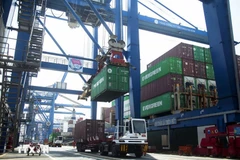
A view of Cat Lai Port in Ho Chi Minh City (Photo: VNA)

Vietnam remains a bright spot for growth, integration: Argentine scholar

Professor Ezequiel Ramoneda, Coordinator of the Southeast Asian Studies Centre (CESEA) of Argentina spoke highly of Vietnam’s efforts to reform the administrative apparatus, enhance the effectiveness of state governance, accelerate digital transformation and streamline procedures. These measures, he said, are essential to improving productivity, reducing costs and better serving the people amid rapidly changing domestic and international conditions.

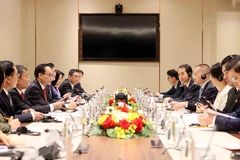
An overview of talks between Politburo member and Minister of Foreign Affairs Le Hoai Trung and Liu Haixing, member of the Communist Party of China (CPC) Central Committee and head of its International Department, and special envoy of CPC General Secretary and President of China Xi Jinping in Hanoi on January 30 (Photo: VNA)

Foreign Minister holds talks with top Chinese leader’s special envoy

The special envoy stressed that the CPC Central Committee and Party General Secretary and President Xi support the CPV Central Committee, led by General Secretary To Lam, in guiding the Vietnamese people to successfully implement the Resolution of the Congress and build socialism suited to Vietnam’s conditions.

Party General Secretary To Lamwill pay a state visit to Laos on February 5 (Photo: VNA)

Party chief to pay state visit to Laos

General Secretary of the Communist Party of Vietnam Central Committee To Lam and a high ranking Vietnamese delegation will pay a state visit to Laos on February 5 at the invitation of Thongloun Sisoulith, General Secretary of the Lao People’s Revolutionary Party Central Committee and President of Laos.

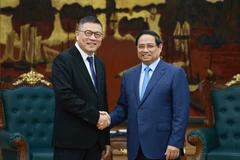
Prime Minister Pham Minh Chinh (R) receives Hong Tianzhu, Chairman of Texhong Group, in Hanoi on January 30. (Photo: VNA)

Prime Minister receives Chairman of China’s Texhong Group

The Vietnamese Government leader particularly emphasised the need for Texhong to pursue in-depth investment, focusing on the application of science and technology, innovation, digital transformation, green production and smart governance. He stressed a shift towards greater reliance on knowledge and technology rather than labour, raw materials and land, in order to optimise the group’s operations and enhance efficiency.

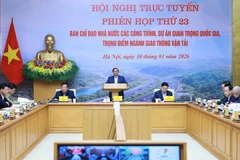
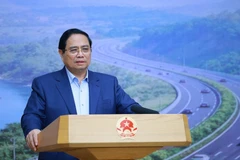
Prime Minister Pham Minh chairs the 23rd meeting of the state steering committee for nationally important and key transport projects, held online with 27 provinces and cities, in Hanoi on January 30. (Photo: VNA)

Prime Minister highlights priority of implementing expressway projects

PM Pham Minh Chinh, also the head of the committee, directed the Ministry of Finance and the Ministry of Construction to coordinate in identifying key projects under the medium-term public investment plan, ensuring that by 2030 Vietnam achieves the target of completing at least 5,000 km of roads as set out in the 14th National Party Congress Resolution.

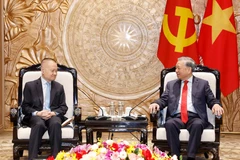
General Secretary of the Communist Party of Vietnam Central Committee To Lam (R) receives Liu Haixing, Member of the Communist Party of China (CPC) Central Committee and head of its International Department, who is on a visit to Vietnam as the special envoy of Party General Secretary and President of China Xi Jinping (Photo: VNA)

Party General Secretary receives special envoy of top Chinese leader

Welcoming the special envoy, General Secretary Lam emphasised that the visit carries profound political significance, reflecting the high priority, deep respect, and sincere friendship of the Chinese Party, State, and people towards their Vietnamese counterparts, as well as the long-standing solidarity and close bonds between the two Communist Parties.

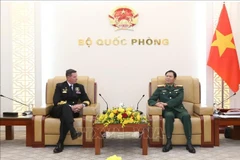
General Nguyen Tan Cuong (R), Chief of the General Staff of the Vietnam People’s Army and Deputy Minister of National Defence, receives Australian Chief of Navy Vice Admiral Mark Hammond in Hanoi on January 30 morning. (Photo: qdnd.vn)

Vietnam, Australia step up naval cooperation

In recent years, based on the 2010 memorandum of understanding and the 2018 joint vision statement, the Vietnam-Australia defence cooperation has been actively implemented in many areas, such as delegation exchanges, dialogue and consultations, training, United Nations peacekeeping, cooperation between services and arms, war legacy remediation, and multilateral defence collaboration, particularly within the ASEAN Defence Ministers’ Meeting Plus framework.

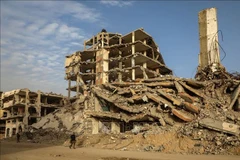
People walking alongside buildings destroyed by conflict in Gaza city (Photo: Xinhua/VNA)

Vietnam ready to make practical contributions to Gaza peace: diplomat

Minister-Counsellor Nguyen Hoang Nguyen, Chargé d'Affaires ad interim of the Permanent Mission of Vietnam to the UN, affirmed that Vietnam strongly supports the Palestinian people’s right to self-determination and initiatives that advance the implementation of the two-state solution, including the UN-backed high-level conference and the New York Declaration 2025.

Prime Minister Pham Minh Chinh, head of the state steering committee for nationally important and key transport projects, chairs the committee’s 23rd meeting in Hanoi on January 30. (Photo: VNA)

Wrongdoing in transport projects must be handled, without causing stagnation: PM

The PM stressed that completed expressways and roads, though built according to criteria, regulations, and standards, must continue to be reviewed, adjusted, and supplemented where necessary. He called for a review of auditing, final settlement, and payment in line with regulations and deadlines; a review of progress, quality, safety, technical and aesthetic requirements, and environmental sanitation; and close attention to ensuring the material and spiritual well-being of affected people in new residential areas.

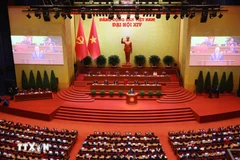
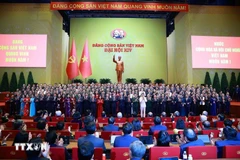
A view of the 14th National Congress of the Communist Party of Vietnam. (Photo: VNA)

Letter of thanks following successful 14th National Party Congress

On behalf of the Party and State leaders, Politburo member and Standing member of the Party Central Committee’s Secretariat Tran Cam Tu, who is also head of the organising sub-committee of the 14th National Party Congress, expressed sincere gratitude to all agencies, members of subcommittees of the 14th National Party Congress, the Steering Committee for review of 40-year Doi moi (renewal), and personnel from the armed forces, civil service, and workforce whose dedicated efforts contributed significantly to the Congress’s success.

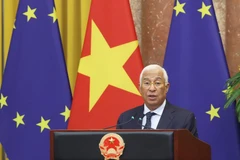
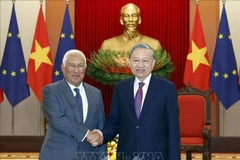
Party General Secretary To Lam (right) and President of the European Council (EC) António Costa (Photo: VNA)

Party chief hosts European Council President

Vietnam and the EU should step up exchanges and dialogue to further strengthen political trust and translate the orientations of the newly established partnership framework into concrete action.

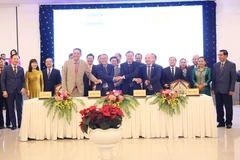
Leaders of Tay Ninh and the Cambodian provinces of Tbong Khmum, Svay Rieng and Prey Veng at the signing ceremony. (Photo: VNA)

Tay Ninh fosters partnership with three Cambodian localities

Chairman of the People’s Committee of Tay Ninh Le Van Han outlined four key areas of cooperation with the Cambodian localities for the 2026–2030 period - economy; agriculture, fisheries and environmental protection; culture, society and tourism; and border management, border demarcation, and security and order maintenance.