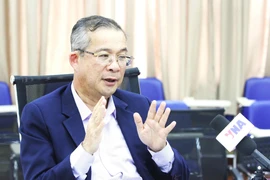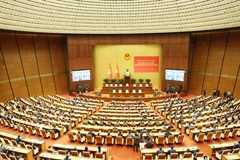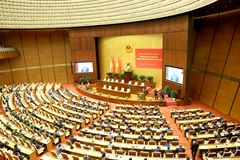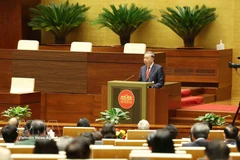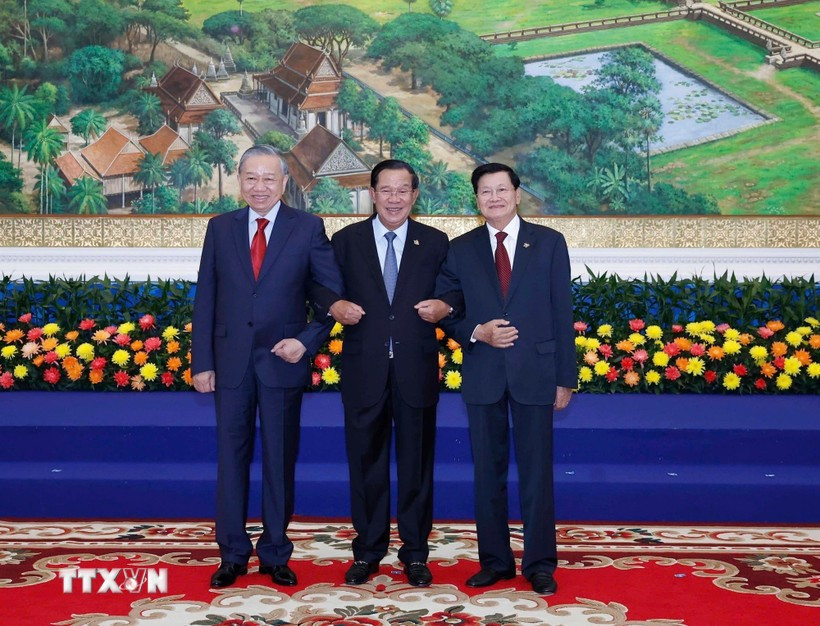
Phnom Penh (VNA) – The political consensus reached within the Cambodia–Vietnam bilateral framework and the trilateral Cambodia–Vietnam–Laos framework plays a decisive guiding role in shaping long-term development strategies of the three countries, according to Dr. Chheang Vannarith, Deputy Secretary-General and Chairman of the Advisory Council of the Cambodian National Assembly.
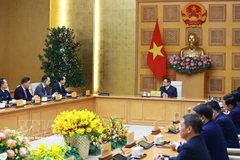
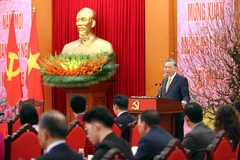
In an interview with the Vietnam News Agency (VNA)'s correspondent in Phnom Penh, Chheang said the recent high-level meeting among the top leaders of the Communist Party of Vietnam (CPV), the Cambodian People's Party (CPP) and the Lao People's Revolutionary Party (LPRP) resulted in a strategic consensus that serves as a foundation for sustainable cooperation and political trust.
He described this as a special cooperation mechanism in which political consensus reached through the Party channel helps consolidate trust, while practical cooperation is implemented through Party-affiliated organisations. These activities generate tangible benefits for the people of each country and contribute to common development within the trilateral framework, Chheang noted.
According to the Cambodian expert, the Party plays a central leadership role in Vietnam and Laos, while in Cambodia, despite differences in political institutions, the Party continues to hold a core position in national leadership activities. Decisions made by the CPP's leaders carry the highest authority and guide the entire political system.
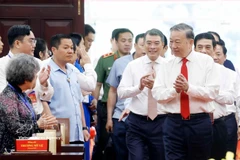
In this context, Chheang stressed that the Cambodia–Vietnam–Laos high-level meeting mechanism is unique, as it brings together leaders of the Party, Government and National Assembly of the three countries. He described it as an unprecedented model in international relations and expressed his hope that the mechanism will be maintained and further strengthened for the benefit of the three nations and their people.
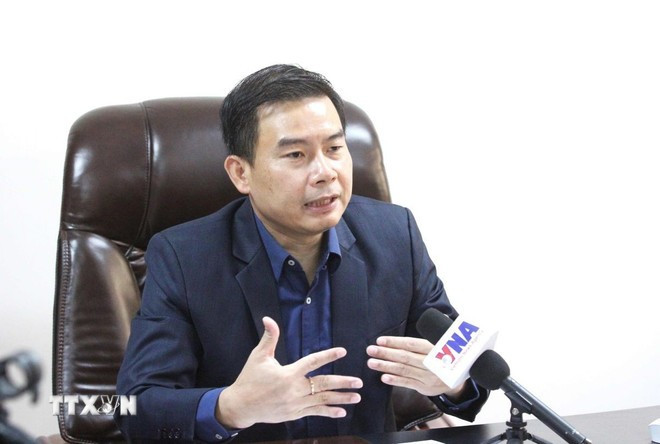
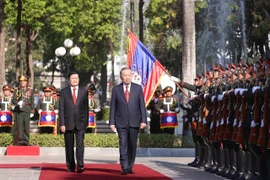
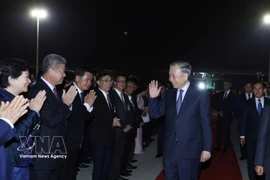
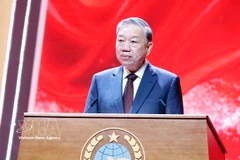
Commenting on the visit by General Secretary of the Communist Party of Vietnam Central Committee To Lam, Chheang said the visit underscored the importance Vietnam attaches to relations with Cambodia. As neighbouring countries, Vietnam has consistently prioritised ties with Cambodia and Laos, which share historic bonds and a tradition of solidarity and good neighbourliness.
Amid ongoing regional and global geopolitical uncertainties, he said, the three countries need to further strengthen unity and cooperation to enhance resilience and promote self-reliance. He emphasised that close coordination among Cambodia, Vietnam and Laos is essential for safeguarding peace, stability and development in the region.
Chheang affirmed that Cambodia’s foreign policy gives top priority to relations with neighbouring countries, describing this approach as a positive and strategic choice with long-term significance. He said Cambodia is working closely with Vietnam to elevate the bilateral relations across multiple areas, including trade, investment, tourism, economy, culture, education, defence and security.
He also highlighted people-to-people exchanges as a fundamental pillar of the bilateral relationship, noting that such exchanges help foster mutual understanding and bring the two countries' people closer together.
The expert further underscored the important role of the press and media in promoting mutual understanding, calling on both countries to invest more in journalism and communications. He noted that younger generations in Cambodia and Vietnam do not have the same level of mutual awareness as previous generations, making enhanced communication efforts increasingly necessary.
According to Chheang, greater media coverage of each other’s country would help improve public understanding and counter misperceptions. He also stressed the need to connect young leaders of the two countries, enabling future generations to share a common vision and deepen cooperation. He expressed his confidence that the visit by the Vietnamese Party leader marked a new chapter in Cambodia–Vietnam relations, with special significance for younger generations and for the long-term friendship between the two countries./.