Official stresses proactive implementation of 14th Party Congress Resolution in foreign affairs

The foreign policy of the 14th Congress represents both continuity and development. It inherits the fundamental objectives, principles and approaches affirmed over previous congresses, namely independence, self-reliance, peace, cooperation, development, multilateralisation and diversification, while introducing new dimensions to meet the country’s Fatherland construction and safeguarding requirements in the new era.

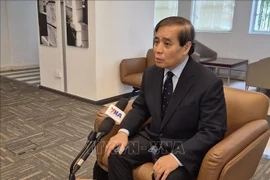
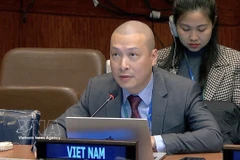
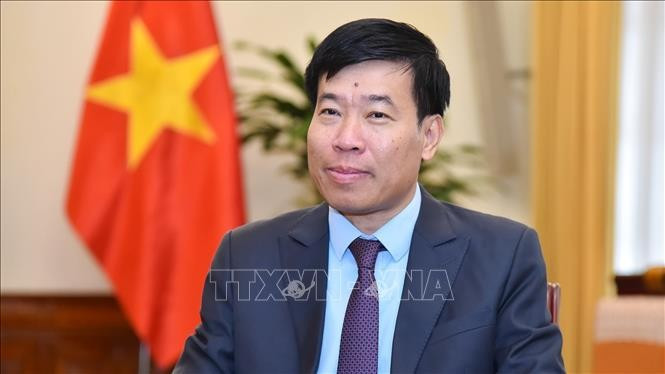
Nguyen Manh Cuong, member of the Party Central Committee, Standing Deputy Secretary of the Party Committee and Deputy Minister of Foreign Affairs. (Photo: VNA)

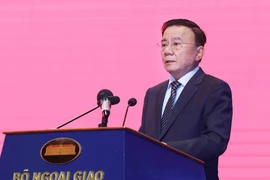
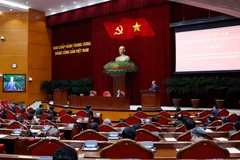
Hanoi (VNA) - Nguyen Manh Cuong, member of the Party Central Committee, Standing Deputy Secretary of the Party Committee and Deputy Minister of Foreign Affairs, has given an interview to the press on the implementation of the foreign policy set out by the 14th National Party Congress within the diplomatic sector.

He noted that the foreign policy of the 14th Congress represents both continuity and development. It inherits the fundamental objectives, principles and approaches affirmed over previous congresses, namely independence, self-reliance, peace, cooperation, development, multilateralisation and diversification, while introducing new dimensions to meet the country’s Fatherland construction and safeguarding requirements in the new era.

According to the deputy minister, a notable new emphasis is the objective of “developing foreign affairs in the new era commensurate with the country’s historical stature, cultural identity and international standing.” He recalled the Party General Secretary’s call to keep pace with global developments, seek pathways to peace, stability and prosperity, and build a higher and more solid national position. In this spirit, Vietnam is consolidating a broad and favourable external environment for development, not only by deepening and stabilising existing partnerships, but also by proactively engaging more substantively in addressing common global challenges. Through bilateral and multilateral mechanisms, the country’s responsible contributions, voice and credibility are increasingly recognised, reflecting a distinctive Vietnamese diplomatic identity marked by sincerity, responsibility and a commitment to peace, security and development.

He further highlighted the addition of the guiding viewpoints of “strategic autonomy” and “self-strengthening,” describing them as prerequisites for maintaining independence and proactiveness in foreign affairs and safeguarding national interests in a volatile world. This thinking, he said, is consistent with the laws of Vietnam’s revolutionary development and President Ho Chi Minh’s enduring emphasis on self-reliance combined with international support.

Another important point underscored by the 14th Congress is the reaffirmation that foreign affairs and international integration, alongside defence and security, constitute “regular and critical” tasks. Foreign affairs are thus recognised not only as a means of safeguarding independence and sovereignty, but also as a key instrument for shaping a favourable environment for national development. This perspective affirms that foreign affairs are a shared undertaking of the entire political system, requiring close, proactive and coordinated participation at all levels, Cuong stressed. Regarding key tasks ahead, Nguyen Manh Cuong stressed that implementing the 14th Congress’s foreign policy requires proactive, concerted and decisive action to translate strategic orientations into concrete outcomes. He cited the Party General Secretary’s description of the “era of national rise” as one demanding strong, resolute and confident action to overcome challenges and realise national aspirations.

He outlined several priorities: unifying awareness across the political system of the mission and role of foreign affairs as a regular and critical task; accelerating the institutionalisation and concretisation of the Congress’s foreign policy; and developing a comprehensive, high-level foreign strategy that mobilises the combined strength of Party diplomacy, State diplomacy and people-to-people diplomacy. Priority will be given to economic and technology diplomacy in support of development, double-digit growth targets, major transformations and strategic infrastructure projects, with public and business satisfaction as a key measure of effectiveness.

Other priorities include enhancing research, forecasting and strategic advisory capacity; ensuring close coordination between foreign affairs, defence and security; allocating resources commensurate with the country’s new stature; advancing digital transformation and modern diplomatic infrastructure; and building a modern, professional diplomatic service with a streamlined, effective apparatus and a contingent of capable, ethical and innovative officials.

Finally, he noted that the Party Committee of the Ministry of Foreign Affairs has moved swiftly to implement the 14th Congress Resolution, guided by the principle of decisive and immediate action. An integrated action programme has been developed to ensure coherent implementation of Party and Government resolutions, with a strong focus on identifying key and breakthrough tasks. Early, intensive diplomatic activities by Party and State leaders following the Congress were cited as concrete evidence of this action-oriented spirit.

Cuong expressed his confidence that with close guidance from Party and State leaders, strong inter-agency coordination and the concerted efforts of the diplomatic sector, Vietnam will successfully fulfil its foreign affairs tasks and effectively implement the 14th Party Congress Resolution, contributing to the country’s strong and sustainable development in the new era./.

VNA
See more

Dr Julia Roknifard, senior lecturer in international relations at Taylor’s University in Malaysia (Photo: VNA)

Legislature proves strong support to Vietnam’s development, integration: Scholar

Dr Julia Roknifard, senior lecturer in international relations at Taylor’s University in Malaysia, shared her assessment of the role of Vietnam’s highest legislative body in promoting economic development and strengthening multilateral cooperation amid a rapidly changing global landscape in in an interview with Vietnam News Agency correspondents in Kuala Lumpur.

The election of deputies to the 16th National Assembly and People’s Councils at all levels for the 2026–2031 tenure is scheduled for May 15, 2026 (Photo: VNA)

General election helps strengthen overseas Vietnamese engagement with national development

According to Nguyen Duc Thang, Executive Committee member of the Germany–Vietnam Association and President of the October Arts Club, the 16th National Assembly election continues Vietnam’s electoral tradition dating back to the 1946 General Election and subsequent milestones in parliamentary development. Selecting capable, responsible and visionary representatives will help reinforce democratic foundations, ensure the people’s right to mastery, and enhance the effectiveness of the country’s highest state authority.

Lao ambassador highlights significance of Vietnam’s 16th National Assembly election

Lao ambassador highlights significance of Vietnam’s 16th National Assembly election

The Lao Ambassador voiced her confidence that Vietnam’s new-tenure National Assembly and People’s Councils would continue to deepen parliamentary cooperation between the two countries, while enhancing policy oversight and creating favourable conditions for expanded cooperation in trade, investment, infrastructure connectivity and people-to-people exchanges.

Speakers at the dialogue. (Photo: VNA)

Vietnam hosts dialogue on improving access to justice for women, youth

The dialogue brought together Deputy Minister of Home Affairs Nguyen Thi Ha, head of the Vietnamese delegation, ambassadors and delegation leaders attending the session, as well as representatives from UN agencies, international organisations, non-governmental organisations and scholars.

Pham Thi Minh Huong, Standing Committee member of the General Association of Vietnamese in Laos, Vice President of the Business Association of Overseas Vietnamese (BAOOV), and Chairwoman and CEO of the Gold Phuc Company (Photo: VNA)

Vietnamese businesses in Laos express confidence in national political system ahead of general elections

Pham Thi Minh Huong, Standing Committee member of the General Association of Vietnamese in Laos, Vice President of the Business Association of Overseas Vietnamese (BAOOV), and Chairwoman and CEO of the Gold Phuc Company, said the Vietnamese business community in Laos closely follows major political developments at home while contributing to socio-economic development and social welfare activities in Laos, particularly support for disadvantaged and disabled groups.

Nguyen Thi Thuy Linh, a third-year student majoring in Chinese language at Beijing Language and Culture University, speaks in an interview with a Vietnam News Agency correspondent in Beijing. (Photo: VNA)

Vietnamese students in China anticipate election with great hope

Many Vietnamese students in China said that although they are studying abroad, they remain deeply connected to their homeland and aspire to contribute their knowledge and international experience to the country’s development. For them, the upcoming election represents not only a significant political event at home but also an opportunity for overseas Vietnamese to place their confidence in Vietnam’s next phase of growth

The appointment decision handover ceremony is held in Hanoi on March 12. (Photo: VNA)

PM appoints new leader for Vietnam’s top science academy

PM Pham Minh Chinh asked the VAST to continue to serve as the Party and State’s strategic advisory body on science – technology in key areas such as artificial intelligence, energy, marine economy, water security, and aerospace, alongside building a national sci-tech database.

Do Thanh Hai (right), Deputy Director-General of the East Sea Institute under the Diplomatic Academy of Vietnam, speaks at the dialogue. (Photo: VNA)

Vietnam, India promote maritime security cooperation through blue economy development

Through four rounds of bilateral “Track 1” Maritime Security Dialogue, the two sides have outlined priority areas of cooperation, including marine scientific research, blue economy development, humanitarian assistance and disaster relief, naval and coast guard cooperation, maritime law enforcement, capacity building, and maritime connectivity.