Vietnam’s effective foreign policy earns widespread international recognition: expert

Against the backdrop of deepening global geopolitical polarisation in recent years, Vietnam’s foreign policy has proven its effectiveness and earned widespread international recognition.

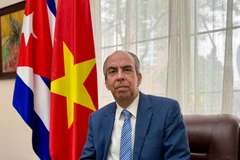
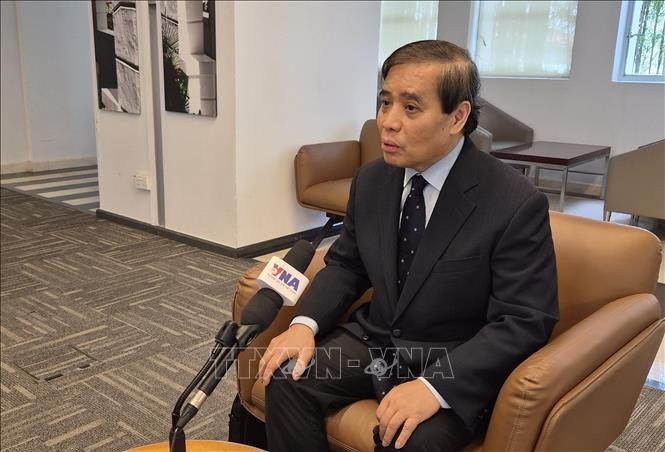
Professor Vu Minh Khuong of the Lee Kuan Yew School of Public Policy in an interview with the Vietnam News Agency's correspondents in Singapore (Photo: VNA)

Singapore (VNA) – Against the backdrop of deepening global geopolitical polarisation in recent years, Vietnam’s foreign policy has proven its effectiveness and earned widespread international recognition.

All major powers within the Group of Seven (G7) and members of the UN Security Council regard the nation as a highly active and valuable partner, according to Professor Vu Minh Khuong of the Lee Kuan Yew School of Public Policy.

In an interview with the Vietnam News Agency's correspondents in Singapore, the Vietnamese scholar noted that over the past five years Vietnam has continuously upgraded its relations to comprehensive strategic partnerships with leading powers, including the US, Japan and Australia. Its growing economic strength, political stability and the proactive vision of its leadership have clearly positioned the country as an influential partner capable of contributing solutions to global challenges.

Vietnam has also performed strongly in forging comprehensive strategic partnerships, particularly with Southeast Asian countries and major powers. Beyond economic integration, the nation has been deeply involved in UN peacekeeping operations and international humanitarian assistance, Khuong noted. This shift in mindset, from “participation” to “proactive contribution,” demonstrates its role as a responsible member of the international community. The professor suggested that in the coming period, Vietnam should focus on value creation, namely addressing pressing global challenges.

He stressed that the country has considerable potential to become a regional anchor for the digital economy in Southeast Asia and beyond, thanks to its strong pool of talent in artificial intelligence (AI) and digital technologies. Khuong recommended Vietnam organise international forums or contribute to major reports to help shape future agendas. In addition, he highlighted the importance of deepening engagement in renewable energy and energy security, particularly green energy.

With such a broad vision, the professor said, Vietnam would not merely contribute to peacekeeping when called upon, but could emerge as a driving force helping Southeast Asia and itself reach new heights. Defining itself as a developed industrial nation is not only about increasing GDP, but also about contributing to a more prosperous and peaceful region. He recommended that this vision be incorporated into the value framework of the upcoming 14th National Party Congress Resolution.

On culture, the professor observed strong progress, especially at the micro level, in harnessing Vietnam’s cultural “soft power” during the current term. Vietnam’s entertainment industry, he noted, makes greater use of the digital economy than its regional peers. He also emphasised that resolutions on culture demonstrate the country’s commitment to investing in cultural industries.

Over the past five years, despite budgetary pressures caused by the pandemic, social welfare policies and sustainable poverty reduction efforts have continued to be ensured. Beyond reducing poverty, access to electricity, information and infrastructure has improved markedly. These achievements reflect the commendable social responsibility of a socialist state, Khuong commented.

Building on the accomplishments of the Communist Party of Vietnam’s 2020-2025 term, the expert expressed strong confidence that the country can go much further. Although last year presented significant challenges, particularly with the implementation of a two-tier local administrative model and administrative mergers, Vietnam has clearly moved beyond the equilibrium of the old development model, a crucial step towards transformative progress.

He predicted that following the 14th National Party Congress, Hanoi and Ho Chi Minh City would emerge with even greater scale and potential.

Khuong also shared his belief that the nation is capable of achieving a new miracle, one that history will record as a shining chapter of national pride for generations to come./.

VNA
See more

Assaf Talgam, a historian and a journalist of Zo HaDerekh, the official newspaper of the Communist Party of Israel. (Photo: VNA)

CPV's leadership - central factor shaping Vietnam’s enduring stability, impressive achievements: Israeli historian

Talgam said that from a comparative and historical perspective, the CPV’s leadership has been the central factor underpinning the country’s enduring political stability and impressive development trajectory. In a world marked by rapid and unpredictable changes, few political organisations have been able to maintain continuity of leadership while simultaneously adapting their governance approach as effectively as the CPV.

Prime Minister Pham Minh Chinh presents Certificates of merit from the Government’s Party Committee to individuals with outstanding achievements. (Photo: VNA)

Prime Minister outlines five specific strategies for Government’s Party Committee

PM Chinh noted that the Government’s Party Committee exercised comprehensive leadership over the Government's operations, proactively and effectively responded to emerging issues, with a particular focus on socio-economic development. As a result, 2025 witnessed high economic growth, sustained macroeconomic stability and ensured major balances.

Politburo member, Standing member of the Party Central Committee’s Secretariat Tran Cam Tu attends the rehearsal. (Photo: VNA)

Security forces stage rehearsal for 14th National Party Congress

The People’s Public Security forces have been praised for their core role in closely working with the army and relevant ministries and agencies, with success in thwarting hostile plots at an early stage, drastically combating fake news and disinformation surrounding the 14th National Party Congress.

Senior Lieutenant General Le Quoc Hung (L), member of the Communist Party of Vietnam (CPV) Central Committee and Deputy Minister of Public Security, and General Vilay Lakhamfong, Politburo member and permanent member of the Secretariat of the Lao People’s Revolutionary Party (LPRP) Central Committee. (Photo: VNA)

Deputy Minister of Public Security congratulates Lao officials following succesful 12th National Party Congress

Deputy Minister of Public Security Senior Lieutenant General Le Quoc Hungconveyed the warmest congratulations of the Central Public Security Party Committee, the Ministry of Public Security leadership, and the Vietnamese People’s Public Security Forces to Lakhamfong and other Lao public security leaders on the congress’s success and their election to key leadership positions for the new term.

A session of the National Assembly Standing Committee. (Photo: VNA)

NA Standing Committee's key work agenda for 2026 approved

A major focus will be preparations for the election of deputies to the 16th NA and to People’s Councils at all levels for the 2026–2031 term. The NASC will coordinate with the National Election Council, the Government, the Vietnam Fatherland Front Central Committee, and relevant agencies and organisations to continue implementing the election plan, organise oversight of the electoral process, and carry out its duties and powers as prescribed.

Party General Secretary To Lam receives US Ambassador Marc Evans Knapper in Hanoi on January 9, 2026. (Photo: VNA)

Party leader receives outgoing US Ambassador

Vietnam always values its relationship with the US and looks forward to continuing close cooperation with the US government to deepen bilateral relations based on mutual respect for each other’s independence, sovereignty, territorial integrity, and political institutions, contributing positively to peace, stability, cooperation, and development regionally and globally.