Dak Lak must link Central Highlands with south central coast: Party chief

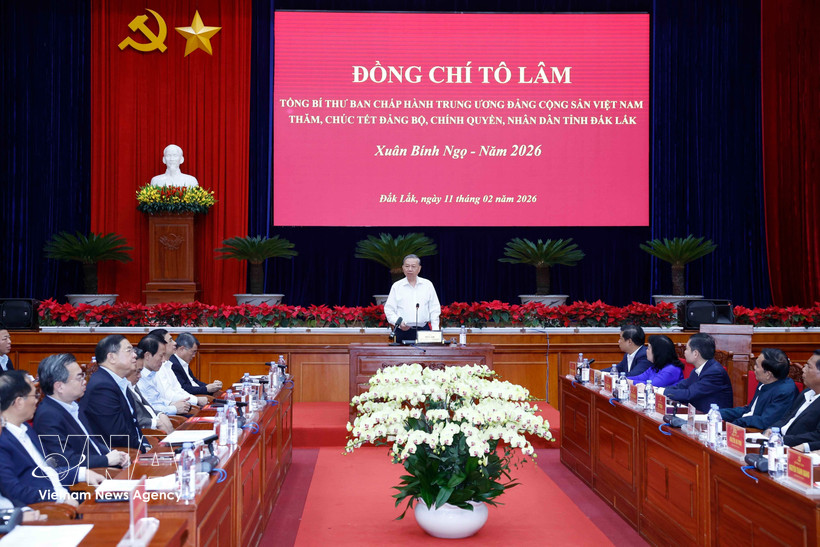
During a working session with the provincial Party Organisation, authorities and residents on February 11, which linked virtually with 102 local wards and communes, Party General Secretary To Lam hailed their achievements last year, urging immediate translation of the 14th National Party Congress's orientations and directives into concrete actions and measurable outcomes from the outset of the new term.

Party General Secretary To Lam speaks at the working session (Photo: VNA)

Dak Lak (VNA) – Dak Lak province must establish itself as a key hub linking the Central Highlands with the south central coast, border areas and national economic corridors, said Party General Secretary To Lam.

During a working session with the provincial Party Organisation, authorities and residents on February 11, which linked virtually with 102 local wards and communes, General Secretary Lam hailed their achievements last year, urging immediate translation of the 14th National Party Congress's orientations and directives into concrete actions and measurable outcomes from the outset of the new term.

He emphasised that all master plans and major projects should fit into the broader national and regional development frameworks. Based on this, Dak Lak should reshape its development space along a “highlands – coast – border” axis, with strategic infrastructure as the backbone. Transport, logistics, energy, and digital infrastructure should guide economic flows, optimise value chains, and strengthen national defence and security, ultimately fostering new growth hubs and development corridors.

Dak Lak needs to move away from depending on natural resource extraction and raw agricultural output and instead focus on upgrading its value chains. Key drivers should include deep processing industries, renewable energy, the marine economy, quality tourism, and the digital economy. The new growth model should centre on boosting productivity, encouraging innovation, and improving institutional quality by strengthening ties between resources, labour, knowledge, and markets. This progress should go hand in hand with protecting forests and ecosystems, while supporting sustainable livelihoods for ethnic minorities, ensuring that both businesses and local communities are active stakeholders and direct beneficiaries.

There was a call to remove institutional bottlenecks, especially land-related challenges in agricultural and forestry enterprises, while making real improvements to the business environment by reducing compliance costs and enhancing access to land, capital, infrastructure, and public services. Actual costs, time, and convenience would serve as benchmarks for evaluating the investment climate.

The General Secretary underscored the need to boost the private sector as a critical engine of growth, with particular attention to a supportive environment for business households and small and micro enterprises, which generate employment and underpin social stability.

According to him, economic growth must be accompanied by investments in education, vocational training and workforce upskilling, especially for youth, ethnic minorities and rural residents, to ensure inclusive and sustainable development. Sci-tech, digital transformation and innovation must sit at the heart of workforce development strategies. Training should meet the practical needs of key emerging sectors such as deep processing, renewable energy, logistics, quality tourism and digital economy, with a focus on digital skills, innovative mindset and technological adaptability. Such upskilling will also bolster governance capacity, labour productivity and long-term competitiveness, paving the way for a knowledge-based, innovation-driven economy.

Improving living standards and public well-being must remain central to all development policies, he said, adding that economic advances should be closely linked to environmental protection, forest and water conservation, and preservation of community living spaces, with no trade-off between ecological sustainability and short-term gains.
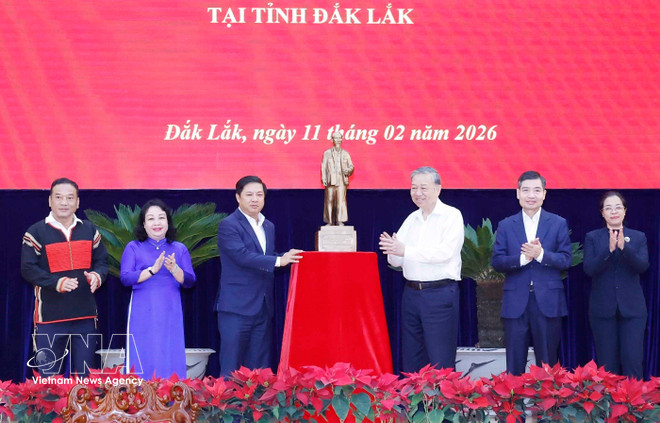
vnanet-tt.jpg
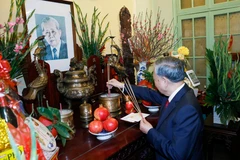
Party General Secretary To Lam presents a statue of President Ho Chi Minh to Dak Lak provincial authorities and people (Photo: VNA)

All socio-economic strategies must be firmly anchored in safeguarding national sovereignty and maintaining border, maritime, ethnic and religious security. The province should proactively identify and mitigate risks from an early stage to avoid passivity or surprises, while weaving economic development tightly with national defence-security consolidation in every project and locality, particularly in border, ethnic minority and sensitive areas.

The leader called for building an action-oriented, disciplined, integrity-driven and fully accountable administrative apparatus consistent with the guidelines of the 14th National Party Congress.

He conveyed the Party Central Committee’s expectation that Dak Lak will play a more proactive role in national development architecture, not only as a pillar of socio-political stability but also as a distinctive development space, making clear and responsible contributions to the country’s major goals.

On the occasion, the Party chief and his entourage presented gifts to former secretaries of the provincial Party Committee, policy beneficiary families, outstanding village elders and heads, and families affected by recent storms and floods.

Representatives from the Bank for Investment and Development of Vietnam (BIDV), the Commercial Bank for Foreign Trade of Vietnam (Vietcombank), and the Vietnam Bank for Agriculture and Rural Development (Agribank) handed over funding to build 300 houses for poor and disadvantaged households in the province.

In the same afternoon, they visited and extended Lunar New Year greetings to former provincial Party Secretary Y Luyen./.
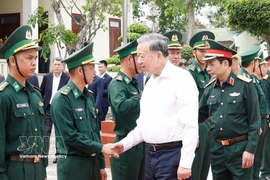
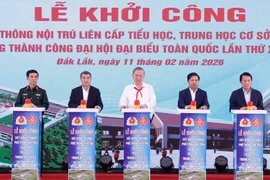
VNA

See more

Dr Julia Roknifard, senior lecturer in international relations at Taylor’s University in Malaysia (Photo: VNA)

Legislature proves strong support to Vietnam’s development, integration: Scholar

Dr Julia Roknifard, senior lecturer in international relations at Taylor’s University in Malaysia, shared her assessment of the role of Vietnam’s highest legislative body in promoting economic development and strengthening multilateral cooperation amid a rapidly changing global landscape in in an interview with Vietnam News Agency correspondents in Kuala Lumpur.

The election of deputies to the 16th National Assembly and People’s Councils at all levels for the 2026–2031 tenure is scheduled for May 15, 2026 (Photo: VNA)

General election helps strengthen overseas Vietnamese engagement with national development

According to Nguyen Duc Thang, Executive Committee member of the Germany–Vietnam Association and President of the October Arts Club, the 16th National Assembly election continues Vietnam’s electoral tradition dating back to the 1946 General Election and subsequent milestones in parliamentary development. Selecting capable, responsible and visionary representatives will help reinforce democratic foundations, ensure the people’s right to mastery, and enhance the effectiveness of the country’s highest state authority.

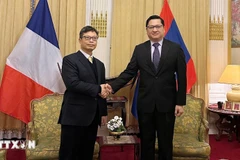
Lao ambassador highlights significance of Vietnam’s 16th National Assembly election

Lao ambassador highlights significance of Vietnam’s 16th National Assembly election

The Lao Ambassador voiced her confidence that Vietnam’s new-tenure National Assembly and People’s Councils would continue to deepen parliamentary cooperation between the two countries, while enhancing policy oversight and creating favourable conditions for expanded cooperation in trade, investment, infrastructure connectivity and people-to-people exchanges.

Speakers at the dialogue. (Photo: VNA)

Vietnam hosts dialogue on improving access to justice for women, youth

The dialogue brought together Deputy Minister of Home Affairs Nguyen Thi Ha, head of the Vietnamese delegation, ambassadors and delegation leaders attending the session, as well as representatives from UN agencies, international organisations, non-governmental organisations and scholars.

Pham Thi Minh Huong, Standing Committee member of the General Association of Vietnamese in Laos, Vice President of the Business Association of Overseas Vietnamese (BAOOV), and Chairwoman and CEO of the Gold Phuc Company (Photo: VNA)

Vietnamese businesses in Laos express confidence in national political system ahead of general elections

Pham Thi Minh Huong, Standing Committee member of the General Association of Vietnamese in Laos, Vice President of the Business Association of Overseas Vietnamese (BAOOV), and Chairwoman and CEO of the Gold Phuc Company, said the Vietnamese business community in Laos closely follows major political developments at home while contributing to socio-economic development and social welfare activities in Laos, particularly support for disadvantaged and disabled groups.

Nguyen Thi Thuy Linh, a third-year student majoring in Chinese language at Beijing Language and Culture University, speaks in an interview with a Vietnam News Agency correspondent in Beijing. (Photo: VNA)

Vietnamese students in China anticipate election with great hope

Many Vietnamese students in China said that although they are studying abroad, they remain deeply connected to their homeland and aspire to contribute their knowledge and international experience to the country’s development. For them, the upcoming election represents not only a significant political event at home but also an opportunity for overseas Vietnamese to place their confidence in Vietnam’s next phase of growth

The appointment decision handover ceremony is held in Hanoi on March 12. (Photo: VNA)

PM appoints new leader for Vietnam’s top science academy

PM Pham Minh Chinh asked the VAST to continue to serve as the Party and State’s strategic advisory body on science – technology in key areas such as artificial intelligence, energy, marine economy, water security, and aerospace, alongside building a national sci-tech database.

Do Thanh Hai (right), Deputy Director-General of the East Sea Institute under the Diplomatic Academy of Vietnam, speaks at the dialogue. (Photo: VNA)

Vietnam, India promote maritime security cooperation through blue economy development

Through four rounds of bilateral “Track 1” Maritime Security Dialogue, the two sides have outlined priority areas of cooperation, including marine scientific research, blue economy development, humanitarian assistance and disaster relief, naval and coast guard cooperation, maritime law enforcement, capacity building, and maritime connectivity.