PM orders further red tape cuts to ease compliance cost burden

Prime Minister Pham Minh Chinh stressed that laws should stipulate only fundamental and principled issues, with detailed regulations delegated to drafting agencies for inclusion in guiding decrees. Policy articulation must ensure clarity, accessibility, ease of enforcement, and effective oversight.

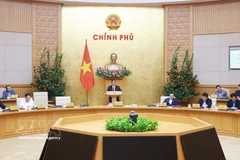
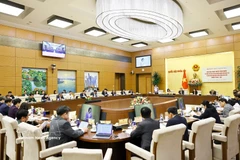
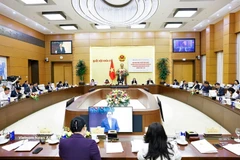
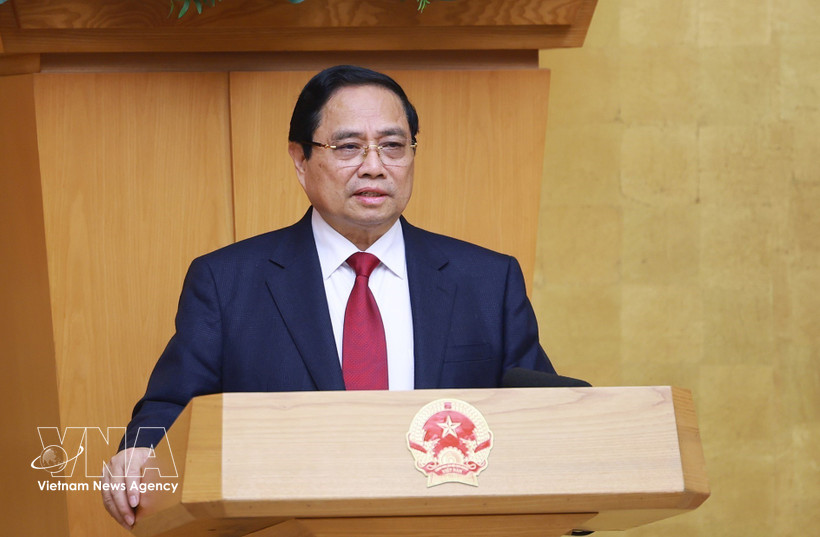
Prime Minister Pham Minh Chinh speaks at the Government’s monthly law-building session in Hanoi on February 27. (Photo: VNA)

Hanoi (VNA) - Prime Minister Pham Minh Chinh has directed a further review and aggressive reduction of administrative procedures, with a focus on mininising inconvenience and compliance costs for citizens and businesses.

Chairing the Government’s monthly law-building session in Hanoi on February 27, PM Chinh asked ministers, heads of ministerial-level agencies and government-affiliated bodies to lead and directly engage in institutional development within their respective sectors and across the broader government framework.

In the law-making process, he stressed the need to fully translate the Party’s guidelines and policies into laws, break barriers, roll out sweeping decentralisation and delegation of authority in tandem with appropriate resource allocation, strengthen enforcement capacity, and design effective inspection, supervision and power-control tools.

Laws should stipulate only fundamental and principled issues, with detailed regulations delegated to drafting agencies for inclusion in guiding decrees. Policy articulation, he stressed, must ensure clarity, accessibility, ease of enforcement, and effective oversight.

Drafting agencies were assigned to incorporate feedback from government members, while also consulting experts, scientists, legal practitioners, affected stakeholders, and international best practices adapted to Vietnam’s context, to finalise draft documents for submission to competent authorities.

Close coordination among ministries, agencies, and National Assembly bodies is essential to forge consensus during verification, explanation, feedback integration, and revision of drafts in line with opinions from the National Assembly Standing Committee and deputies. Ministries and agencies must swiftly issue decrees and circulars to guide enforcement once laws take effect.

At the 16th NA’s first session, the Government plans to submit 34 documents for approval, including 15 draft laws and resolutions, many of which are complex with wide-ranging socio-economic implications. The PM therefore called on ministries and agencies, particularly ministers and heads of ministerial-level agencies, to pool maximum resources and personally direct the completion of draft laws and resolutions already reviewed by the Government to ensure quality and timely submission for NA consideration.

Completed documents and reports should be promptly forwarded to NA bodies for appraisal and to the NA Standing Committee for input. Relevant agencies must report immediately to the Government and PM on any examination and revision of draft laws, or issues beyond their authority.

Government members heard summary submissions and reports explaining and incorporating feedback, and discussed the revised Law on the Capital; the amended Law on Civil Status; the draft Law on Belief and Religion; the draft Law amending and supplementing a number of articles of the Law on Overseas Representative Missions of the Socialist Republic of Vietnam; and a draft NA resolution on coordination mechanisms and special policies to improve the prevention and settlement of international investment disputes.

For the draft laws and resolution discussed, the PM assigned the ministries of justice, foreign affairs, and ethnic and religious affairs to fully absorb opinions from Government members and the session, and urgently finalise the drafts to ensure both progress and quality./.
VNA

See more

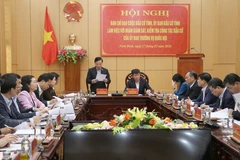
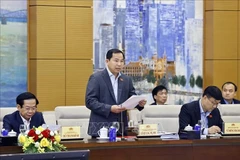
Vice Chairman of the National Assembly Nguyen Khac Dinh speaks at the meeting (Photo: VNA)

Ninh Binh urged to prioritise election preparations

Ninh Binh province has established an election committee at the provincial level comprising 37 members and 129 commune-level committees with a total of 2,128 members. Across the province, 2,536 polling stations have been set up, including 18 separate polling areas, along with 2,536 election teams.

At a workshop on mutual legal assistance in criminal matters (Photo: VNA)

Institutional improvement to power new era of development: official

As the country enters a new development phase, laws are defined not merely as management tools but as instruments to drive development, dismantle bottlenecks and unlock new growth space—particularly in science and technology, innovation and digital transformation.

Prime Minister chairs February thematic law-making session (Photo: VNA)

Prime Minister chairs February thematic law-making session

Since the start of the current term, the Government has convened 41 thematic sessions on law-making, giving opinions on more than 215 draft laws, ordinances, resolutions and legislative policy dossiers; and submitting 179 legal documents to the National Assembly for consideration and adoption—more than double the number recorded during the 14th National Assembly term.

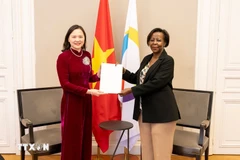
Ambassador Nguyen Thi Van Anh, Head of Vietnam's Permanent Delegation to to UNESCO (left), presents her credentials to the Secretary-General of International Organisation of La Francophonie Louise Mushikiwabo (Photo: VNA)

OIF Secretary-General appreciates Vietnam’s role, contributions

Secretary-General of the International Organisation of La Francophonie (OIF) Louise Mushikiwabo congratulated the diplomat on her new assignment, expressing her admiration for and congratulations on Vietnam’s socio-economic development achievements and international integration. She spoke highly of Vietnam’s role, position, and contributions within the Francophone Community.

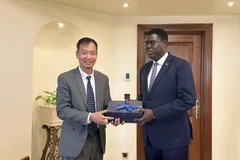
Vietnamese Ambassador to Egypt and South Sudan Nguyen Nam Duong (L) presents gift to South Sudanese Minister of Foreign Affairs and International Cooperation Monday Semaya Kumba (Photo: VNA)

South Sudan keen on all-around collaboration with Vietnam

South Sudanese Minister of Foreign Affairs and International Cooperation Monday Semaya Kumba expressed interest in increasing the exchange of all-level delegations and sustaining mutual support at the UN and other multilateral forums, while conveying his hope to visit Vietnam soon.

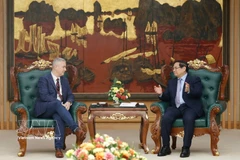
Prime Minister Pham Minh Chinh (R) receives Belgian Ambassador to Vietnam Karl Van Den Bossche on February 26. (Photo: VNA)

Vietnam always sees Belgium as important partner within EU: PM

Ambassador Karl Van Den Bossche affirmed that Belgium always considers Vietnam a priority partner in the region and stands ready to accompany Vietnam in achieving its socio-economic development goals, including overcoming the consequences of war.

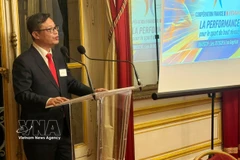
Vietnamese Ambassador to France Trinh Duc Hai speaks at the event (Photo: VNA)

Sports cooperation reflects depth of Vietnam-France ties: Ambassador

Deeper engagement in major Francophone sporting events and a long-term ambition to host large-scale competitions, including the Olympic Games, would help elevate Vietnam’s sporting profile in the international arena while further deepening strategic cooperation between Vietnam and France.

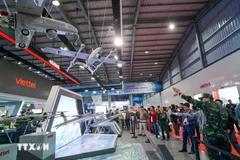
The area showcasing electronic equipment by the Military Industry-Telecoms Group (Viettel) at the Vietnam International Defence Expo 2024. (Photo: VNA)

Vietnam International Defence Expo 2026 preparations move into high gear

Vietnam International Defence Expo 2026, themed “Peace, Friendship, Cooperation and Development,” will be organised on a larger scale, featuring a wide array of weapons and technical equipment alongside product exhibitions, seminars and panel discussions, drills, live field demonstrations, and business networking activities.

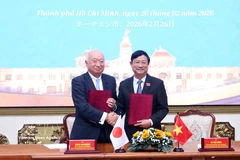
Vo Van Minh (right), Chairman of the Ho Chi Minh City People’s Council, and Yanai Shungaku (left), Chairman of the Yamaguchi Prefectural Assembly, sign a memorandum of understanding on friendly exchanges and cooperation. (Photo: VNA)

Ho Chi Minh City, Japan's Yamaguchi elevate partnership

Among Japanese localities, Ho Chi Minh City places high importance on cooperation with Yamaguchi prefecture and wishes to further nurture the longstanding friendship between the two sides, including the earlier partnership between Yamaguchi and the former Binh Duong province (now part of Ho Chi Minh City).

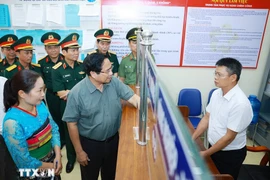
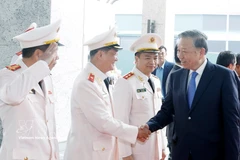
Party General Secretary To Lam and officers of the Ministry of Public Security’s Investigation Security Agency (A09) during his visit to the unit on February 26. (Photo: VNA)

Party chief extends Tet greetings to Investigation Security Agency

The investigation security unit has consistently upheld its role in safeguarding the Party, the regime and the people, thoroughly implementing the principle of proactively preventing threats from early and from afar to thwart hostile and reactionary forces plots and schemes, and shifting towards a more proactive and offensive posture in line with national political requirements.

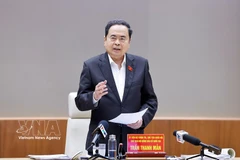
National Assembly (NA) Chairman Tran Thanh Man speaks at the working session with Hai Phong authorities. (Photo: VNA)

NA Chairman inspects election preparations in Hai Phong

Highlighting Hai Phong’s role as one of Vietnam’s six centrally-run cities, the leader said the upcoming election of deputies to the 16th legislature and to People’s Councils at all levels for the 2026–2031 term must be closely aligned with the need to safeguard political security and social order, and organised with a higher sense of responsibility, more rigorously and more comprehensively than in previous polls.

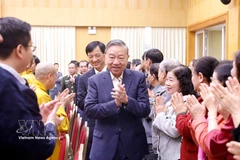
General Secretary of the Communist Party of Vietnam Central Committee To Lam (C) attends the meeting with Hanoi voters (Photo: VNA)

Party leader outlines strategic directions in meeting with Hanoi voters

Responding to a query on Vietnam’s consistent foreign policy, he stressed that comprehensive foreign affairs are the cause of the entire Party, people and political system, with close coordination among Party diplomacy, State diplomacy and people-to-people diplomacy, alongside the active engagement of the National Assembly, ministries, localities and citizens.