PM sends message to 16th UNCTAD session

As the world is now at a historic turning point that demands mindset reform, deep thinking, and bold action, people must be placed at the centre, as the main stakeholder, the resource, the driving force, and the ultimate goal of development, with all policies aimed at human progress, said the Vietnamese PM.

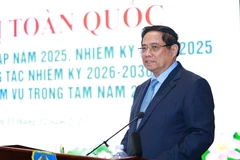
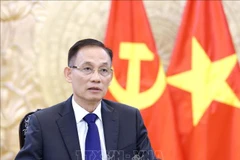
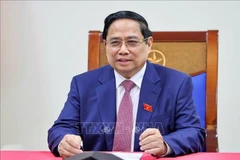
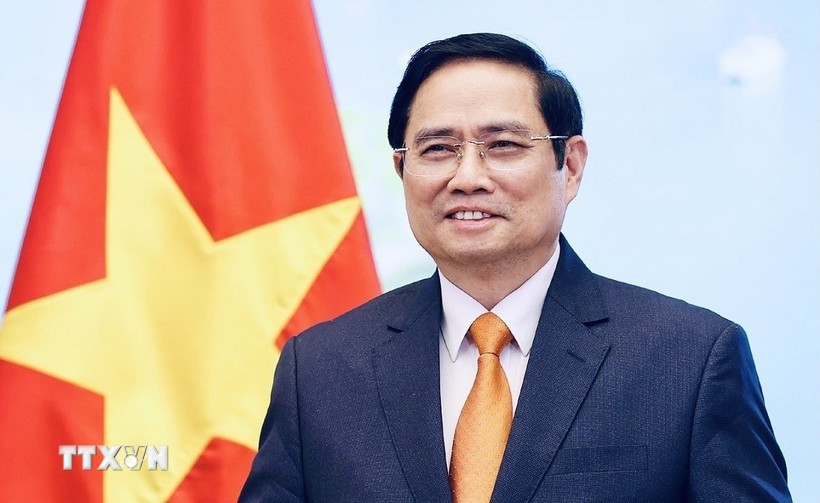
Prime Minister Pham Minh Chinh (Photo: VNA)

Geneva (VNA) – Vietnam remains steadfast in supporting the central role of the United Nations in maintaining peace, promoting cooperation, and addressing global and universal challenges, including trade, investment, and inclusive and sustainable development, Prime Minister Pham Minh Chinh affirmed.

The PM delivered his remarks in a pre-recorded video message sent to the opening of the 16th session of the UN Conference on Trade and Development (UNCTAD16) on October 20.

Firstly, the PM underscored that as the world is now at a historic turning point that demands mindset reform, deep thinking, and bold action, people must be placed at the centre, as the main stakeholder, the resource, the driving force, and the ultimate goal of development, with all policies aimed at human progress.

In the current context, he said, it is essential to base development on science – technology, innovation, and digital transformation, while environmental protection and social security must serve as the key drivers for fast yet sustainable development.

Secondly, PM Chinh emphasised that more than ever, the current circumstances call for international solidarity, multilateralism, and cooperation to foster global development. He noted today’s issues are universal, interconnected, and global, requiring a fair, transparent, and rules-based international order as a prerequisite for peace, stability, cooperation, development, and shared prosperity for all.

He urged the renewal and enhancement of trust in multilateralism, reinforcement of international cooperation, and joint efforts to promote strong and effective reforms of the multilateral trade and financial systems towards openness, fairness, inclusiveness, and mutual benefit for all nations.

Finally, the Government leader reaffirmed that Vietnam pursues a foreign policy of independence, self-reliance, multilateralisation and diversification of external relations, being a good friend and reliable partner of all countries, as well as a responsible member of the international community.

Held under the theme “Shaping the future: Driving economic transformation for equitable, inclusive and sustainable development”, the conference is seen as an opportunity to help reshape global trade amid rising uncertainties.

Taking place through October 23, the event, co-hosted by Switzerland and UNCTAD, gathers heads of states and governments, ministers of trade and economy, Nobel laureates, leaders of international organisations, and prominent experts for high-level dialogue on global trends and policy approaches in trade, investment, development, and the digital economy./.
VNA

See more

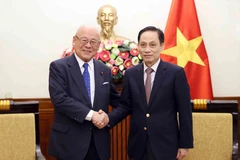
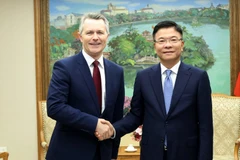
Minister of Foreign Affairs Le Hoai Trung receives Non-Resident Ambassador of Nepal to Vietnam Dhan Bahadur Oli in Hanoi on December 13, 2025. Photo courtesy of the Ministry of Foreign Affairs.

Vietnam, Nepal seek to promote deeper, substantive cooperation

Nepalese leaders attach great importance to relations with Vietnam and wish to learn from its experience and development models in socio-economic development and international integration, said Non-Resident Ambassador of Nepal to Vietnam Dhan Bahadur Oli.

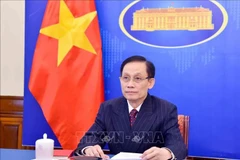
Vietnamese Minister of Foreign Affairs Le Hoai Trung (Photo: VNA)

Vietnamese, Lao foreign ministers hold online talks

The two ministers agreed to maintain close coordination in the time ahead and to expand cooperation under the new framework and orientation, underscoring the significance of the two countries’ “great friendship, special solidarity, comprehensive cooperation, strategic cohesion”.

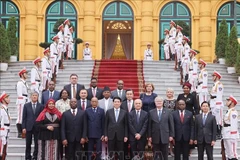
State President Luong Cuong (fourth from left, first row) and newly-appointed foreign ambassadors in Hanoi on December 12, 2025. (Photo: VNA)

State President receives newly-appointed foreign ambassadors

Receiving Egyptian Ambassador Hany Mostafa Mohamed Mostafa Hassan, President Cuong affirmed that Vietnam highly evaluates Egypt’s role, position, and contributions to regional peace and stability. He also congratulated the African country on its achievements in implementing the 2030 Vision.

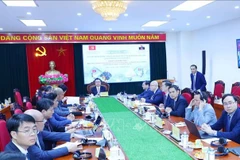
An overview of the seminar on the Party’s leadership in ensuring macroeconomic stability, renewing the growth model, restructuring the economy and promoting international integration (Photo: VNA)

Vietnam, Cuba exchange theoretical views on Party’s leadership in macroeconomic stability

The two sides explored in depth the Party’s role in leadership, orientation, oversight and strategic coordination in economic management; approaches to implementing economic restructuring programmes alongside the renewal of the growth model; measures to respond to global economic volatility, inflationary pressures and shifts in global trade; and the building of effective strategic advisory bodies to ensure the Party’s comprehensive leadership in a changing context.

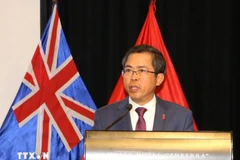
Vietnam’s Ambassador to Australia Pham Hung Tam (Photo: VNA)

Australia–Vietnam Policy Institute serves as bridge for bilateral relations

Established in 2022, AVPI serves as a forum for exchanging ideas among businesses, government agencies, non-profits, universities, and scholars in Australia on Vietnam. The institute acts as a platform for policy dialogue, focusing on research and insights on strategic relations and bilateral economic ties.

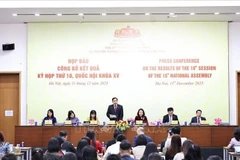
General Secretary and Chairman of the NA Office Le Quang Minh chairs the press conference announcing the results of the NA's 10th session (Photo: VNA)

10th session helps strengthen public trust in personnel work, NA’s supreme oversight

Personnel consolidation carried out at the NA's 10th session helps ensure continuous, unified, effective, and efficient leadership of the state apparatus; guarantee smooth and uninterrupted direction and governance; and prevent any leadership gaps in critical areas. All positions elected or approved by the legislature meet the key criteria required within the organisational structure.