PM urges building strong decrees on decentralisation, delegation of power to local administrations

Prime Minister Pham Minh Chinh emphasised the need to institutionalise the Party’s viewpoints and policies on promoting decentralisation and delegation, ensuring consistency and unity in the principles of delineating authority, decentralisation, and delegation of power.

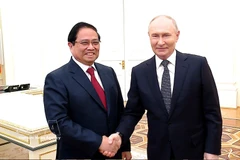
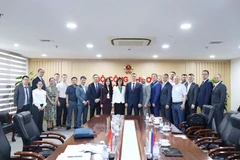
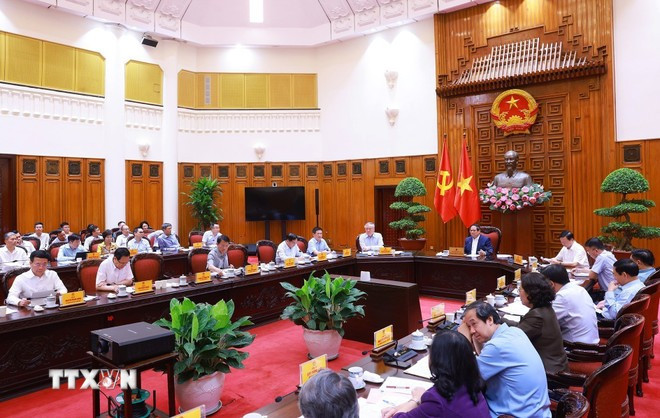
Prime Minister Pham Minh Chinh chairs meeting between standing Cabinet members and ministries, sectors, and agencies regarding decentralisation, delegation of authority, and delineation of powers associated with the implementation of the two-level local administration model. (Photo: VNA)

Hanoi (VNA) - Prime Minister Pham Minh Chinh on May 17 directed the building of decrees on comprehensive decentralisation and delegation of authority to local administrations in all areas, ensuring the implementation of the principle “localities decide, localities implement, localities take responsibility.”

Chairing a meeting between standing Cabinet members and ministries, sectors, and agencies regarding decentralisation, delegation of authority, and delineation of powers associated with the implementation of the two-level local administration model, PM Chinh, who is head of the Government Steering Committee for reviewing the implementation of the Party Central Committee’s Resolution No. 18-NQ/TW, requested members of the Government and the steering committee to strictly implement the directives of the Politburo on decentralisation and delegation of authority to enhance the effectiveness and efficiency of the political system, meeting the requirements for national development in the new era.

He emphasised the need to institutionalise the Party’s viewpoints and policies on promoting decentralisation and delegation, ensuring consistency and unity in the principles of delineating authority, decentralisation, and delegation of power.

pham-minh-chinh-3.jpg
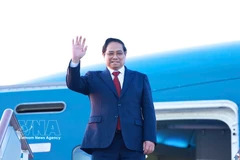
Prime Minister Pham Minh Chinh (Photo: VNA)

The Government leader urged the immediate development of decrees to carry out these works, with initial priority given to delineating the authority of local administrations based on the two-level local administration model, and decentralisation and delegation of power in state management by sector and field, with the responsibilities between the central and local levels clearly defined.

Additionally, he required the building of separate decrees for certain specialised and specific sectors to further promote decentralisation and delegation in state management for these sectors.

With the spirit of “avoiding perfectionism and haste,” the Prime Minister requested standing Cabinet members and the working group of the Government Steering Committee to work with ministers and heads of ministerial-level agencies on relevant contents, tasks, and draft decrees.

They are also tasked with monitoring, and conducting assessments to ensure consistency, coherence, timeliness, and quality of the decrees before submission to competent authorities for consideration./.
VNA

See more

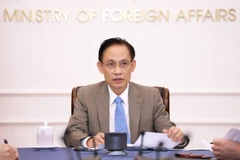
Vietnamese Minister of Foreign Affairs Le Hoai Trung (Photo: VNA)

Vietnamese, Lao foreign ministers hold online talks

The two ministers agreed to maintain close coordination in the time ahead and to expand cooperation under the new framework and orientation, underscoring the significance of the two countries’ “great friendship, special solidarity, comprehensive cooperation, strategic cohesion”.

State President Luong Cuong (fourth from left, first row) and newly-appointed foreign ambassadors in Hanoi on December 12, 2025. (Photo: VNA)

State President receives newly-appointed foreign ambassadors

Receiving Egyptian Ambassador Hany Mostafa Mohamed Mostafa Hassan, President Cuong affirmed that Vietnam highly evaluates Egypt’s role, position, and contributions to regional peace and stability. He also congratulated the African country on its achievements in implementing the 2030 Vision.

An overview of the seminar on the Party’s leadership in ensuring macroeconomic stability, renewing the growth model, restructuring the economy and promoting international integration (Photo: VNA)

Vietnam, Cuba exchange theoretical views on Party’s leadership in macroeconomic stability

The two sides explored in depth the Party’s role in leadership, orientation, oversight and strategic coordination in economic management; approaches to implementing economic restructuring programmes alongside the renewal of the growth model; measures to respond to global economic volatility, inflationary pressures and shifts in global trade; and the building of effective strategic advisory bodies to ensure the Party’s comprehensive leadership in a changing context.

Vietnam’s Ambassador to Australia Pham Hung Tam (Photo: VNA)

Australia–Vietnam Policy Institute serves as bridge for bilateral relations

Established in 2022, AVPI serves as a forum for exchanging ideas among businesses, government agencies, non-profits, universities, and scholars in Australia on Vietnam. The institute acts as a platform for policy dialogue, focusing on research and insights on strategic relations and bilateral economic ties.

General Secretary and Chairman of the NA Office Le Quang Minh chairs the press conference announcing the results of the NA's 10th session (Photo: VNA)

10th session helps strengthen public trust in personnel work, NA’s supreme oversight

Personnel consolidation carried out at the NA's 10th session helps ensure continuous, unified, effective, and efficient leadership of the state apparatus; guarantee smooth and uninterrupted direction and governance; and prevent any leadership gaps in critical areas. All positions elected or approved by the legislature meet the key criteria required within the organisational structure.