Public administrative governance key to national development: PM

PM Pham Minh Chinh underscored that public administrative governance is central to organising the exercise of State power and translating the Party’s guidelines and the State's policies and laws into tangible development outcomes.

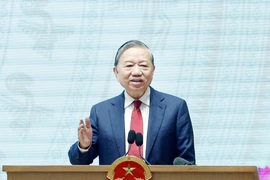
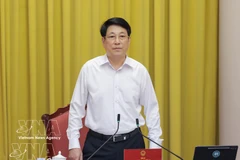
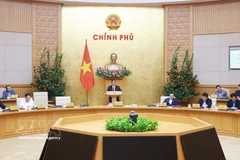
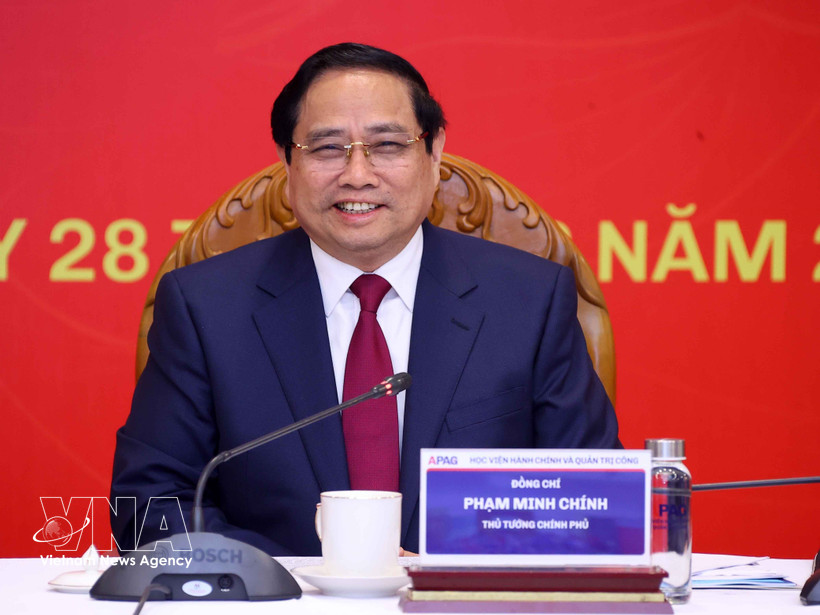
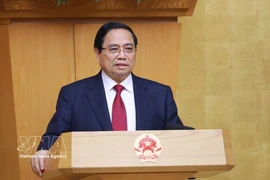
Prime Minister Pham Minh Chinh addresses the working session with the Academy of Public Administration and Governance (APAG) in Hanoi on February 28. (Photo: VNA)

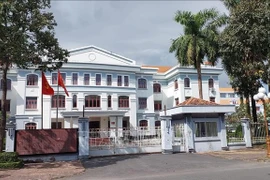
Hanoi (VNA) – Prime Minister Pham Minh Chinh visited and worked with leaders of the Academy of Public Administration and Governance (APAG) in Hanoi on February 28, stressing that public administrative governance is the “hinge” of national development.

PM Chinh underscored that public administrative governance is central to organising the exercise of State power and translating the Party’s guidelines and the State's policies and laws into tangible development outcomes.

He distinguished between “management”, which focuses on execution, coordination of resources and supervision of activities, and “governance”, which shapes vision, strategy and operational mechanisms for sustainable development. At the national level, governance represents a higher stage of state management, requiring more comprehensive and advanced executive capacity.

In Vietnam, the concept of “national governance” was first formally introduced in the 13th National Party Congress documents, emphasising modernisation in line with the principle: “The Party leads, the State manages, and the people are the masters.” Within this structure, public administrative governance holds the central position, he stressed.

The PM described national governance capacity as a “strategic asset” and core soft power determining a country’s breakthrough potential, strategic autonomy and development standing. The biggest gap between policy and practical results, he noted, lies in governance and implementation capacity.
vnanet-potal-thu-tuong-lam-viec-voi-hoc-vien-hanh-chinh-va-quan-tri-cong-8612113-1.jpg
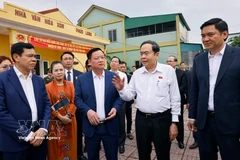
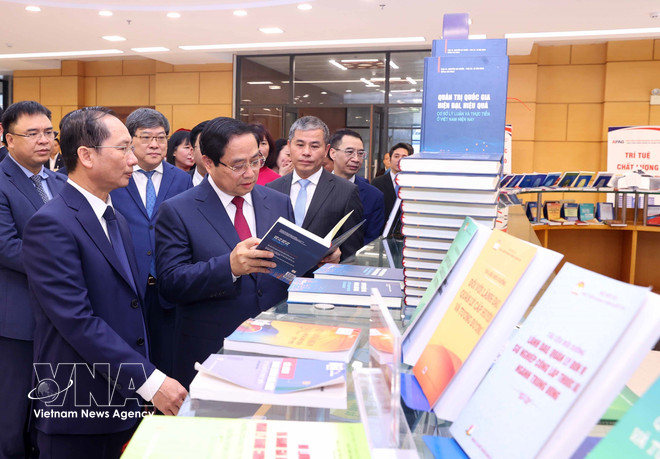
Prime Minister Pham Minh Chinh and officials visit an exhibition of books and publications on APAG activities (Photo: VNA)

He highlighted the rapid, complex and unpredictable global changes as well as major domestic transitions, including digital, green, energy and structural transformations, as well as improvements in human resources quality. Vietnam is also streamlining its administrative system from four levels to three, while enhancing the quality of its grassroots personnel.

He noted that the 14th National Party Congress continued to prioritise building a modern, efficient, and effective governance system centred on citizens and businesses, grounded in science – technology, innovation, digital transformation and green transition. Meanwhile, the Politburo has issued nine specialised resolutions on key areas to create a comprehensive framework for national governance in the new era, stressing the task of developing personnel and improving governance efficiency.

To meet new requirements, PM Chinh asked the APAG to take the lead in key areas, including implementing Party resolutions, developing a plan to become a national key university in public administration and governance, innovating training methods based on competency standards and outcomes, strengthening independent evaluation, expanding cooperation with domestic and international partners, and enhancing autonomy. It needs to promote research and policy consultancy, upholding the philosophy of “placing learners at the centre”, developing a contingent of lecturers capably of engaging in policymaking, and advancing a digital, green and smart academy model.

He also requested relevant ministries and the Ho Chi Minh National Academy of Politics to create favourable mechanisms, ensure greater autonomy, and provide adequate resources to support the APAG development.

According to APAG Director Assoc. Prof. Dr Nguyen Ba Chien, the academy performs undergraduate and postgraduate training, research, international cooperation and public services in administration, state management and governance under the direction of the Ho Chi Minh National Academy of Politics.

After merging into the Ho Chi Minh National Academy of Politics, it has stabilised its structure without disrupting operations. The academy now comprises five functional units, seven faculties, two centres, one scientific journal and three regional campuses in Ho Chi Minh City, Da Nang and Dak Lak, employing a 649-strong staff.

With a nationwide network, it closely links training with practical governance needs. Over the past year, it has continued academic programmes while enhancing capacity-building for officials, particularly amid the shift to a two-tier local government model.

The academy proposed standardising civil servant training based on competency frameworks, linking training with personnel evaluation, and expanding its role in policy consultancy and impact assessment./.
VNA

See more

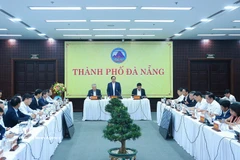
Prime Minister Pham Minh Chinh addresses a working session with the Da Nang Party Committee's Standing Board on February 28. (Photo: VNA)

Da Nang urged to secure growth of at least 11% this year

The PM directed further development of the Vietnam International Financial Centre (IFC) in Da Nang into a modern global hub linked to innovation, digital technology and sustainable finance, serving as a controlled testing ground for new financial models.

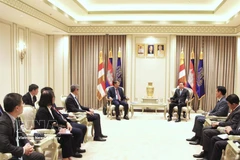
The meeting between Permanent Deputy Minister of Foreign Affairs Nguyen Minh Vu and First Deputy Prime Minister of Cambodia Neth Savoeun in Phnom Penh on February 27 (Photo: VNA)

Vietnam consolidates traditional ties with Cambodia

Deputy Foreign Minister Nguyen Minh Vu affirmed that by dispatching a delegation to Cambodia shortly after the Party General Secretary's visit, Vietnam demonstrates its leaders' strong political determination as well as proactive, prompt and responsible efforts to effectively implement the high-level agreements and common perceptions through concrete programmes and clear roadmaps.

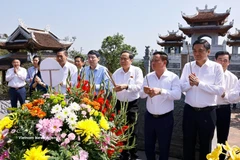
National Assembly Chairman Tran Thanh Man and officials offer incense to President Ho Chi Minh at Chung Son Temple on February 28. (Photo: VNA)

NA leader pays tribute to President Ho Chi Minh in Nghe An

At the Kim Lien Special National Relic Site, the NA leader and his delegation paid solemn tribute to President Ho Chi Minh, a great leader of the Party and people, a hero of national liberation, and the one who laid the foundation for the Vietnamese NA and affirmed the role of the supreme body of State power throughout his life-long career dedicated to the nation.

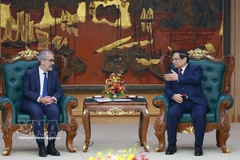
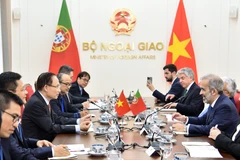
Prime Minister Pham Minh Chinh (R) receives Portuguese Minister of State and Foreign Affairs Paulo Rangel in Hanoi on February 27. (Photo: VNA)

Vietnam wants to further deepen multifaceted ties with Portugal: PM

PM Chinh highlighted the historical bonds between the two peoples dating back more than 500 years and described Portugal’s decision to open an embassy in Vietnam as a landmark step, reflecting its determination to strengthen the bilateral ties and create a favourable foundation for cooperation across fields.

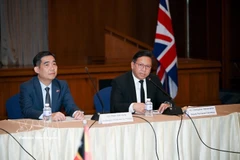
The talks between Minister of Foreign Affairs Le Hoai Trung and Portuguese Minister of State and Foreign Affairs Paulo Rangel in Hanoi on February 27. (Photo: The Ministry of Foreign Affairs)

Vietnamese, Portuguese foreign ministers hold talks in Hanoi

They concurred in making economic, trade and investment cooperation a key pillar of bilateral relations while stepping up collaboration in maritime economy, renewable energy, education and training, start-ups, innovation and locality-to-locality connectivity.

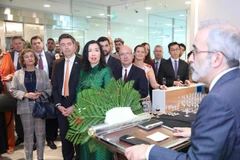
Delegates at the inauguration of the Embassy of the Portuguese Republic in Vietnam (Photo: baoquocte.vn)

Portugal inaugurates embassy in Vietnam

Deputy Foreign Minister Le Thi Thu Hang noted that Vietnam’s launch of its embassy in Lisbon in November last year and Portugal’s establishment of its embassy in Hanoi represent meaningful reciprocal steps.

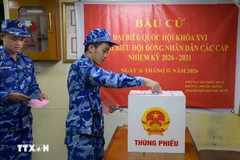
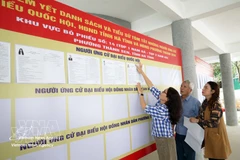
Voters aboard Coast Guard ship CSB 6008 in Ho Chi Minh City cast their ballots in the election of deputies to the National Assembly and People’s Councils at all levels. (Photo: VNA)

Early voting held safely and orderly for voters on duty at sea

Captain Nguyen Duc Hoang, Captain of CSB 6008, said the early voting not only enabled the officers and soldiers to exercise their political rights but also reflected the Party and State’s attention to safeguarding citizens’ mastery rights.

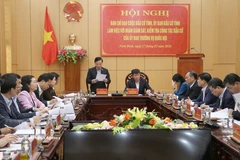
Vice Chairman of the National Assembly Nguyen Khac Dinh speaks at the meeting (Photo: VNA)

Ninh Binh urged to prioritise election preparations

Ninh Binh province has established an election committee at the provincial level comprising 37 members and 129 commune-level committees with a total of 2,128 members. Across the province, 2,536 polling stations have been set up, including 18 separate polling areas, along with 2,536 election teams.

At a workshop on mutual legal assistance in criminal matters (Photo: VNA)

Institutional improvement to power new era of development: official

As the country enters a new development phase, laws are defined not merely as management tools but as instruments to drive development, dismantle bottlenecks and unlock new growth space—particularly in science and technology, innovation and digital transformation.

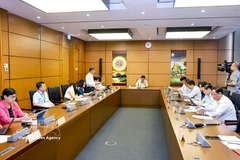
Prime Minister chairs February thematic law-making session (Photo: VNA)

Prime Minister chairs February thematic law-making session

Since the start of the current term, the Government has convened 41 thematic sessions on law-making, giving opinions on more than 215 draft laws, ordinances, resolutions and legislative policy dossiers; and submitting 179 legal documents to the National Assembly for consideration and adoption—more than double the number recorded during the 14th National Assembly term.

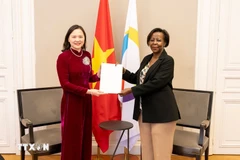
Ambassador Nguyen Thi Van Anh, Head of Vietnam's Permanent Delegation to to UNESCO (left), presents her credentials to the Secretary-General of International Organisation of La Francophonie Louise Mushikiwabo (Photo: VNA)

OIF Secretary-General appreciates Vietnam’s role, contributions

Secretary-General of the International Organisation of La Francophonie (OIF) Louise Mushikiwabo congratulated the diplomat on her new assignment, expressing her admiration for and congratulations on Vietnam’s socio-economic development achievements and international integration. She spoke highly of Vietnam’s role, position, and contributions within the Francophone Community.

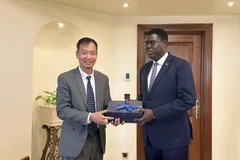
Vietnamese Ambassador to Egypt and South Sudan Nguyen Nam Duong (L) presents gift to South Sudanese Minister of Foreign Affairs and International Cooperation Monday Semaya Kumba (Photo: VNA)

South Sudan keen on all-around collaboration with Vietnam

South Sudanese Minister of Foreign Affairs and International Cooperation Monday Semaya Kumba expressed interest in increasing the exchange of all-level delegations and sustaining mutual support at the UN and other multilateral forums, while conveying his hope to visit Vietnam soon.