Vietnam's 2026 election: streamlined timelines, digital innovation, and push for better leadership

The 2026 election represents a defining political moment for Vietnam - a countrywide celebration of democracy that builds trust and propels forward momentum into the next era of progress.

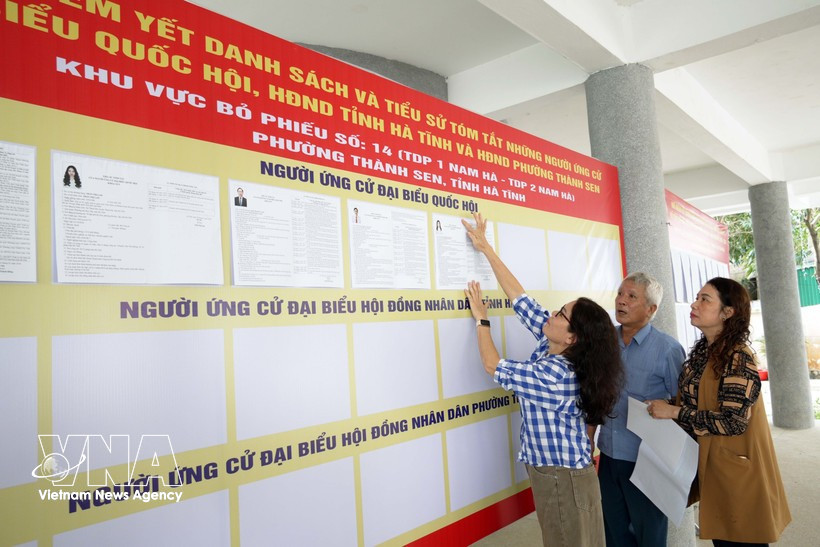
Lists of candidates in the deputies to the 16th National Assembly and People’s Councils at all levels are publicised at Polling Station No. 14 in Thanh Sen ward, Ha Tinh province. (Photo: VNA)

Hanoi (VNA) – The upcoming election of deputies to the 16th National Assembly and People’s Councils at all levels goes beyond choosing people’s representatives but those equipped to drive a revamped governance model, said full-time deputy head of Hai Phong city’s delegation of NA deputies Nguyen Thi Viet Nga.

Ensuring concerted steps

Nga pointed to the most notable change: the Election Day is fixed for March 15, about two months earlier than in prior terms, with results anticipated by March 22. The 16th NA’s first session is slated to convene on April 6 to look into personnel placements and legislative tasks.

The tighter schedule between the 14th National Party Congress, which concluded in January 2026, and the opening sessions of the new-term NA and People's Councils will facilitate smooth personnel realignment, assignment of officials, and swift rollout of the 14th National Party Congress's Resolution and resolutions of congresses at all levels.

Alongside the earlier election date, procedural timelines have been tightened. The gap from the end of candidate nominations to voting day has been cut from 70 days to just 42, designed to simplify processes, heighten proactiveness and accountability across levels, and fast-track digital integration. Adjusted schedules now cover consultation sessions, candidate list disclosures, and the handling of complaints and denunciations.

Flexible campaigning methods

Nga said a noteworthy innovation reflecting the “spirit of the digital age” is the expanded options for voter-candidate interaction. Meetings can take place face-to-face, virtually, or in blended formats, as long as they meet standards for technology, data security, and cybersecurity.

This flexibility widens access to democratic engagement, especially for voters in crowded urban zones or those juggling tight schedules. For candidates, it enables wider outreach, more adaptive dialogue, and faster feedback loops.

A major upgrade lets voters access candidate profiles directly via the VNeID app, eliminating the need for manual searches. Election data will be updated periodically, potentially every two hours, from polling sites to the central system, improving real-time accuracy and easing administrative burdens at the grassroots level. Greater information accessibility empowers voters to review candidates’ biographies, professional backgrounds, and action agendas before voting.

Still, Nga stressed that embracing digital tools requires robust data protection, privacy measures, reliable infrastructure, and targeted assistance for less tech-savvy or disadvantaged groups to prevent exclusion.

Quality of deputies

Nga affirmed that the quality of deputies must hinge on a mix of political integrity, public service ethics, professional competence, social trust, and above all, a true commitment to representing constituents, listening to their concerns, and protecting their legitimate rights and interests.

Balanced representation remains essential, with appropriate shares of full-time lawmakers, women, younger members, ethnic minorities, and voices from varied fields such as academia, labour, agriculture, business, and the arts. Such diversity ensures parliamentary debates capture the full spectrum of socio-economic realities.

Building momentum for new term

Nga expressed her confidence that these reforms will result in election outcomes that truly mirror the people’s will and aspirations, yielding deputies of integrity, capability, and credibility who are bold in thought and action, willing to take responsibility, and deeply connected to citizens.

A successful poll, she said, will establish a solid foundation for the new term, delivering a more capable NA and People’s Council network, proactive delivery of the 14th Party Congress Resolution, and progress toward national breakthroughs via institutional reform, effective governance, national unity, and citizen-centred policies.

With these meticulously designed overhauls, the 2026 election represents a defining political moment for Vietnam – a countrywide celebration of democracy that builds trust and propels forward momentum into the next era of progress./.
VNA

See more

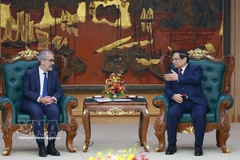
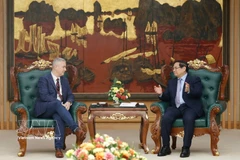
Prime Minister Pham Minh Chinh (R) receives Portuguese Minister of State and Foreign Affairs Paulo Rangel in Hanoi on February 27. (Photo: VNA)

Vietnam wants to further deepen multifaceted ties with Portugal: PM

PM Chinh highlighted the historical bonds between the two peoples dating back more than 500 years and described Portugal’s decision to open an embassy in Vietnam as a landmark step, reflecting its determination to strengthen the bilateral ties and create a favourable foundation for cooperation across fields.

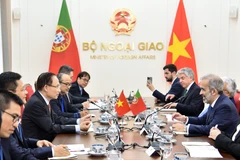
The talks between Minister of Foreign Affairs Le Hoai Trung and Portuguese Minister of State and Foreign Affairs Paulo Rangel in Hanoi on February 27. (Photo: The Ministry of Foreign Affairs)

Vietnamese, Portuguese foreign ministers hold talks in Hanoi

They concurred in making economic, trade and investment cooperation a key pillar of bilateral relations while stepping up collaboration in maritime economy, renewable energy, education and training, start-ups, innovation and locality-to-locality connectivity.

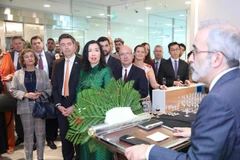
Delegates at the inauguration of the Embassy of the Portuguese Republic in Vietnam (Photo: baoquocte.vn)

Portugal inaugurates embassy in Vietnam

Deputy Foreign Minister Le Thi Thu Hang noted that Vietnam’s launch of its embassy in Lisbon in November last year and Portugal’s establishment of its embassy in Hanoi represent meaningful reciprocal steps.

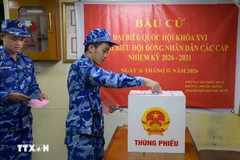
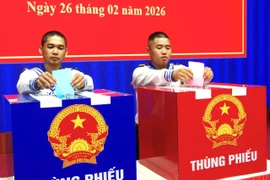
Voters aboard Coast Guard ship CSB 6008 in Ho Chi Minh City cast their ballots in the election of deputies to the National Assembly and People’s Councils at all levels. (Photo: VNA)

Early voting held safely and orderly for voters on duty at sea

Captain Nguyen Duc Hoang, Captain of CSB 6008, said the early voting not only enabled the officers and soldiers to exercise their political rights but also reflected the Party and State’s attention to safeguarding citizens’ mastery rights.

Prime Minister Pham Minh Chinh speaks at the Government’s monthly law-building session in Hanoi on February 27. (Photo: VNA)

PM orders further red tape cuts to ease compliance cost burden

Prime Minister Pham Minh Chinh stressed that laws should stipulate only fundamental and principled issues, with detailed regulations delegated to drafting agencies for inclusion in guiding decrees. Policy articulation must ensure clarity, accessibility, ease of enforcement, and effective oversight.

At a workshop on mutual legal assistance in criminal matters (Photo: VNA)

Institutional improvement to power new era of development: official

As the country enters a new development phase, laws are defined not merely as management tools but as instruments to drive development, dismantle bottlenecks and unlock new growth space—particularly in science and technology, innovation and digital transformation.

Prime Minister chairs February thematic law-making session (Photo: VNA)

Prime Minister chairs February thematic law-making session

Since the start of the current term, the Government has convened 41 thematic sessions on law-making, giving opinions on more than 215 draft laws, ordinances, resolutions and legislative policy dossiers; and submitting 179 legal documents to the National Assembly for consideration and adoption—more than double the number recorded during the 14th National Assembly term.

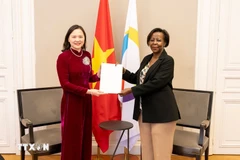
Ambassador Nguyen Thi Van Anh, Head of Vietnam's Permanent Delegation to to UNESCO (left), presents her credentials to the Secretary-General of International Organisation of La Francophonie Louise Mushikiwabo (Photo: VNA)

OIF Secretary-General appreciates Vietnam’s role, contributions

Secretary-General of the International Organisation of La Francophonie (OIF) Louise Mushikiwabo congratulated the diplomat on her new assignment, expressing her admiration for and congratulations on Vietnam’s socio-economic development achievements and international integration. She spoke highly of Vietnam’s role, position, and contributions within the Francophone Community.

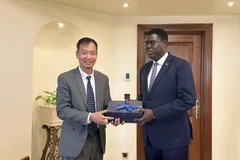
Vietnamese Ambassador to Egypt and South Sudan Nguyen Nam Duong (L) presents gift to South Sudanese Minister of Foreign Affairs and International Cooperation Monday Semaya Kumba (Photo: VNA)

South Sudan keen on all-around collaboration with Vietnam

South Sudanese Minister of Foreign Affairs and International Cooperation Monday Semaya Kumba expressed interest in increasing the exchange of all-level delegations and sustaining mutual support at the UN and other multilateral forums, while conveying his hope to visit Vietnam soon.

Prime Minister Pham Minh Chinh (R) receives Belgian Ambassador to Vietnam Karl Van Den Bossche on February 26. (Photo: VNA)

Vietnam always sees Belgium as important partner within EU: PM

Ambassador Karl Van Den Bossche affirmed that Belgium always considers Vietnam a priority partner in the region and stands ready to accompany Vietnam in achieving its socio-economic development goals, including overcoming the consequences of war.

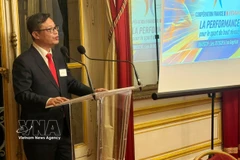
Vietnamese Ambassador to France Trinh Duc Hai speaks at the event (Photo: VNA)

Sports cooperation reflects depth of Vietnam-France ties: Ambassador

Deeper engagement in major Francophone sporting events and a long-term ambition to host large-scale competitions, including the Olympic Games, would help elevate Vietnam’s sporting profile in the international arena while further deepening strategic cooperation between Vietnam and France.

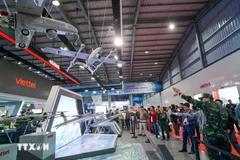
The area showcasing electronic equipment by the Military Industry-Telecoms Group (Viettel) at the Vietnam International Defence Expo 2024. (Photo: VNA)

Vietnam International Defence Expo 2026 preparations move into high gear

Vietnam International Defence Expo 2026, themed “Peace, Friendship, Cooperation and Development,” will be organised on a larger scale, featuring a wide array of weapons and technical equipment alongside product exhibitions, seminars and panel discussions, drills, live field demonstrations, and business networking activities.

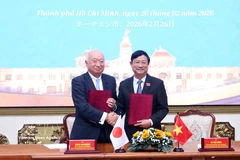
Vo Van Minh (right), Chairman of the Ho Chi Minh City People’s Council, and Yanai Shungaku (left), Chairman of the Yamaguchi Prefectural Assembly, sign a memorandum of understanding on friendly exchanges and cooperation. (Photo: VNA)

Ho Chi Minh City, Japan's Yamaguchi elevate partnership

Among Japanese localities, Ho Chi Minh City places high importance on cooperation with Yamaguchi prefecture and wishes to further nurture the longstanding friendship between the two sides, including the earlier partnership between Yamaguchi and the former Binh Duong province (now part of Ho Chi Minh City).

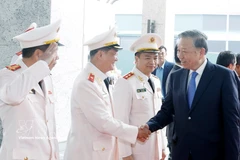
Party General Secretary To Lam and officers of the Ministry of Public Security’s Investigation Security Agency (A09) during his visit to the unit on February 26. (Photo: VNA)

Party chief extends Tet greetings to Investigation Security Agency

The investigation security unit has consistently upheld its role in safeguarding the Party, the regime and the people, thoroughly implementing the principle of proactively preventing threats from early and from afar to thwart hostile and reactionary forces plots and schemes, and shifting towards a more proactive and offensive posture in line with national political requirements.

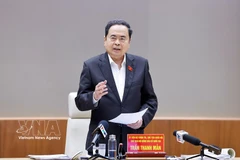
National Assembly (NA) Chairman Tran Thanh Man speaks at the working session with Hai Phong authorities. (Photo: VNA)

NA Chairman inspects election preparations in Hai Phong

Highlighting Hai Phong’s role as one of Vietnam’s six centrally-run cities, the leader said the upcoming election of deputies to the 16th legislature and to People’s Councils at all levels for the 2026–2031 term must be closely aligned with the need to safeguard political security and social order, and organised with a higher sense of responsibility, more rigorously and more comprehensively than in previous polls.