Public investment may help Vietnam achieve GDP growth target: VinaCapital

A VinaCapital report highlighted the Government’s strong commitment to public investment disbursement this year.

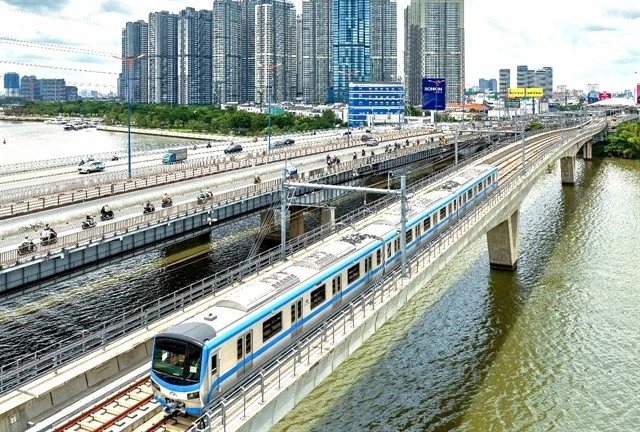
The Ben Thanh-Suoi Tien metro line. (Photo: VNA/VNS)

HCM City (VNS/VNA) - A 40% increase in infrastructure investment that the Vietnamese Government is now planning would add approximately 2 percentage points to Vietnam’s 2025 GDP growth - if the Government manages to hit its disbursement targets this year, according to Michael Kokalari, chief economist at VinaCapital.

In his latest report, he said the Government increased its 2025 infrastructure spending target from 6% to 7% of GDP last week and simultaneously lifted its GDP growth target for 2025 from 7% to 8%.

“The increased 1% of GDP of planned spending on infrastructure projects should help the country achieve the Government’s new, 1% higher 2025 GDP growth target and will also support the country’s long-term growth prospects and appeal to foreign investors.

“The Government’s newly approved plan to increase infrastructure investment by nearly 40% this year to 36 billion USD (up from the 31 billion USD originally approved late last year), should help offset the hit to the country’s GDP growth we expect from slower export growth to the US, following a 23% surge in Vietnam’s exports to the US last year.”

The report also highlighted the Government’s strong commitment to public investment disbursement this year.

Several large projects were initiated/approved over the last two months, including a 67 billion USD high-speed rail line that would span the length of the country and the 8 billion USD Lao Cai - Hanoi - Hai Phong railway.

Meanwhile, the first section of Ho Chi Minh City’s long awaited metro line opened in December 2024, which VinaCapital believes is helping to support enthusiasm and momentum for accelerated infrastructure development going forward.

Kokalari pointed out that the Government had ample fiscal resources to ramp up spending.

“Government debt is well below 40% of GDP, and we estimate that the Government has over 40 billion USD of undisbursed funds previously earmarked for infrastructure spending.

“The primary bottlenecks to increasing infrastructure spending (or to achieving annual spending targets) have been bureaucratic issues impeding the project approvals and other processes entailed in large-scale project development,” he said.

Three major laws came into effect last month that are directly aimed at accelerating project approvals, streamlining investment disbursements, and driving greater private sector participation in infrastructure projects, and the laws should help expedite progress and ensure that spending targets are achieved.

Kokalari said more than 80% of planned infrastructure spending this year would be earmarked for boosting the country’s electricity generation and distribution capacity, and for improving its transportation network. By 2030, Vietnam aims to double the total length of its highway network, double airport passenger capacity and increase the country’s seaport capacity by 50%.

The country’s Power Development Plan VIII, approved in 2023, anticipates 9% annual electricity consumption growth for the foreseeable future. Vietnam will need 135 billion USD to double Vietnam’s electricity generation capacity over 2021-2030 with most of that growth expected to come from LNG (37% of total planned capacity growth), renewables (27%), and coal (19%), according to Kokalari.

The report also highlighted that in early 2025, the Government announced additional public investments into large infrastructure projects related to railways and ports to further streamline freight movement, improve workforce mobility, and facilitate more FDI inflows into Vietnam.

The Lao Cai - Hanoi - Hai Phong rail lines (and two other lines of Lang Son – Hanoi and Mong Cai – Ha Long – Hai Phong) would link nine provinces in Vietnam to China’s Yunnan province, enabling a more efficient flow of goods across the two countries. This railway may also facilitate the transit of Vietnamese goods to Europe through China.

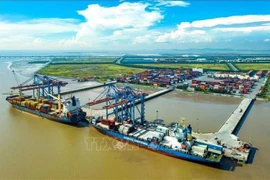
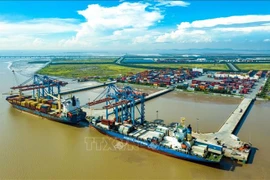
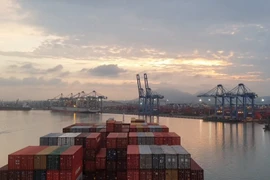
Regarding ports, the Government’s recent revision of its seaport development plan added the Can Gio port project, which would accommodate larger vessels, supporting the country’s goal of increasing its seaport capacity by 50% by 2030, the report stated./.

VNA

See more

At the working session (Photo: VNA)

Can Tho, Guangxi seek collaboration in logistics, supply chains

Chinese investors now back 35 projects in Can Tho with registered capital of nearly 1.2 billion USD. In the first seven months of 2026, Can Tho’s exports to China hit 77.5 million USD, while imports stood at 64.7 million USD. Key exports included rice, seafood, farm produce, processed agricultural products and apparel while main imports comprised agricultural chemicals, veterinary medicines, fertilisers, chemicals, fabrics and other materials and inputs.

Vietnamese Minister of Finance Ngo Van Tuan grants an interview to the Vietnam News Agency (VNA). (Photo: VNA)

Vietnam, Russia move to boost financial cooperation

On bilateral economic, trade and investment ties, Tuan said two-way trade hit 3.24 billion USD in the first seven months of 2026, up 12% from a year earlier. Vietnam’s exports to Russia totaled 1.33 billion USD, while imports amounted to 1.91 billion USD.

Cai Mep - Thi Vai Port complex in Ho Chi Minh City (Photo: VNA)

Ho Chi Minh City seeks to make seaports new growth driver

To maximise its seaport advantages, Ho Chi Minh City is developing smart and green ports while promoting clean energy, lower emissions and sustainable supply chains. It aims to establish an integrated ecosystem linking seaports with industrial parks, logistics centres, free trade zones, multimodal transport networks and an international financial centre.

Farmers visit the off-season durian orchard of Cao Chi Dai in Vinh Hanh commune, An Giang province (Photo: VNA)

Vietnam promotes finance for green agriculture

Over the past five years, Vietnam has developed and gradually implemented a green finance system to support low-emission and environmentally friendly production, including agriculture. Based on the State Bank of Vietnam's Directive No. 03/CT-NHNN dated March 24, 2015, banks including BIDV, VCB, HDBank and Agribank have introduced green credit packages for waste treatment, high-tech agriculture, digital transformation, regional linkages and emission reduction across production chains.

An overview of the meeting between representatives from Polish businesses and the Agency for Domestic Market Surveillance and Development. (Photo: Agency for Domestic Market Surveillance and Development)

Polish businesses seek suppliers, partners in Vietnam

MAJAMI, a confectionery manufacturer and trader under Sweet House, is seeking distributors for Polish confectionery products in the Vietnamese market. Meanwhile, GABONA, a distributor and wholesaler of professional cosmetics, hair care and make-up products and beauty accessories, is looking for Vietnamese manufacturers of vegan and natural cosmetics.

Kendra Rinas, Chief of Mission for IOM Vietnam speaks at the event. (Photo: VNA)

Vietnam advances in building, using migrant labour data system: workshop

Data presented in the report reflects effective migration governance in recent years. The average recruitment cost paid by migrant workers dropped by 23.8%, from 164.9 million VND (6,400 USD) in 2021 to 125.7 million VND in 2025. Conversely, average first-month earnings abroad rose by 25.4%, increasing from 22.4 million VND to 28.1 million VND.

Workers produce leather shoes for export at Lefaso Tra Vinh Investment and Production Joint Stock Company in Tra Cu commune, Vinh Long province. (Photo: VNA)

Vietnamese exporters pivot to ease pressure from US tariffs

Pressure from the new US tariff policy is prompting Vietnamese exporters to reassess their strategies. Rather than pursuing volume-driven growth, many are shifting towards higher-value orders, tighter cost control, greater productivity and a more balanced allocation of markets to reduce reliance on a single destination.

A worker handles and stacks goods. Nearly 138,100 businesses were newly founded from January to August, up 7.7% over the same period last year, while more than 40,800 businesses completed dissolution procedures, a jump of 125.5%. (Photo: VNA)

Firm entry and exits point to continued restructuring pressure

Updates from the National Statistics Office last week showed that nearly 138,100 businesses were newly founded from January to August, up 7.7% over the same period last year, while more than 40,800 businesses completed dissolution procedures, a jump of 125.5%.

A Vietnamese business introduces durian cakes to Chinese visitors at the 22nd China-ASEAN Expo (CAEXPO) in 2025. (Photo: VNA)

Vietnam steps up trade, investment promotion at China-ASEAN Expo

According to the CAEXPO Secretariat, Vietnam will once again lease an entire exhibition area of about 3,000sq.m, featuring 170 booths, making it one of the ASEAN countries with the largest exhibition spaces at this year’s event. Nearly 100 Vietnamese businesses have confirmed their participation, including major brands such as Trung Nguyen Group, TH Group, Saigon Coffee and Biti’s.