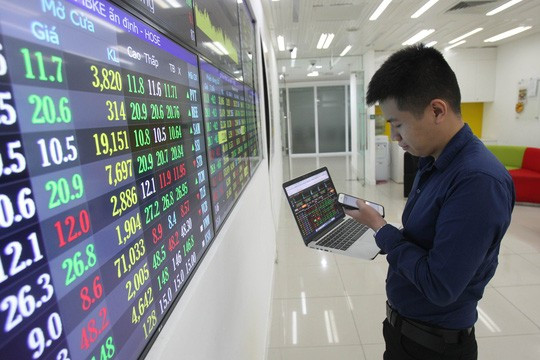
Hanoi (VNA) - Vietnam's stock market has undergone a significant transformation, marked by an increase in the number of listed companies, market capitalisation, and trading value.
However, to align with the market's expanding scale, there is a pressing need to enhance investment quality and ensure that available securities meet stringent standards.
Minister of Finance Nguyen Van Thang emphasised the importance of accelerating development efforts in 2025 to harness resources and fully exploit potential, aiming for sustainable economic breakthroughs.
He stated the the mission of the securities sector is to continuously develop infrastructure, improve service quality, attract international investors, and mobilise medium- and long-term capital for the state budget, enterprises, and the economy. The country must create a transparent, safe, and attractive investment environment, making Vietnam's stock market a reliable destination for both domestic and foreign investors.
Currently, Vietnam's stock market boasts over 9.2 million trading accounts. Deputy Minister of Finance Nguyen Duc Chi noted that for the market to achieve high quality and sustainable development, there must be a substantial presence of institutional investors.
In developed markets like the Republic of Korea (RoK) and Japan, institutional investors account for about 60% of market activity, whereas in Vietnam, this figure remains minimal, leading to market volatility driven by investor sentiment.
Data from securities firms indicates that individual investors contribute approximately 75% of daily liquidity. This contrasts with international markets such as Hong Kong (China) and the RoK, where individual investors typically invest through fund certificates or entrust funds to investment firms, with direct market participation primarily by professional investors.
To attract more foreign institutional investors and enhance investment capacity in Vietnam's stock market, the Ministry of Finance and the State Securities Commission have been diligently refining the legal framework.
The Ministry issued Circular No. 68/2024/TT-BTC, effective from November 2, 2024, addressing the prefunding requirement for margin trading, allowing foreign institutional investors to purchase shares without pre-depositing funds.
Additionally, the newly amended Securities Law, recently passed by the National Assembly, facilitates the participation of professional institutional investors in the market.
Nguyen The Minh, Director of Research and Development for Individual Clients at Yuanta Vietnam Securities Company, observed that the dominance of domestic individual investors in daily trading leads to significant market fluctuations, sometimes not reflecting underlying fundamentals.
Market movements result from the "fear of missing out" (FOMO) effect. Implementing a central counterparty (CCP) model and pursuing market upgrades should incentivise more institutional investors, thereby reducing the proportion of individual investors.
Despite the potential for an upgrade and stability, foreign investors have been accelerating their divestment from Vietnamese stocks.
Minh noted that the market currently faces a shortage of high-quality offerings, particularly due to delays in initial public offerings (IPOs) and the privatisation of state-owned enterprises. With the passage of the Law on Management and Use of Public Assets, it is anticipated that from 2025 onwards, these activities will provide new supply, addressing market shortages. This development is expected to not only attract capital inflows but also play a crucial role in the market's upgrade by overcoming capitalization challenges and ensuring sustainability.
Nguyen Quang Thuan, Chairman of FiinGroup, suggested accelerating the reduction of state ownership in companies and sectors where state control is unnecessary, encouraging enterprises on the UPCOM market to transition to listed exchanges, and promoting corporate governance and transparency. Additionally, he emphasised the need to improve the quality of information disclosure.
Thuan also highlighted the importance of market upgrades and regulatory relaxation to empower institutional investors. While individual investors contribute to short-term market momentum, institutional investors play a vital role in stabilising the stock index.
To enhance the effectiveness of foreign institutional investors and promote the development of Vietnam's stock market, it is essential to pursue market upgrades and national credit rating objectives.
Proactively attracting large international asset management institutions, granting them conditional operating licenses, and developing diverse products tailored to the preference of foreign institutional investors such as non-voting depository receipts are crucial steps. Additionally, managing entrusted accounts by securities brokers and investment companies should be subject to supervision.
Nguyen Minh Hong, Director of Analysis at Nhat Viet Securities Joint Stock Company (VFS), noted that to achieve the goal of laying the foundation for further development, the government will continue to amend regulations on foreign ownership ratios, short selling, and upgrade trading systems to align with international standards. These measures aim to encourage foreign investor participation, making their transactions more active and accessible./.