Hanoi (VNA) - Despite tourism being highlighted as a bright spot in the Government's mid-year economic report during the July cabinet meeting, Prime Minister Pham Minh Chinh and industry leaders remained concerned about how to implement the two-tier administration model to ensure the sector’s smooth operations.
More importantly, how can Vietnam "redraw" its tourism map to fully leverage the expanded spaces and new development opportunities created by the recent administrative mergers?
Each international tourist currently spends about 1,500 USD in Vietnam, and the sector’s leadership is targeting an increase to 2,000 USD. Tourism, as a special integrated economic sector, has an impact on 18 other industries.
Given complex and unpredictable global and regional developments, disruptions in supply chains are inevitable. In this context, Minister of Culture, Sports and Tourism Nguyen Van Hung stressed the need for the tourism sector to adapt to new structures and conditions, aiming not only to remain a spearhead of the economy but also to become an “inspirational” economic force.
The current priority is helping tourism adapt and offset the challenges posed by recent global shifts. This includes reimagining Vietnam’s tourism map to create stronger inter-regional connections, maximise new advantages, and tap into a broader cultural space rich in diversity, tailored to different markets and visitor profiles.

Minister Hung outlined clear directions and tasks, notably the reassessment of each locality’s tourism assets and the overall restructuring of Vietnam’s tourism system, a process to be completed by the end of Q3.
A top priority is the post-merger restructuring of tourism products, aiming to welcome 22–23 million international visitors by 2025 and contribute to the national growth target of 8%.
To reach this goal, the minister urged provinces to swiftly review and reassess their resources, update or supplement national tourism planning based on current conditions, not just existing frameworks. Bottlenecks in management must also be addressed through revised mechanisms and policies to encourage tourism business investment.
Simultaneous development of domestic and international tourism is essential. In terms of international markets, immediate efforts should focus on ten key source markets like the Republic of Korea, China, Japan, the US, Australia, Europe, Southeast Asia, India, the Middle East, and Russia.
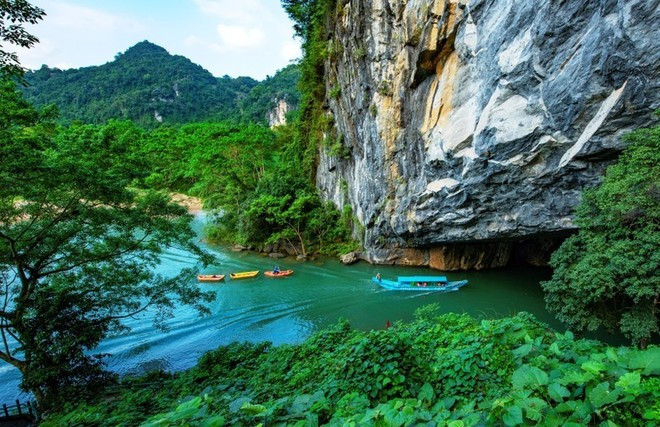
Developing distinct, specialised, and effective tourism products is a key focus. Each locality needs to identify its strengths, adopt strategic cooperation and regional linkage, and clearly define roles to avoid homogenous offerings.
Minister Hung also called for regional linkages to be genuine and sustainable, with major cities such as Hanoi, Ho Chi Minh City, Da Nang, and Hai Phong acting as national transportation and tourism hubs.
Localities must intensify tourism promotion aligned with the theme “Vietnam – Travel to Love”, develop smart tourism ecosystems, and accelerate digital transformation. The sector must provide professional and polite services, enhance destination management, ensure safety and security, and strictly prevent overcharging and tourist scams.
Minister Hung stressed, “Tourism development must come from collective efforts, involving ministries, sectors, localities, businesses, and especially the people. The tourism sector cannot develop on its own”./.