Hanoi (VNA) - The Government is collecting opinions from ministries, sectors, and localities on the plan to reorganise administrative units at all levels and build a two-tier local government model, then compile a report which is to be submitted to the Party Central Committee in mid-April.
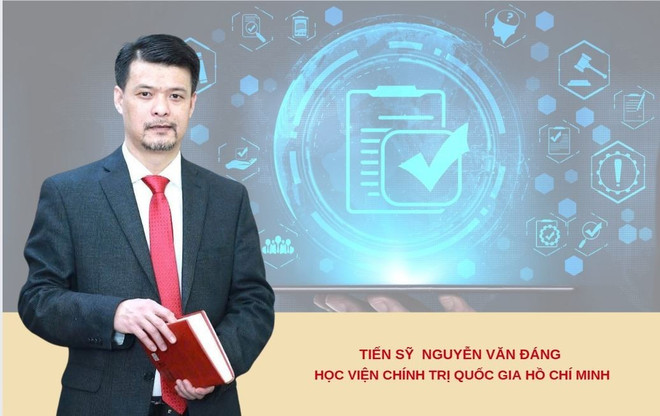
In an interview granted to VietnamPlus, Dr. Nguyen Van Dang, a public governance and policy researcher from the Ho Chi Minh National Academy of Politics said the policy of merging some provincial-level administrative units, eliminating district-level units, and continuing to merge commune-level units presents an opportunity to define a new mission for the commune-level political system, moving toward modern local governance.
High expectations for administrative reorganisation
Reporter: How do you evaluate the reorganisation and restructuring of units within the political system so far?
Dr. Nguyen Van Dang: Since late November 2024, with decisive guidance and swift execution, the review of Resolution 18 of the 12th-tenure Party Central Committee on the continued reorganisation of the political system’s organisational structure has achieved positive results across ministries, departments, and agencies, from central to local levels. These sweeping, revolutionary changes have received widespread support from officials, Party members, and the general public nationwide.
For local administrative units and political systems, until early February 2025, the general direction had been to continue reorganising district- and commune-level units, without detailed orientation for those at the provincial level. Therefore, by late February 2025, the new directions reflected in Conclusion No. 127-KL/TW marked a step forward in the Party and State leaders’ awareness and determination to reshape administrative units and local government models. The anticipated changes will undoubtedly reshape local and national governance structures in the future.
At present, the phrase “organisational apparatus streamlining revolution” has become a widely searched keyword and discussed topic. From what I’ve seen and experienced, the public generally support the Party’s sound policy and the decisive actions by State agencies. A sense of positive expectation about the nation’s future development has emerged from current discussions on the apparatus restructuring.
Reporter: What do you think about the policy of merging certain provinces, eliminating district-level government, and continuing to merge to enlarge commune-level units as outlined in Conclusion No. 127-KL/TW?
Dr. Nguyen Van Dang: The merger of provinces has attracted great attention since we began drastically streamlining ministries and Party bodies. In Conclusion No. 127-KL/TW, the policy about the possibility of merging certain provinces has addressed widespread curiosity, and I have seen strong consensus. This is because shortcomings in the administrative unit structure – especially in administrative boundaries of provinces – have become quite evident. Thus, merging provinces to create new momentum and development space is widely supported.
In Conclusion No. 127-KL/TW, eliminating the district level and establishing a two-tier local government model (provincial and commune levels) is attracting even more attention. Since removing an entire level of the local administration system that has existed for years is a novel policy, it will undoubtedly spark considerable discussion.
The policy of removing the district-level government first poses a huge workload for State agencies in reviewing implementation procedures, redesigning functions and responsibilities of the two-tier system, and rearranging personnel. People and businesses are concerned not only about which provinces might be merged but also about whether the new government model will function smoothly or cause disruption.
Eliminating the district level and enlarging the commune level raises the need to define a “new mission” for the commune-level government system in Vietnam. Though challenging, this task is necessary to build a modern local governance system that is aligned with societal needs and enhances flexibility in responding to increasingly diverse demands from citizens and businesses.
Reporter: What needs to be taken into account when reorganising administrative units at all levels?
Dr. Nguyen Van Dang: Conclusion No. 127-KL/TW demonstrates a very strong determination of the Party and State leaders to reshape the key components of local governance in our country. I believe the guiding viewpoints in the conclusion are essential and very reasonable requirements. More specifically, they demand strategic thinking and long-term vision, and emphasise the need to create conditions for the sustainable development of localities as well as the entire country in the future.

Therefore, reorganising provincial-level administrative units must first involve an overall structural approach. In other words, decisions about which provinces are merged with each other should not be based solely on area or population size but must take into account regional development planning, infrastructure conditions, and similarities in development history, traditions, culture, economic features, and lifestyles of local communities.
The second point to note is that the new provincial structure must optimise the potential of the merged localities. This is a very challenging requirement, so careful and thorough consideration is necessary to ensure that the reorganisation truly facilitates development. While we should not be overly idealistic in expecting a perfect merger of localities, but new administrative units must aim to minimise inadequacies that could spark controversy or even become barriers to future development.
The third important point is defining the functions and tasks for the two-tier government system. The issue is not just about transferring which powers and functions from the district level to the commune or provincial level. If we think that way, we may create a patchwork system that lacks comprehensiveness and long-term sustainability. In my view, the redistribution of authority and functions between provincial and communal levels should be embedded in a long-term vision for a local government model that is aligned with the requirements of modern national governance.
The general principle is that the commune level must be capable of autonomy and self-determination to meet people’s everyday needs, while the provincial level should focus on policy planning, macro-management, and responsibility for complex issues involving the authority of multiple sectors and levels.
Reporter: After the reorganisation, each commune will be almost like a small district. In your opinion, what are the key issues we need to pay attention to?
Dr. Nguyen Van Dang: The first issue is the allocation of authority and the design of functions and tasks for units within the commune-level government. Until now, the commune-level government in our country has mainly implemented policies and managed social life in accordance with the law. However, with the new scale, the commune level will take on more functions and responsibilities, along with increased authority. This requires detailed planning by the agencies responsible for designing the government apparatus.

The second issue is the quality requirements for commune-level officials and civil servants. Clearly, with these new functions and responsibilities, the current personnel at the commune level may face many difficulties. Therefore, the reassignment of officials and civil servants to the commune level must closely link to their competence.
In general, the credibility, virtues, and competence of leaders and managers must match the new stature of communes. Civil servants and public employees must be skilled, have a strong sense of public service ethics, and maintain a professional working style.
The third issue arises from the two-tier local government model itself. Until now, our administrative system has been organised in connection with the government structure. With the two-tier model, people will only have two choices for public service providers: the commune or provincial level. This could lead to problems such as overload at the commune level or inconvenience for citizens having to go up to the provincial level.
So, should we organise intermediate-level administrative units, separate from the government system, to serve the needs of a cluster of communes? This is also a matter that requires thorough study in order to develop suitable options.
Reporter: Thank you very much!