Hanoi (VNS/VNA) – Vietnam stands at a pivotal juncture as it seeks to actualise its net-zero carbon ambitions by 2050, with the launch of a domestic carbon credit market closely seen as a strategic instrument to catalyse greenhouse gas mitigation.
However, experts warn that without a strong, transparent and well-coordinated institutional backbone, the market risks remaining fragmented and underperforming.
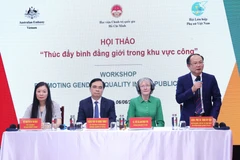
At a workshop held on June 17 by the Vietnam Union of Science and Technology Associations (VUSTA) in collaboration with the Institute for Economics and Development, Associate Professor Hoang Van Phu, chair of the VUSTA, emphasised that with the green growth model, the carbon credit market is the decisive economic tool to promote greenhouse gas reduction and climate response.
Unlike voluntary sustainability efforts, this market operates on the principle that 'polluters pay', establishing emissions allowances as tradable economic assets that transfer financial incentives into the private sector.
Vietnam has laid foundational legal groundwork: the 2020 Environmental Protection Law officially recognises carbon trading, Decree 06/2022 outlines domestic emissions trading mechanisms and Decision 232/QD‑TTg (January 24, 2025) shapes the roadmap for market development between 2025 and 2030.
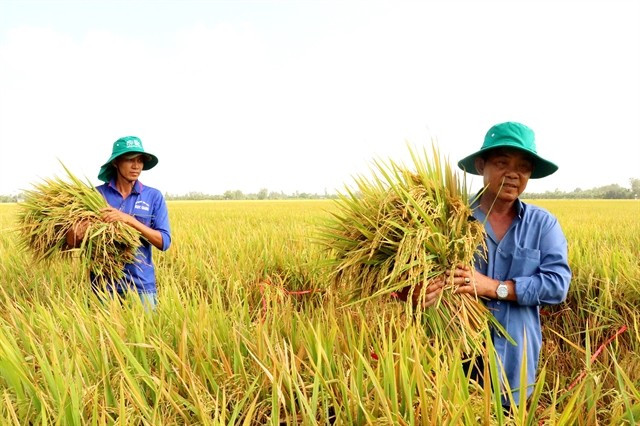
Yet despite this progress, the domestic carbon credit market remains fragmented, with limited infrastructure and minimal linkages across industries, including renewables, agriculture and waste management - key areas with high emission reduction potential.
Experts have identified six critical barriers: regulatory gaps, insufficient technical infrastructure, limited corporate expertise, lack of high‑quality human resources, weak corporate awareness and inadequate inter‑sectoral coordination. These issues risk reducing carbon trading to a theoretical concept rather than a functioning financial mechanism.
Dr Nguyen Manh Hai, an economic expert, said that overcoming these hurdles is central to advancing carbon credit policy. His recommendations include refining the legal framework - covering auctioning, trading and certification - while ensuring transparency in measurement, reporting and verification (MRV) systems, as well as strict enforcement protocols.
He also highlighted the need for a robust domestic emissions trading system (ETS), driven initially by pilot industries, complemented by a digital trading platform, and facilitating integration with global carbon markets via international credit mechanisms. This strategy could attract trade opportunities beyond Vietnam’s borders and tap into global capital flows.
Hai stressed that capacity‑building is also equally vital.
Other experts urged expanded training for companies, regulators and certifiers in emissions accounting and carbon trading, paired with awareness campaigns to illustrate the economic benefits of engaging with the carbon market. Additionally, policy tools such as tax incentives, green credit facilities and financial support for early adopters of clean technologies will be essential.
Voluntary carbon market (VCM) should be promoted as a stepping stone for pioneering firms.
Dr Ho Cong Hoa of the Academy of Policy and Development framed this moment as a strategic turning point for Vietnam. While the legal framework offers basic traction, he emphasised that a legally integrated, transparent and globally interoperable emissions system requires more decisive action.
Drawing on international examples, he noted that the success of carbon markets hinges on comprehensive legislation, stringent oversight mechanisms and active participation by private sector players and financial institutions.
Moreover, transparent quota allocation, smart fiscal incentives and efficient reinvestment of market revenues will sustain long‑term growth.
Looking ahead, Dr Hoa urged authorities to revisit and fine-tune key provisions in Decree 06/2022 and its amendments, clarifying the legal status of carbon as a tradable commodity, auction rules, mechanisms for credit offsets, penalties for non-compliance, accountability and international linkages aligned with Article 6 of the Paris Agreement.
He also called for a dedicated inter‑ministerial coordination body and sophisticated data systems to support stringent MRV processes—critical for fostering transparency, enhancing accountability and attracting green investment both domestically and abroad./.
VNA