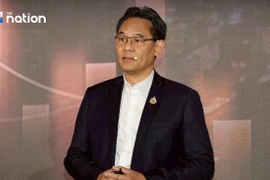
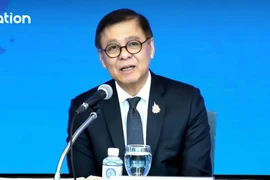
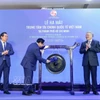
Bangkok (VNA) - Thailand is witnessing not deglobalisation but "reglobalisation" - a strategic realignment of trade, production, and finance - requiring the country to integrate its economic and foreign policies more closely than ever before, Foreign Affairs Minister Sihasak Phuangketkeow said on February 16.
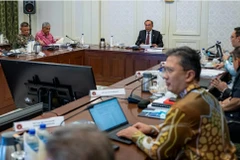
Speaking at an international seminar co-hosted by UNCTAD, the Ministry of Commerce, the International Institute for Trade and Development (ITD), and the Harvard Club of Thailand, Sihasak outlined a comprehensive economic diplomacy strategy launched by his ministry last month to position Thailand advantageously in an increasingly complex global environment, The Nation reported.
He acknowledged the rise of inward-looking policies, increasing protectionism, and the growing use of economic tools such as tariffs for strategic purposes—a stark contrast to the global conversation two decades ago when Thailand hosted the 10th session of UNCTAD following the Asian financial crisis, when the focus centred on poverty reduction and building productive capacity.
Sihasak detailed the three core goals of Thailand's economic diplomacy strategy, launched by the Ministry of Foreign Affairs last month.
The first pillar focuses on building confidence in Thailand. The second pillar targets strengthening Thailand's competitiveness. The third pillar emphasises enhancing collaboration and partnerships.
Sihasak stressed that achieving these goals requires coordination across government ministries./.
Thailand confronts economic headwinds
Vinit Visessuvanapoom, Director-General of the Fiscal Policy Office (FPO) and the ministry’s spokesperson, said the country’s GDP growth in the third quarter of 2025 came in at 1.2%, weaker than expected, pulling down the full-year average. The slowdown was attributed to weaker manufacturing output due to refinery maintenance shutdowns.