Thailand’s media opposes China’s test flights

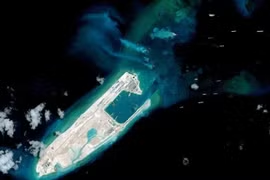
Thailand’s media has raised strong objections to China’s test landing of planes on an airstrip illegally built on Chu Thap (Fiery Cross) Reef in Vietnam’s Truong Sa (Spratly) archipelago.
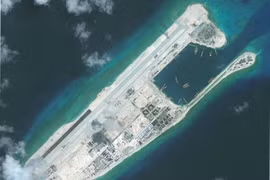
Thailand’s media opposes China’s test flights ảnh 1Fiery Cross Reef (Source: AFP)

Bangkok (VNA) – Thailand’s media has raised strong objections to China’s test landing of planes on an airstrip illegally built on Chu Thap (Fiery Cross) Reef in Vietnam’s Truong Sa (Spratly) archipelago, saying this action escalates tensions and instabilities in the region.

The country’s media also called on the Association of Southeast Asian Nations (ASEAN) to unite with each other to prevent the situation from getting more complicated.

Bangkok Post on January 12, ran an article titled “Unnecessary flight risks” saying China’s claims over almost the entire East Sea backed by “dubious historical references” is “impossible to accept”.

The article said China must bear the responsibility for creating and maintaining unnecessary and indeed risky conflicts.

The problem boils down to China’s creation of artificial islands within the Truong Sa archipelago. The immediate danger, however, is China’s flights to and from the areas occupied illegally by the country in the archipelago, the article stated.

It also affirmed the Civil Aviation Authority of Vietnam (CAAV) statement that Chinese flights “threaten the safety of all flights in the region” as the Chinese flights involved go through busy airspace used by scores of airlines from dozens of countries.

Every aircraft that flies without giving public notice puts all flights in danger. It is a terrible decision by China, and should be immediately reversed, the article said.

This is the sort of situation where the new ASEAN Community will show its desire and ability to act. ASEAN should approach China as a group, to press Beijing to resume proper air safety standards, it suggested.

In an article issued the same day, The Nation also called on ASEAN to play a more active role in seeking a solution to maintaining peace and stability in the region.

ASEAN has adopted mechanisms to deal with maritime disputes, including the Declaration on the Conduct of Parties in the East Sea, signed with China in 2002.

However, the document is non-binding. ASEAN members are now negotiating on a binding Code of Conduct of Parties in the East Sea.

The article called on relevant parties to seek a diplomatic solution lest regional disputes escalate into armed conflicts.

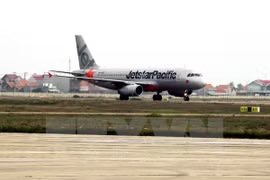
On January 2 and 6, China conducted test flights on an airstrip illegally built on Chu Thap (Fiery Cross) Reef in Vietnam’s Truong Sa (Spratly) archipelago.

Responding to this act, Vietnamese Foreign Minister Spokesperson Le Hai Binh on January 2 said, the act seriously violates Vietnam’s sovereignty over Truong Sa archipelago and runs counter to the common perception reached by the two countries’ high-ranking leaders, the agreement on basic principles guiding the settlement of Vietnam – China issues at sea, and the spirit of the 2002 Declaration on the Conduct of Parties in the East Sea.

It has undermined peace and stability in the East Sea, eroded bilateral political trust and negatively impacted the neighbourliness and good sentiments between the two peoples, he added.

Vietnam resolutely protests against China’s pilot flights and asks the country to immediately end, and not repeat such an action, and take practical and specific acts to contribute to maintaining peace, stability, security, maritime and aviation safety and freedom in the East Sea, Binh said.-VNA
VNA

See more

ASEAN Secretary-General Kao Kim Hourn announces the outcomes of the 49th ASEAN Summit and related meetings at the ASEAN headquarters in Jakarta, Indonesia, on November 18, 2026. (Photo: VNA)

49th ASEAN Summit highlights action-oriented regional cooperation

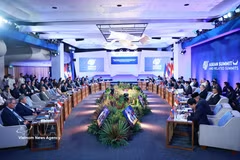
As 2026 marks the first year of implementing the ASEAN Community Vision 2045, leaders underlined the bloc's solidarity and centrality as well as closer coordination among the three community pillars in response to global economic uncertainties and security challenges, with priorities including digital transformation, AI application, energy security and supply chain resilience.

ASEAN Secretary-General Kao Kim Hourn (Photo: VNA)

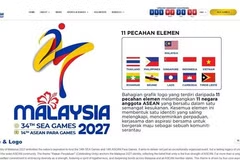
Growing together: 11 nations, one ASEAN home

The new emblem signals an ASEAN that is growing more inclusive while holding to its founding principles of building a peaceful, stable, dynamic region based on equality and cooperation. Its colours come from member states’ national emblems, reflecting diversity inside a single community.

An overview of the dialogue between ASEAN leaders and the ASEAN Business Advisory Council (ASEAN-BAC) in Manila on November 15 (Photo: VNA)

Vietnam puts forward priorities to advance ASEAN cooperation

Appreciating ASEAN-BAC’s report and recommendations, Deputy Minister of Foreign Affairs Dang Hoang Giang, head of Vietnam’s ASEAN Senior Officials’ Meeting (SOM) delegation, called for simplifying procedures, reducing costs, accelerating digitalisation, upgrading the ASEAN Single Window (ASW) and effectively implementing the ASEAN Digital Economy Framework Agreement (DEFA) to make the regional market more accessible.

ASEAN signs Digital Economy Framework Agreement

ASEAN signs Digital Economy Framework Agreement

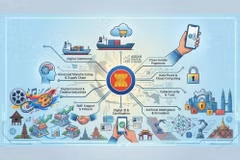
The Digital Economy Framework Agreement (DEFA), the bloc’s first standalone and legally binding digital economy agreement, establishes common rules covering digital trade, cross-border data flows, electronic payments, cyber security and artificial intelligence (AI).

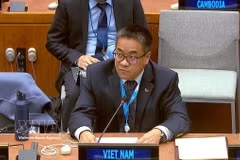
Minister Counsellor Nguyen Hai Luu, Deputy Permanent Representative of Vietnam to the UN, speaks at the discussion on November 12, 2026. (Photo: VNA)

Vietnam supports peace, reconstruction efforts in Gaza: diplomat

Minister Counsellor Nguyen Hai Luu, Deputy Permanent Representative of Vietnam to the UN, expressed deep concern over the dire humanitarian situation in Gaza, particularly as recent heavy rains and flooding have worsened living conditions for residents.

Thailand diversifies oil sources to ensure energy security

Thailand diversifies oil sources to ensure energy security

Although the diversification of oil import sources has helped reduce the risk of domestic oil shortage, it has not immediately reduced energy costs because import prices depend on market mechanisms, transportation costs, foreign exchange rates and the terms of oil contracts.

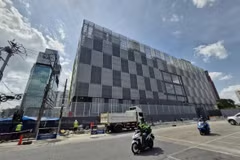
ST Telemedia Global Data Centres (Thailand), an affiliate of Singapore Telecom, is developing three data cehtres in Thailand including this facility on Rama IX Road in Bangkok. (Photo: bangkokpost)

Thailand tightens regulations on data centres

The new rules focus on controlling investment scale, electricity and water consumption, environmental impacts, and preventing investors from reserving resource quotas beyond their actual needs.

A road is under construction in Dong Nai city, Vietnam. (Photo: VNA)

ADB: Southeast Asia needs 7.1 trillion USD in infrastructure investment by 2040

ADB estimates that the region will need an average of 476 billion USD in infrastructure investment annually during 2026–2040, equivalent to 8.7% of GDP. However, at current investment levels, government budget resources would cover only around 45% of this demand, leaving an annual financing gap of 264 billion USD.

Kyodo News publishes an article titled “Sculptures by Japanese, Vietnamese artists on display in Yokohama,” (Screenshot photo)

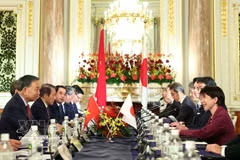
Japanese media widely cover top Vietnamese leader ’s visit

Japanese media have continued extensive coverage of General Secretary of the Communist Party of Vietnam (CPV) Central Committee and President To Lam’s activities in Japan, highlighting his meetings with representatives of leading financial institutions at the Tokyo Stock Exchange, witnessing of cooperation agreement signing and participation in cultural exchanges.