Hanoi (VNA) - These are among the most notable assessments made by the Centre for Aviation (CAPA) – the world’s leading aviation data and analytics platform – when evaluating the development prospects of Phu Quoc in the coming years.
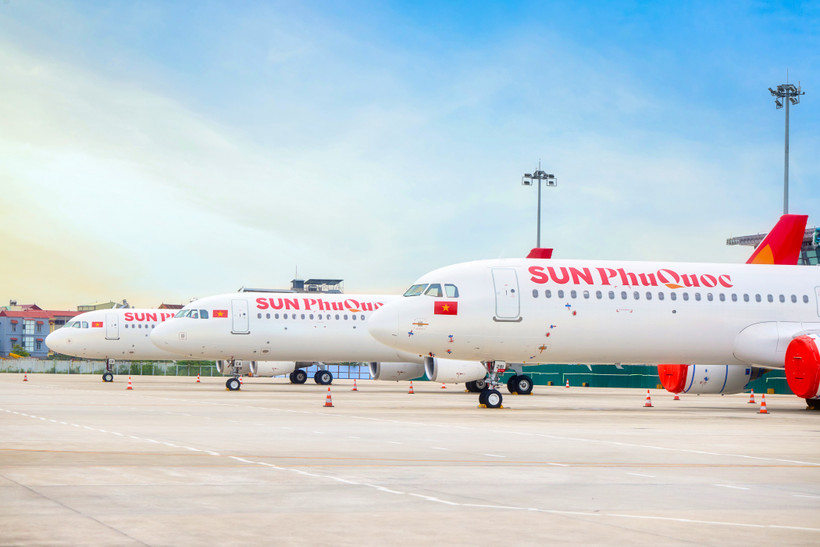
According to CAPA, Phu Quoc holds a rare advantage in having established a relatively comprehensive aviation ecosystem, comprising the expanded Phu Quoc International Airport and an airline bearing the island’s name – Sun PhuQuoc Airways. This is a model that few tourist destinations in the region or globally, have been able to develop simultaneously.
In its latest research published in early December, CAPA noted that Phu Quoc is no longer developing under the “natural momentum” typical of island destinations. Instead, it is entering a phase of deliberate growth, driven by the convergence of transport infrastructure, an integrated tourism and hospitality ecosystem, and the leadership of private conglomerates, most notably Sun Group.
CAPA analyzed: “Sun Group, the operator of the airport at Phu Quoc and elsewhere, has come up with a scheme to propel the island resort into the same league as others, like Bali in Indonesia, Phuket in Thailand and Jeju in the Republic of Korea. This will be by launching a new airline, which will not compete with the existing international routes at Phu Quoc, but rather will maximise its presence in high volume domestic markets first as a launch pad to new international routes later.”
Beyond strategic orientation, CAPA also revealed the rapid development timeline of Sun PhuQuoc Airways. Under current plans, the airline’s fleet is expected to expand from approximately eight aircraft by the end of 2025 to nearly 100 aircraft by 2030, including wide-body jets capable of operating intercontinental routes. In parallel, Phu Quoc International Airport is being upgraded to handle around 20 million passengers annually, not only to serve APEC 2027 but also to create long-term capacity for international tourism growth.

CAPA expressed confidence in the prospects of this “game,” particularly highlighting Sun Group’s horizontally and vertically integrated business model. The study pointed out that the group exercises synchronized control over the value chain, from air transport and premium accommodation to large-scale entertainment complexes, while also owning a private aviation airline serving the high-end segment (private jet).
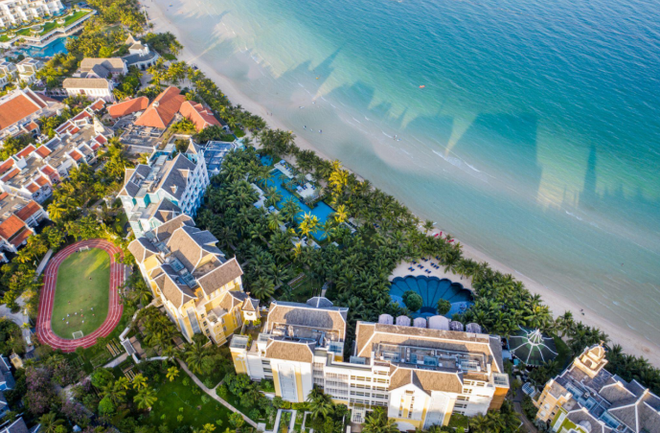
This integration creates a closed-loop ecosystem: travelers fly with Sun PhuQuoc Airways, stay at five-star resorts, and experience entertainment ecosystems developed by Sun Group. According to CAPA, this approach enables Phu Quoc to fundamentally address its “connectivity bottleneck” – a decisive factor in determining the growth potential of an international tourism destination. Similar models have been applied in parts of Europe and the Americas, where they have already proven successful.
In addition to internal strengths, CAPA also pointed to favorable regional dynamics for Vietnamese tourism and Phu Quoc in particular, as commercial and tourism activities in Thailand – a key regional competitor show signs of decline, opening opportunities for a shift in international visitor flows.
From CAPA’s perspective, Phu Quoc is standing at a rare historical turning point, where aviation strategy is no longer merely a supporting tool, but has become a central lever for tourism growth. If this ecosystem is implemented on schedule and operated effectively, Phu Quoc has a solid foundation to emerge as a new regional hub for tourism, resort development, and aviation – potentially surpassing established names such as Bali or Phuket within the next decade./.