Turning seafood by-products into billion-dollar industry

According to forecasts from the agriculture and environment sector, in the coming years, shrimp heads alone could provide around 490,000 tonnes of food products, while pangasius offcuts and stomachs could provide 100,000 tonnes, and fish oil could provide 150,000 tonnes.

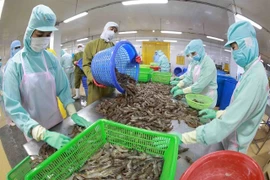
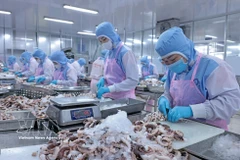
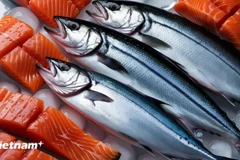
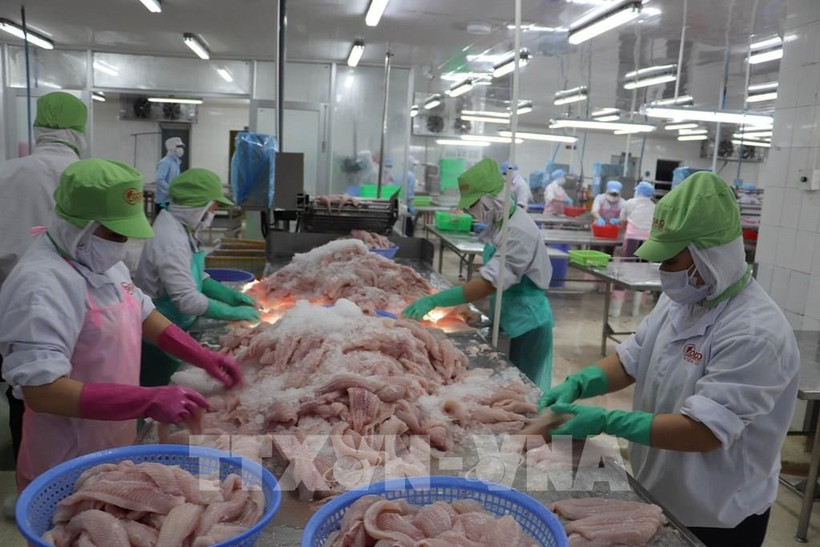
Seafood processing generates a large volume of by-products. (Illustrative photo: VNA)

HCM City (VNA) – Vietnam, one of the world’s leading producers and exporters of seafood, is exploring ways to transform seafood by-products into value-added products, boosting the sustainability and profitability of the sector while contributing to a circular economy.

In Ho Chi Minh City, several enterprises have successfully tapped into this potential. Nguyen Thanh Loc, Director of Phuc Loc Co. Ltd., in Tan Hai ward, said the company purchases about 60 tonnes of by-products daily from fishing vessels and factories to produce 4,000–5,000 tonnes of fishmeal annually, generating revenues of 72–90 billion VND (3–3.9 million USD). “With additional capital and technology, we could increase protein content to 64% and reduce imports by 140,000 tonnes of fishmeal each year,” he added.

Meanwhile, Tu Hai Co. Ltd., in Phuoc Thang ward has begun exporting cleaned and dried fish bones to Japan at 10 USD per kilogramme, yielding 10–12 billion VND annually. “Demand is high, but supply is limited. It looks like the beginning of a promising new business,” said Dao Quoc Tuan, CEO of Tu Hai Co. Ltd.

On a larger scale, the Southern Research Institute for Marine Fisheries utilises mixed crab species to produce canned crab paste and chitosan powder – a raw material for healthcare and agriculture – which is sold at up to 1,000 USD per kilogramme.

Beyond industrial applications, seafood by-products are being transformed into artistic tourist souvenirs. Restaurants and processing facilities generate tonnes of shells nightly.

Hai Lan Co. Ltd., in Ba Ria ward collects and recycles shells into souvenirs, artwork and jewellery, with items selling for between 40,000 VND and 20 million VND each.

Recently, the company reportedly signed a memorandum of understanding with OSB Investment and Technology JSC – Alibaba’s authorised agent in Vietnam – to market its shell-based products on Alibaba’s e-commerce platform, expanding their global reach.

Environmental awareness and creativity are also inspiring young people. Nguyen Le Minh Chau, a student at Vung Tau High School, submitted a model “Workshop for Handmade Shell Products in a Beach-themed Coffee Shop” to the Ba Ria–Vung Tau Seafood Innovation Contest. The concept allows visitors to create their own shell-based items in a workshop setting while enjoying drinks in a space decorated with appealing shells.

Support in policy, capital and technology

According to forecasts from the agriculture and environment sector, in the coming years, shrimp heads alone could provide around 490,000 tonnes of food products, while pangasius offcuts and stomachs could provide 100,000 tonnes, and fish oil could provide 150,000 tonnes. Shrimp shells could yield 146,000 tonnes of animal feed, while fish heads, bones and entrails could supply another 900,000 tonnes annually.

Other by-products – such as shrimp shells and fish skin or swim bladders – could be processed into high-value items for pharmaceuticals, cosmetics and other industries.By 2030, shrimp by-products are projected to reach 650,000 tonnes, worth 80–100 million USD, and pangasius 1.3 million tonnes, valued at over 500 million USD.

Pham Thi Na, Deputy Director of the HCM City Department of Agriculture and Environment, noted that processing by-products could generate tens of thousands of jobs, enhance Vietnam’s seafood reputation, and ease pressure on the environment due to food processing waste.

Pham Quoc Huy, Director of the Southern Research Institute for Marine Fisheries, emphasised that turning by-products into resources requires treating them as a strategic industry rather than leaving it to the spontaneous market. Beyond fishmeal and fish oil, global trends now include extracting peptides and enzymes, and producing biodegradable materials and packaging from shrimp shells and fish skin.

Supportive policies, green financing, and stronger collaboration among businesses, scientists, and authorities could turn seafood waste into “blue gold,” boosting Vietnam’s marine economy, protecting oceans, and raising the global profile of its seafood industry.

Currently, seafood by-products – mainly shrimp shells, crab shells, fish skin, bones and organs – amount to around 1 million tonnes per year, with over 90% in solid form. Improper disposal can lead to environmental pollution, especially in tropical regions. Currently, the processing value of these by-products is approximately 275 million USD per year, significantly lower than the estimated potential of 4 - 5 billion USD./.
VNA

See more

Over 250 enterprises join the Vietnam International Gifts and Housewares Expo 2025 (Photo: VNA)

Int’l gifts, housewares expo draws over 250 enterprises

Vietnam International Gifts and Housewares Expo 2025 (IGHE 2025) features a comprehensive range of household goods, gifts and decorative products, positioning itself as a must-see destination for buyers from Vietnam and overseas.

Individuals should proactively monitor their credit data to detect signs of identity theft in a timely manner. (Photo: baodautu.vn)

Early warning: A crucial defence against identity theft, credit fraud

ID365 aims to help users monitor and control any changes related to their personal identification information. It serves as an "early warning" system, empowering individuals to proactively safeguard their identities and assets, while also strengthening the defences of the entire financial and banking system against increasingly sophisticated fraud risks.

Workers sew export garments at Maxport Vietnam Co.Ltd (Photo: VNA)

Garment industry diversifies markets to weather global volatility

The sector is striving to generate 46 billion USD in export revenue this year. Although the figure falls short of the 48 billion USD target, it still represents a 5.6% year-on-year increase, helping Vietnam maintain its position among the world’s top three textile and garment producers.

Illustrative image (Photo: VinSpeed)

Vingroup’s VinSpeed inks high-speed rail deal with Siemens Mobility

Under the pact, Siemens Mobility, a supplier of high-speed rail technologies and solutions, will design, supply and integrate trainsets and key railway subsystems, including signaling, communications and power supply. It will also cooperate in maintenance for supplied equipment and transfer technology to support VinSpeed’s rail projects.

Reference exchange rate rises (Photo: VNA)

Reference exchange rate going up

The State Bank of Vietnam set the daily reference exchange rate at 25,151 VND/USD on December 18, up 5 VND from the previous day.

Vice Chairman of the People’s Committee of Quang Ninh province Nguyen Van Cong chairs the meeting regarding sustainable marine aquaculture development for 2026 (Photo: baoquangninh.vn)

Quang Ninh eyes sustainable marine aquaculture development

Speaking at a December 17 meeting regarding sustainable marine aquaculture development for 2026, Vice Chairman of the People’s Committee of Quang Ninh province Nguyen Van Cong urged the provincial Department of Agriculture and Environment to urgently finalise the draft plan, which will serve as a basis for focusing on the development of marine aquaculture in the coming period; and take the lead in coordinating with localities to review and adjust the planning of marine aquaculture areas, with an emphasis on encouraging the efficient use of marine areas suitable for aquaculture, in line with environmental impact assessments.

Mirela Janice Eidt, head of the Office of Brazilian Ministry of Agriculture and Livestock (MAPA), speaks at the event (Photo: Vietnamese Embassy in Brazil)

Vietnam, Brazil enhance smart agriculture ties

Amid escalating global pressures, including climate change, resource scarcity and tougher standards on food safety, traceability and low-carbon production, smart agriculture and sustainable value chains are no longer optional but inevitable. With both Vietnam and Brazil prioritising this development path, they see strong potential for deeper long-term strategic collaboration.

Contractors paving asphalt along the 61.7km Quy Nhơn–Chí Thạnh Expressway, crossing Gia Lai and Đắk Lắk provinces.(Photo: VNA)

Vietnam targets 5,000km of expressway by 2030

According to the Ministry of Construction, Vietnam brought just 89km of expressways into operation between 2001 and 2010, followed by 1,163km in the 2011–20 period. By contrast, the length of expressways invested in since 2021 alone is equivalent to the combined total of the previous decade.

Thousands of perfumes and cosmetic products of unknown origin are seized by Hanoi's authorities (Photo: VNA)

Vietnam cracks down on 23,000 market violations in 2025

The Ministry of Industry and Trade's Domestic Markets Department reported that market management forces conducted 27,540 inspections throughout 2025, detecting violations worth nearly 290 billion VND – a 31.8% decrease from 2024.

The upcoming Made-in-Vietnam fair in Hanoi from December 18-22 will feature product display areas, business networking spaces, and food courts. Illustrative photo: VNA)

Vietnam Brand Week to promote e-commerce, Made-in-Vietnam products

Co-organised by the Vietnam E-Commerce and Digital Economy Agency and the Hanoi Department of Industry and Trade, the event series includes a supply-demand connectivity conference to promote the consumption of Vietnamese and local products on e-commerce and digital platforms, alongside a Made-in-Vietnam fair.