Vaccinated people nears 900,000 mark, as ministry in talks for mRNA technology transfer

A total of 892,454 people in Vietnam have been given COVID-19 vaccine shots to date, according to May 11’s morning report from the National Expanded Programme on Immunisation (NEPI).
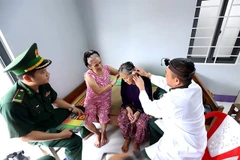
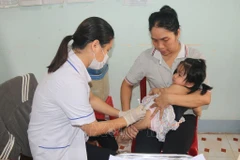
Vaccinated people nears 900,000 mark, as ministry in talks for mRNA technology transfer ảnh 1Illustrative image (Source: VNA)
Hanoi (VNS/VNA) - A total of 892,454 people in Vietnam have been given COVID-19vaccine shots to date, according to May 11’s morning report from theNational Expanded Programme on Immunisation (NEPI).

On May 10,25,057 people in 41 cities and provinces have been given the jabs.

The dosesadministered has reached 97 percent of the existing stock of 917,000 dosesof AstraZeneca that Vietnam has received so far as part of the purchase of 30million doses from the company and another 30 million from the global vaccinesharing scheme COVAX Facility that is expected to be delivered in differentbatches within 2021 and early 2022.

The first inline are mostly frontline workers – medical staff directly involved with thetreatment of COVID-19 patient; medical staff performing tasks such ascollecting patient samples, testing and tracing; members of grassrootsanti-COVID-19 groups; members of COVID-19 steering committees at local andcentral levels; and police and military members.

Regarding lastweek's death of a medical worker in Vietnam who developedanaphylactic shock after receiving the COVID-19 shot, health authorities havestressed that the reaction rate is still too small to forego the criticalprotection that the vaccines offer against COVID-19.

Pham Quang Thai,head of the northern region office of the NEPI, said all vaccines, drugs, andeven food – not just COVID-19 vaccines – could lead to adverse reactions, butthe rate is “very low” and if the vaccinated are monitored and reactions arepromptly dealt with then there would be few problems.

“We are painedto hear about the incident. It was very rare, and we won’t pause (thevaccination drive) here but we should learn from the experience here to preventsuch regrettable incidents in the future,” Thai said.

Specifically,there must be increased readiness for the prevention of anaphylaxis at allimmunisation facilities, according to the doctor.

Adrenalinshots must be readily available so that they could be immediately administered,instead of wasting critical time in preparing the shots, he said, adding thattraining and supervision of follow-up post-vaccination monitoring should alsobe strengthened to ensure that medical staff are ready in all situations.

Given thecurrently limited supply to Vietnam, especially as the COVID-19 situation isshowing complicated developments, the health ministry has met with a WorldHealth Organization (WHO) representative to facilitate the negotiations ontransferring of mRNA technology – currently the cutting-edge technology used inhighly effective COVID-19 vaccines like Pfizer-BioNTech and Moderna (whileAstraZeneca used vector-based technology) – so that Vietnam can start producingthe vaccines right within the country.

The healthministry is awaiting the results of the second phase of the human trials ofNanogen, Vietnam’s front runner in the race for a homegrown COVID-19 vaccine,and depending on the safety assessment, could start administering the vaccineto the population as the phase 3 trials commence./.
VNA

See more

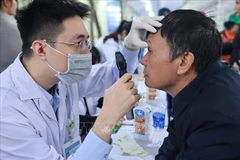
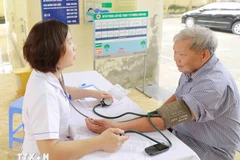
Health check-up offered to citizens in Gia Lai province. (Photo: VNA)

Health ministry maps out three phases for hospital fee exemption

Health insurance participants from near-poor households and those aged 75 and above who are receiving social pension allowances will be entitled to 100% coverage of medical examination and treatment costs within the scope of health insurance benefits.

A patient pays hospital fees using cashless transactions (Photo: qdnd.vn)

Hanoi aims for modern healthcare system

Hanoi's health sector will continue to expand the comprehensive use of digital technology in professional practices to improve management efficiency and service quality, aiming to develop a modern, transparent, and people-centred healthcare system.

Doctors from the Vietnam Young Physicians Association provide free medical examinations and treatment for residents of the capital. (Photo: VNA)

3.37 billion USD earmarked for public health care, population quality improvement

The programme’s overarching goal is to ensure that all people receive primary healthcare management and early, preventive care delivered close to home, thereby reducing disease burden; to increase the total fertility rate and strive for a balanced sex ratio at birth; to adapt to population ageing while improving population quality; to improve care for vulnerable groups; and to contribute to improvements in physical and mental health, stature, life expectancy and overall quality of life, towards building a healthier Vietnam.

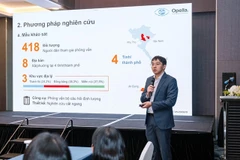
A representative of the Health Strategy and Policy Institute shares the results of a study titled “Assessment of Vietnam’s Readiness for Self-Care and Its Influence Factors”. (Photo courtesy of the organiser)

Vietnam ranks 4th in health self-care readiness

Self-care is an essential component of primary healthcare, with WHO defining it as the ability of individuals, families, and communities to promote and maintain health, prevent disease, and cope with illness with or without the support of healthcare professionals.

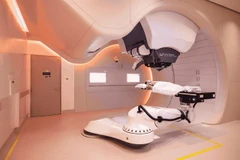
A proton machine in a hospital in Singapore. Proton beam therapy provides more options for cancer patients. (Photo courtesy of IHH Healthcare Singapore)

Proton therapy, an alternative method for cancer patients

In recent years, Vietnam's Ministry of Health has held numerous meetings with relevant units to assess the progress in developing proton therapy centres in the country. The project for establishing proton therapy centres is set to commence preparations in 2025 and aims for completion between 2026 and 2030.

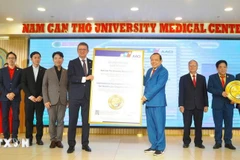
At the event (Photo: VNA)

First hospital in Mekong Delta earns US AACI accreditation

Nam Can Tho University Hospital on December 15 hosted a ceremony to announce its accreditation by the American Accreditation Commission International (AACI), a US-based body, becoming the first facility in the Mekong Delta and among a select few in Vietnam to earn the distinction.

A health worker administer IPV polio vaccine to a child in Dong Thap province. (Photo: VNA)

Vietnam proactively takes polio prevention measures amid outbreak in Laos

The meeting took place following an assessment by the World Health Organisation (WHO) warning that Vietnam is facing a very high risk of polio import and re-emergence. The risk arises after neighbouring Laos officially declared a polio outbreak on October 7, following the detection of circulating vaccine-derived poliovirus type 1 (cVDPV1).

National health target programme prioritises the most vulnerable groups (Photo: VietnamPlus)

National target programme on health prioritises most vulnerable groups

The National Assembly on December 11 adopted a resolution on the National Target Programme on Healthcare, Population, and Development for the 2026–2035 period, marking a significant step in Vietnam’s long-term commitment to improving public health and population quality.

A view of the International Conference on Molecular Diagnostics in Microbiology and Diseases, organised by Rencontres du Vietnam and the International Centre for Interdisciplinary Science and Education (ICISE) in the central province of Gia Lai on December 11. (Photo: VNA)

Nearly 100 international scientists attend molecular diagnostics conference in Vietnam

The conference features almost 80 presentations across plenary sessions, parallel sessions and poster sessions, focusing on leading research trends such as point-of-care diagnostics; predictive biomarkers used to anticipate individual responses to therapy; and the development of new tools and platforms for rapid molecular-level detection and diagnosis.

Digital transformation in healthcare is being strongly promoted. (Photo: Organising Committee of the 2024 “Technology with Heart” Award, co-hosted by Vietnam News Agency and Viettel)

AI and precision medicine: Emerging prospects for Vietnam-Canada cooperation

Canada has strong experience in compiling and analysing genomic data, while Vietnam has a large population with diverse genetic structures. This complementarity can help Vietnam narrow its technological gap and enhance its capacity to treat rare diseases — an area many countries are prioritising for development.

Maternal and child healthcare in Tuyen Quang province. (Photo: VNA)

Vietnam on path to become a healthy nation

Resolution 72 not only focuses on health care but is also closely interlinked with other sectors, helping to build a solid foundation for sustainable national development and create momentum for Vietnam to “take off” and further integrate into the world.

The emergency ward at Bach Mai Hospital, Hanoi. (Photo: VNA)

Health sector targets free hospital fee for all

The total value of medical expenses not covered by the health insurance fund is estimated at around 24.8 trillion VND (942 million USD) per year. Health insurance contributions remain low, at 4.5% of the salary or reference base used for calculation.

Sen. Lieut. Gen. Vongsone Inpanphim, Lao Deputy Minister of National Defence and Director of the General Department of Politics presents the Friendship Order of Laos to Vietnam’s Central Military Hospital 108. (Photo: VNA)

Vietnam, Laos expand cooperation in military medicine

Over the past two decades, many Vietnamese experts have undertaken long-term missions at the Central Hospital 103 to provide training and technical assistance, contributing to the successful treatment of complex cases. The Central Military Hospital 108 has also trained 206 Lao doctors, six nurses and two engineers — a clear demonstration of substantive, long-standing cooperation.