Vietnam builds sustainable supply chain in multipolar trade order: expert

The expert noted as global trade enters a more fragmented and multipolar phase, the country’s role as a resilient manufacturing and export hub is being increasingly reinforced by the credible implementation of government policies and the prudent stewardship of the central bank.

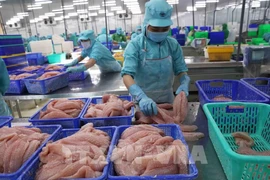
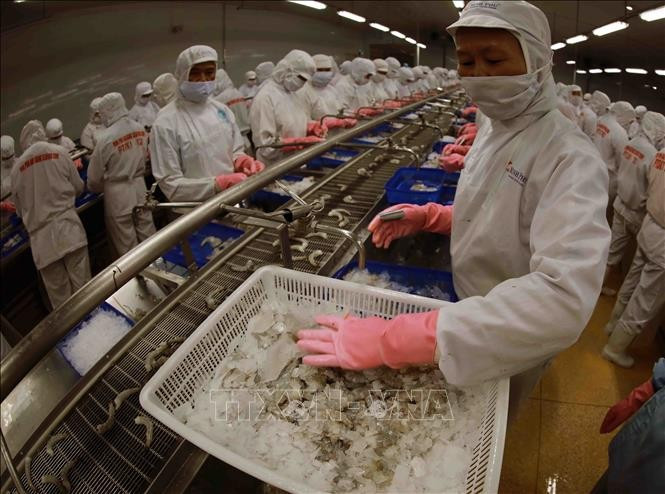
A shrimp processing line at a factory of the Minh Phu Seafood Corporation. (Illustrative photo: VNA)

Kualua Lumpur (VNA) – In today’s world, where policy credibility and execution capacity matter just as much as cost, Vietnam is well placed to become a reliable and long-term supply chain partner amid the ongoing reshaping of global trade, says Shan Saeed, Global Chief Economist at Malaysia-based international real estate technology group IQI Juwai.

The expert noted as global trade enters a more fragmented and multipolar phase, the country’s role as a resilient manufacturing and export hub is being increasingly reinforced by the credible implementation of government policies and the prudent stewardship of the central bank. From 2026 onward, this policy discipline will remain a decisive advantage of Vietnam as multinational corporations reassess supply-chain concentration risks and place greater emphasis on reliability, scalability, and policy certainty.

He remarked that Vietnam’s macroeconomic policy framework has consistently prioritised stability over excessive stimulus. Real GDP growth is projected to reach 7–8% in the medium term, underpinned by sustained investment momentum, industrial upgrading, and steady domestic demand. Inflation is being kept at around 3–3.5%, preserving cost competitiveness while protecting purchasing power. Public debt remains moderate at approximately 37–38% of GDP, providing fiscal space for infrastructure, logistics, and industrial policy initiatives without undermining national balance-sheet strength.

He emphasised that this macroeconomic setup is key to investors' confidence. Vietnam’s trade and industrial policies have delivered tangible results. Merchandise exports surpassed 405 billion USD in 2024, with diversification steadily improving as ASEAN, the Middle East, and South Asia account for a growing share alongside traditional markets such as the US and the European Union. Participation in high-standard trade frameworks, including the Comprehensive and Progressive Agreement for Trans-Pacific Partnership (CPTPP), the EU – Vietnam Free Trade Agreement (EVFTA), and the Regional Comprehensive Economic Partnership (RCEP), has secured preferential access to markets representing more than 30% of global GDP, contributing to reducing tariff barriers and enhancing supply-chain flexibility.

At the same time, monetary policy has remained disciplined and market-oriented. The State Bank of Vietnam has prioritised stabilising the exchange rate, ensuring liquidity, and strengthening the financial system, which has helped keep inflation expectations in check and cushion the impact of external shocks. This steady environment has encouraged strong capital inflows, with foreign direct investment surpassing 25 billion USD in 2024, into electronics, semiconductors, electric vehicle parts, and value-added manufacturing.

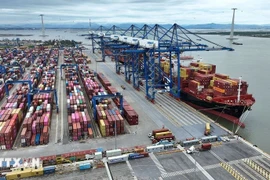
Looking beyond 2026, Saeed noted that continued investment in ports, logistics corridors, and electronic customs systems, coupled with policies to strengthen domestic supplier ecosystems and workforce skills, will further enhance the country’s resilience./.

VNA
See more

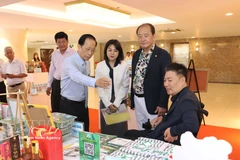
Vietnamese, Chinese enterprises exchange experience at the networking and exchange programme in Da Nang city on January 13, 2026 (Photo: VNA)

Da Nang promotes logistics cooperation with Chinese businesses

With the goodwill and active engagement of partners, particularly the Chinese business community, the cooperation is expected to generate concrete and long-term opportunities, contributing to the development, deeper integration and sustainability of Da Nang’s startup and innovation ecosystem, said Le Son Phong, Deputy Director of the municipal Department of Science and Technology.

SCAVI Hue Co., Ltd. (100% invested by Financière B’Lao Group, France), specialising in garment manufacturing at Phong Dien Industrial Park in Hue. (Photo: VNA)

Business Confidence Index reaches seven-year high: EuroCham Vietnam

After several years affected by global volatility and disruptions, the Q4/2025 BCI indicates that European business sentiment in Vietnam has returned firmly to positive growth territory, surpassing levels seen prior to US tariff announcements and even before the COVID-19 pandemic. Specifically, 65% of surveyed companies assessed their current business conditions as positive in Q4/2025, with the figure rising to 69% when looking ahead to Q1/2026, suggesting that optimism is set to strengthen further as the new year begins.

Prime Minister Pham Minh Chinh chairs the 5th meeting of the Central Steering Committee on Housing Policy and the Real Estate Market in Hanoi on January 13, 2026. Photo: VNA

PM chairs meeting on housing policy, real estate market

The right to housing is a fundamental right of citizens, and housing is an essential need of every person. Housing development is an important pillar of social welfare policy, while also serving as a driving force for economic growth, labor market stability, and sustainable socio-economic development, said Prime Minister Pham Minh Chinh.

Hanoi to host Thailand Week 2026 in late January

Hanoi to host Thailand Week 2026 in late January

Visitors to Thailand Week 2026 will be able to enjoy a variety of attractive promotional programmes, lively trade promotion activities and daily lucky draws offering numerous quality Thai products.

Illustrative image (Photo: VNA)

German media group releases Vietnam outlook report 2026

The Germany-based international media group specialising in economic, financial and political coverage of emerging markets IntelliNews on January 11 published its annual Vietnam Outlook report 2026, highlighting prospects for economic growth and what problems lie in store.