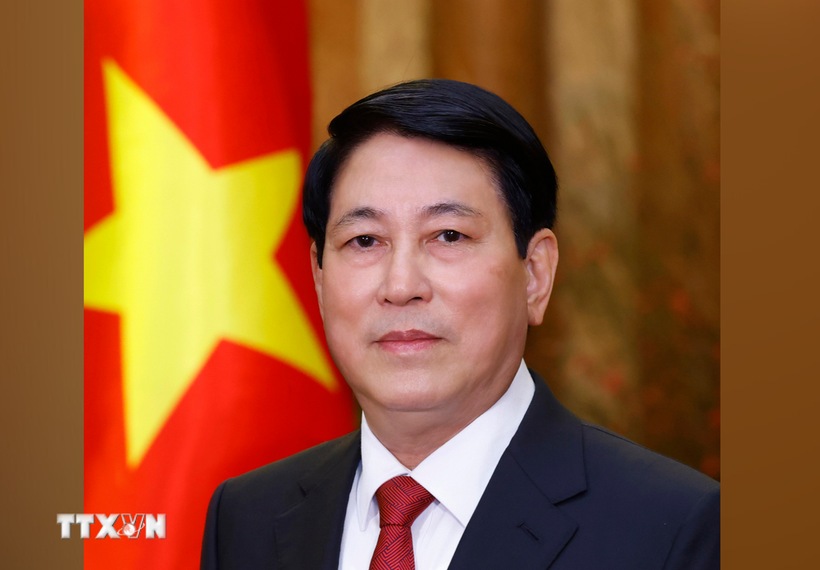
Hanoi (VNA) - At the invitation of General Secretary of the Communist Party of China (CPC) Central Committee and President of China Xi Jinping, Vietnamese State President Luong Cuong will attend a ceremony marking the 80th anniversary of the world people's victory over fascism and pay a working trip to China from September 2 - 4.
The working visit, the first to China by President Cuong as head of state, coincides with the 75th founding anniversary of Vietnam - China diplomatic ties and the Year of Vietnam - China Humanistic Exchanges. It is expected to solidify a stable, substantive, and effective Vietnam – China relationship. President Cuong's attendance affirms Vietnam’s responsible voice for global peace, security, and development.
Remembering a global turning point
The World War II erupted on September 1, 1939, with Nazi Germany’s invasion of Poland, rapidly engulfing Europe, Asia, Africa, the America, and the Pacific. The war involved 61 nations and claimed an estimated 70 million lives, with the Soviet Union suffering the heaviest losses - 10.7 million soldiers and 24 million civilians.
The war ended in Europe on May 8, 1945, with Nazi Germany’s surrender, followed by fascist Japan’s capitulation on September 2, 1945. The six-year war upended the global order, dismantling fascism, weakening colonial empires, and igniting independence movements across the world.
For Vietnam, the war’s end triggered the August Revolution in 1945, culminating in the establishment of the Democratic Republic of Vietnam, the first worker-peasant state in Southeast Asia. This victory was part of a broader global struggle for peace, democracy, and social progress.
The defeat of fascism also marked the birth of the United Nations and foundational principles of international relations - the principles of respect for equal rights, countries' rights to self-determination, peaceful settlement of disputes, and respect for international law. Eight decades later, that victory's legacy continues to be celebrated as the bedrock of today’s global order.
China will host the official ceremony on September 3, featuring a large-scale military parade in Tiananmen Square in Beijing. More than 20 world leaders, including President Cuong, are expected to attend.
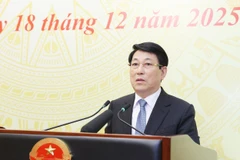
Vietnamese Ambassador to China Pham Thanh Binh said the State President’s presence reaffirms the country’s foreign policy of independence, self-reliance, diversification and multilateralisation, active, comprehensive, extensive and effective global integration, while making active and constructive contributions to peace, cooperation and development in the region and the world.
He underlined the resonance between Vietnam’s own 80th anniversary of August Revolution and National Day and China’s victory anniversary, calling both occasions a strong expression of the nation’s will to contribute to global and regional peace.
Developing solid, substantive, effective Vietnam – China relations
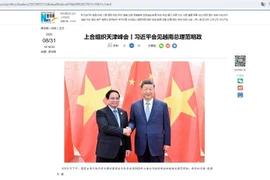
The Vietnamese State leader will engage in bilateral activities during his trip, which follows Chairman of the Standing Committee of the National People’s Congress Zhao Leji’s visit to Hanoi for attendance at National Day celebrations from August 31 to September 2, and Prime Minister Pham Minh Chinh’s attendance at the Shanghai Cooperation Organisation Summit in China from August 31 to September 1. These overlapping engagements underscore the deepening “shoulder-to-shoulder” relationship and mutual support between the two Parties and countries in their pursuit of national development.
Since the two countries agreed to build a community with a shared future that carries strategic significance in December 2023, Vietnam and China have advanced cooperation under six major orientations, including stronger political trust, deeper national defence-security collaboration, more substantive coordination, stronger societal foundations, closer multilateral coordination, and better control and settlement of disputes.
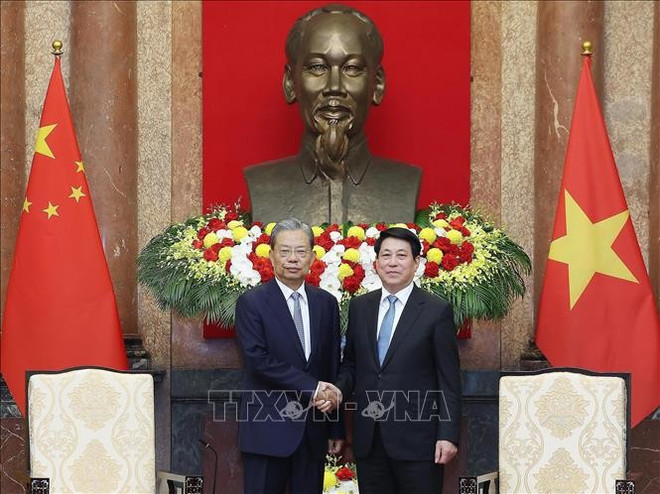
High-level exchanges across various channels have intensified since early 2025, marking the 75th anniversary of diplomatic ties (January 18) and contributing to consolidating political trust and the foundations of party-to-party and state-to-state ties.
Bilateral trade reached 205.2 billion USD in 2024 and 136.5 billion USD in the first seven months of 2025. Vietnam remains China’s top trading partner in ASEAN and its fourth largest globally, trailing only the US, Japan, and the Republic of Korea (RoK).
China has emerged as a key investor in Vietnam, with a cumulative foreign direct investment (FDI) of 31.26 billion USD across 5,195 projects by late January 2025, ranking sixth among 149 foreign investors. In 2024, China led with 955 new projects and ranked third with 4.73 billion USD in committed capital, up 3% from the previous year. In the first seven months of 2025, China topped new project approvals with 695 and placed second in registered capital with 2.27 billion USD, behind Singapore.
Both nations have maintained active economic and trade mechanisms, aiming for more stable, balanced, and sustainable commercial ties.
Tourism has also surged, with 3.74 million Chinese visitors to Vietnam in 2024, a 114% increase year-on-year, accounting for 21.3% of total foreign arrivals and ranking second behind the RoK. In the first seven months of 2025, over 3.1 million Chinese tourists travelled to Vietnam, making up 25.5% of total visitors, the largest share among foreign markets.
People-to-people exchanges, alongside education and cultural collaboration, have gained traction. To celebrate the 75th anniversary of diplomatic ties and the Year of Vietnam - China Humanistic Exchanges, ministries, agencies, and localities from both countries have ramped up joint activities, while coordination at multilateral forums has expanded.
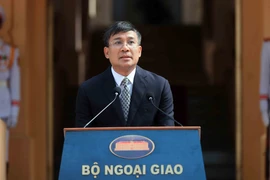
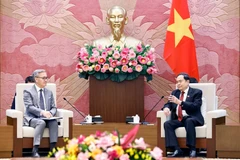
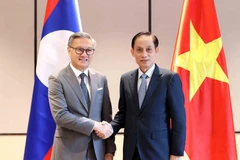
Permanent Deputy Minister of Foreign Affairs Nguyen Minh Vu said the State President is expected to hold talks and meetings with key Chinese leaders to reinforce political trust and push forward win-win cooperation. He will also meet leaders from other countries and international organisations attending the commemoration.
The trip is expected to strengthen Vietnam’s partnerships with important partners in the region and the world, showcase its achievements after 80 years of independence, and spread a positive and reliable image of the country and its people, he added./.