Vietnam exerts efforts to protect ozone layer, preserve food and vaccines

Vietnam always joins efforts of the international community in controlling and wiping out the use of ozone depleting substances, a representative of the Ministry of Nature Resources and Environment (MoNRE) has affirmed.
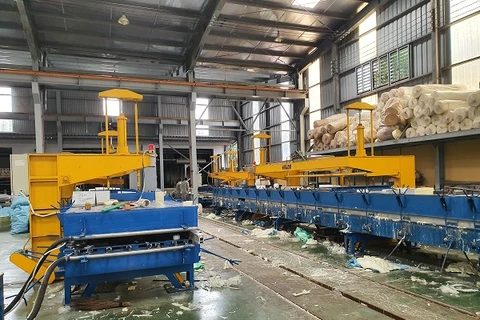
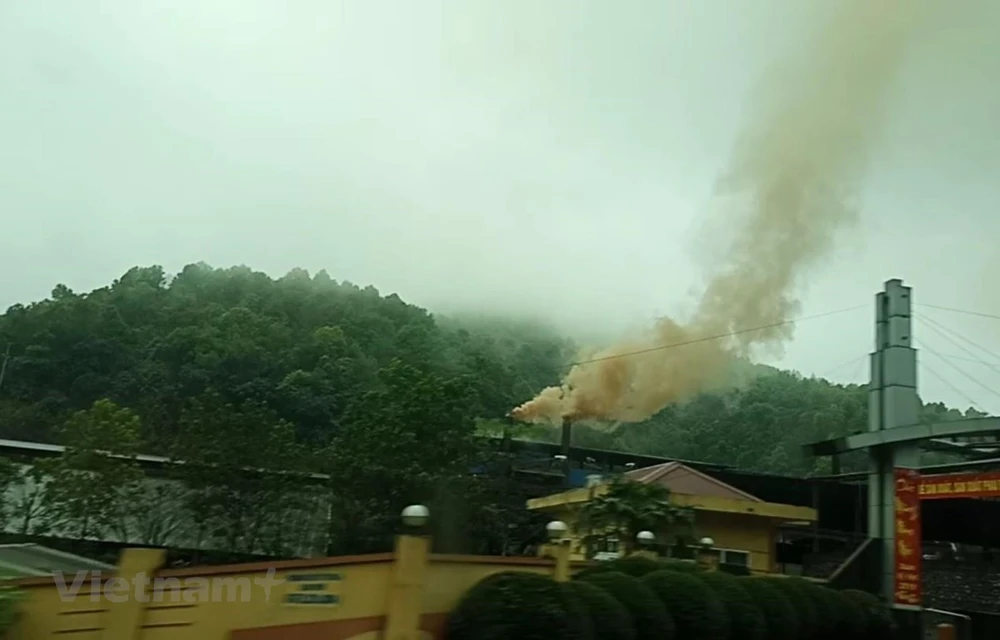
Illustrative photo (Source: VietnamPlus)

Hanoi (VNA) - Vietnam always joins efforts of the international community in controlling and wiping out the use of ozone depleting substances, a representative of the Ministry of Nature Resources and Environment (MoNRE) has affirmed.

Amid complicated developments of the COVID-19 pandemic that trigger difficulties for socio-economic development, this year's theme for the International Day for the Prevention of the Ozone Layer is 'Montreal Protocol Keeping us, our food, and vaccines cool.'

In response to the event, Vietnam has proactively rolled out measures to control and put an end to the usage of ozone depleting substances, thereby slowing down climate change, protecting people’s health and maintaining economic stability and ecosystems.

Healing ozone layer hole

According to the MoNRE, the Montreal Protocol on Substances that Deplete the Ozone Layer (the Montreal Protocol) is designed to stop the production and import of ozone depleting substances and reduce their concentration in the atmosphere to help protect the earth's ozone layer. It has been one of the most successful environmental agreements to date.

The Kigali Amendment to the Montreal Protocol, which aims to gradually control and reduce the use of Hydrofluorocarbons (HFCs), has brought about positive outcomes. The reduction of HFCs usage will help avoid a 0.4 degrees Celsius rise in global temperature by the end of the 21st century.

The Kigali Amendment also offers chances to improve the efficiency of energy use in cooling and removal of HFCs. Alternatives to the substances may create opportunities for the creation of new air conditioning and cooling devices that save more power without leaving negative impacts on the environment.

It is worthy of note that the MoNRE said the combination of HFC consumption reduction and raising effectiveness of the cold supply chain, especially in developing economies, will help avoid food wastefulness.

As Vietnam has been among signatories of the Vienna Convention for the Protection of the Ozone Layer and the Montreal Protocol since 1994, the country has joined global efforts over the years to protect the ozone layer and reduce the use of ozone depleting substances.

Vietnam exerts efforts to protect ozone layer, preserve food and vaccines ảnh 1Illustrative image (Source: VietnamPlus)

Of note, Vietnam put an end to the usage of some chemicals, including CFC, Halon and CTC, in early 2010.

The country forbids the utility of methyl bromide outside phytosanitary and disinfection for export items and Hydrochlorofluorocarbon (HCFC) in Styrofoam production from October 2015, therefore meeting a target to cut down the use of HCFC by 10 percent in line with the roadmap.

Efforts made to reduce use of HCFC

The MoNRE underscored that Vietnam needs to cut down HCFC consumption at grassroots level by 35 percent in accordance with the Montreal Protocol. It also equals that HCFC imports will reduce by 1,000 tonnes compared to the previous period to only 2,600 tonnes.

In September 2019, the Government issued a resolution ratifying the Kigali Amendment to the Montreal Protocol, under which the country would build a roadmap for control over and reduction of HCFCs between 2024 and 2045.

One of the achievements made in the work so far is the legalisation of regulations on ozone layer protection in Article 92 of the 2020 Law on Environmental Protection, and guiding documents which will take effect from January 1 next year.

Deputy Minister of Natural Resources and Environment Le Cong Thanh said that the law contains numerous amendments and supplementations compared to its predecessor, including those in climate change adaptation, ozone layer protection and activities to reduce greenhouse gas emissions.

The establishment and development of the domestic carbon market that is suitable for Vietnam’s socio-economic growth, as well as international commitments on climate change and ozone layer protection, are also promulgated in the law.

In addition, management and coordination among State agencies in controlling the substances are specified towards minimising administrative reforms for businesses. The law serves as an important legal ground for the implementation of the Montreal Protocol in Vietnam in a concerted and effective manner./.

VNA

See more

A Vietnamese pheasant chick born at Pairi Daiza Zoo in Belgium (Photo: published by VNA)

Vietnamese pheasants successfully hatched at Belgian zoo

The chicks were born at Pairi Daiza’s Oasis greenhouse following a carefully monitored breeding and care programme. According to the International Union for Conservation of Nature (IUCN), the Vietnamese pheasant is classified as Critically Endangered and may already be extinct in the wild.

An endangered Asian elephant in the wild in the Central Highlands region in Vietnam. (Photo courtesy of Animals Asia)

Conservation project set to protect endangered elephant herds

WWF VN said the non-refundable grant worth 23.9 billion VND (908,000 USD) will help provide conservation and protection solutions for the wild elephant community, including by creating safe migratory corridors, improving habitat and reducing conflict between humans and wildlife.

The national campaign launched to mobilise public action for a greener, cleaner and more beautiful Vietnam. (Photo: VNA)

National environmental protection campaign calls for public action

Hoai stressed that protecting the environment is a shared responsibility of authorities, businesses, organisations and citizens, calling on the public to adopt practical measures such as reducing litter, limiting single-use plastics, conserving resources, planting trees and sorting waste at source.

Members of the “Kindness for Sa Can” project collect plastic waste at the Sa Can estuary in Quang Ngai province. (Photo: VNA)

Front calls on entire people to join hands in environmental protection campaign

In the appeal, the VFF Central Committee's Presidium noted that environmental protection has been identified by the Party and State as a strategic priority. The 14th National Party Congress highlighted the need to harmonise economic, cultural and social development with environmental protection and improvements in living standards.

Officers release the rare elongated tortoise (Indotestudo elongata) back into its natural habitat in the Ta Thiet historical forest area. (Photo: VNA)

Rare elongated tortoise released into the wild in Dong Nai

The elongated tortoise is one of the most beautiful and rare terrestrial tortoise species, listed in both the Vietnam Red Data Book and the International Union for Conservation of Nature (IUCN) Red List of Threatened Species. It typically inhabits tropical and subtropical forests and plays an important role in maintaining ecological balance. However, due to illegal trade and habitat loss, its wild population has been declining sharply.

Cai Khe ward of Can Tho city is under water after a storm (Photo: VNA)

Can Tho pushes JICA-funded drainage project to deliver results in 18 months

The Japan International Cooperation Agency (JICA)-funded technical cooperation project on drainage management for climate resilience in Can Tho aims to improve planning capacity for wastewater collection, enhance operations and management of existing treatment plants, and the city’s ability to run public awareness campaigns.

Plastic waste poses a growing challenge to communities and societies around the world, including Vietnam. (Illustrative photo: VNA)

Wide range of activities planned for 2026 environment and marine awareness campaign

A series of environmental and marine-related events to held in the central province of Nghe An from June 4-6 will generate a broad social impact, helping transform awareness into action and commitments into concrete results, and contributing to Vietnam’s goals of green growth, circular economy development, net-zero emissions and harmonious coexistence between people and nature.

At the working session (Photo: VNA)

AFD, Lang Son move to fast-track climate resilience project

The climate resilience and sustainable infrastructure project in Lang Son consists of two main components, focusing on sustainable infrastructure and environmental improvement; and technical assistance and capacity building, with AFD experts expected to train project management officials and local agencies in disaster response and climate adaptation.

People wear sun-protective clothing when going outside in Quang Ninh province. (Photo: VNA)

Forecast of more intense heat and complex typhoons in summer

The number and activity of tropical cyclones and depressions over the East Sea, internationally known as the South China Sea, and their direct impacts on mainland Vietnam are expected to be comparable to the multi-year average. The long-term average over the East Sea is 5.2 typhoons, with 1.9 making landfall.

An overview of the seminar reviewing the project’s implementation during the 2021–2026 period (Photo: VNA)

Hue project prevents over 933 tonnes of plastic waste leakage

Launched in 2021 with funding from the Norwegian people through WWF-Norway and WWF-Vietnam, the “Hue – Plastic Smart City in Central Vietnam” project aims to help Hue protect rivers, wetlands and coastal ecosystems from plastic pollution while building the city into a model plastic-reduced urban area in central Vietnam.

Deputy Minister of Agriculture and Environment Nguyen Quoc Tri speaks at the event. (Photo: VNA)

Vietnam diversifies financing mechanisms for nature conservation

Initiatives on biodiversity finance, carbon credits, public – private partnerships, nature-based tourism, and private sector investment are creating more opportunities to increase resources for ecosystem conservation and restoration, said an official.

The Dong Thap Muoi Ecological Reserve spans more than 106 hectares and is set to be expanded by an additional 60 hectares in the near future. (Photo: VNA)

Local initiatives drive Vietnam’s push to protect biodiversity for sustainable future

Vietnam has established a network of 180 terrestrial and marine nature reserve covering more than 2.67 million hectares. These sites are being further strengthened to improve ecological connectivity, restore habitats and conserve endangered species. Forest cover remains stable at over 42%, contributing to water protection, climate adaptation and carbon absorption.

All the animals underwent health checks and assessments of their ability to adapt to the natural environment before being safely released. (Photo: VNA)

Quang Tri releases 13 wild animals back into nature

The animals included two masked palm civets, four stump-tailed macaques, and seven rhesus macaques. All belong to Group IIB under Circular No. 85/2025/TT-BNNMT issued by the Ministry of Agriculture and Environment on the management of endangered, precious and rare species, as well as the implementation of the Convention on International Trade in Endangered Species of Wild Fauna and Flora (CITES).

The clouded monitor (Varanus nebulosus) weighs approximately two kilograms and measures around 70 centimetres in length. (Photo: VNA)

Quang Tri hands over rare clouded monitor to rescue centre

The animal was identified as a clouded monitor (Varanus nebulosus), weighing approximately two kilograms and measuring around 70 centimetres in length. The species belongs to Group IB — a category of endangered and rare forest wildlife species given the highest level of protection in Vietnam, with all forms of commercial exploitation and use strictly prohibited.