Hanoi (VNA) – Vietnam has become a world-leading example in achieving millennium development goals, particularly in poverty reduction and rural advancement, after five years implementing the national target programmes on new-style rural area development and sustainable poverty alleviation, according to the Coordination Office of the New-Style Rural Development Programme.
Declining poverty rate
Deputy Head of the Coordination Office Tran Nhat Lam said the two national target programmes delivered tangible results, helping the country achieve and even exceed its set targets. By the end of 2024, the multidimensional poverty rate dropped to 1.93%, with poor households in disadvantaged districts declining to 24.86%, and among ethnic minorities to 12.55%.
The momentum has continued into 2025 as 19 communities with extreme difficulties in coastal areas and island regions have escaped poverty status, surpassing the goals set by the National Assembly and the Government.
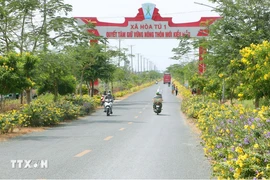
By June 30, 6,084 out of 7,669 communes were recognised as new rural areas, 2,567 achieved “advanced” rural status, and 743 communes were honoured as “model” new rural areas. Besides, 13 cities and provinces were certified as having completed their missions to build new-style rural areas, reaching 87% of the national goal. Rural incomes have also surged, with the average reaching 54 million VND (over 2,000 USD) per person per year in 2024, or a 1.3-fold increase from 2020.
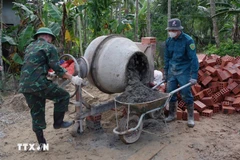
As much as 3.7 quadrillion VND was mobilised as of mid-year for new-style rural area building while millions of residents voluntarily donated over 98.2 million square metres for the work.
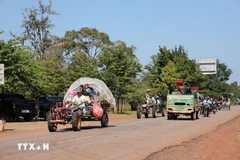
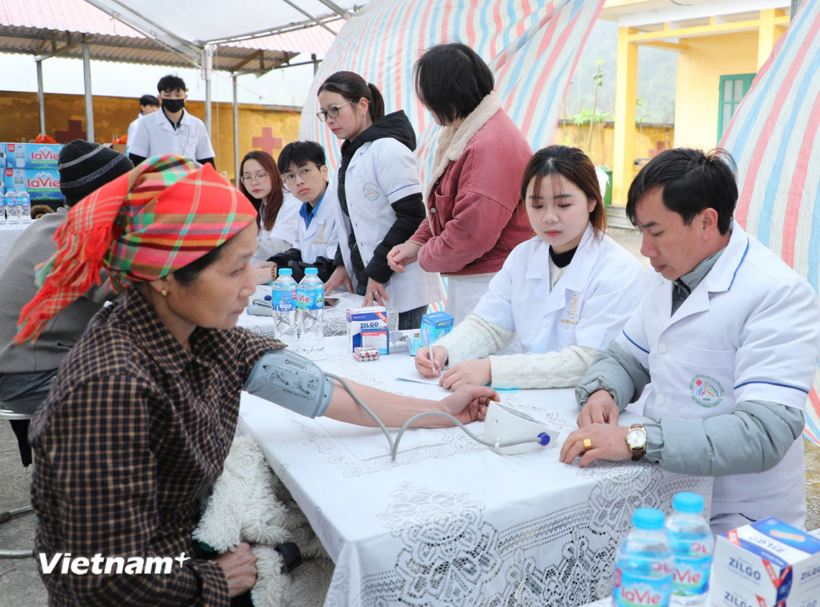
Thanks to these concerted efforts, rural infrastructure has been significantly upgraded, livelihoods diversified, and essential social services, healthcare, education, clean water, and information access, expanded, according to Lam.
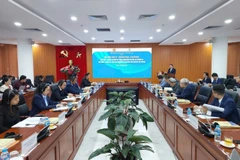
Vice Chairman of the National Assembly Le Minh Hoan said that the new-style rural area development initiative is not merely about building infrastructure but about creating livable countryside communities where people nurture their aspiration for further growth.
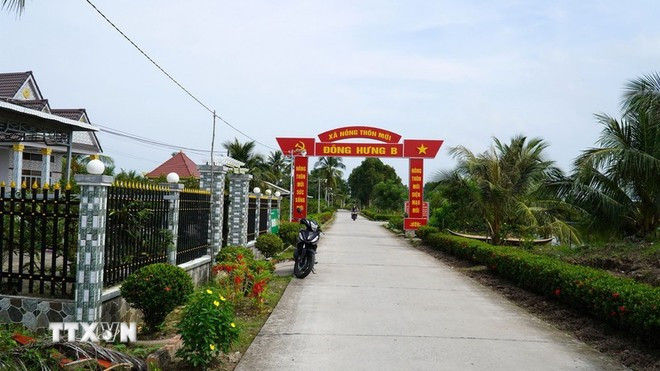
Despite the remarkable progress, the office acknowledged several challenges, including high poverty relapse rates and sluggish disbursement of funds.
Accelerating sustainable development of rural economy
Looking ahead, Deputy Minister of Agriculture and Environment Tran Thanh Nam underscored the need for a new phase focused on sustainability, stating new-style rural area building must closely align with the Party and Government’s resolutions.
To enhance efficiency, the Prime Minister has directed the Ministry of Agriculture and Environment to merge the two existing programmes into a single – The National Target Programme on New-Style Rural Area Development and Sustainable Poverty Reduction, which will be implemented from 2026 to 2035.
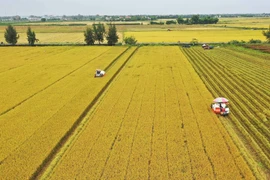
According to the Deputy Head of the Coordination Office, the programme aims to build modern and sustainable rural areas that can adapt to climate change while harmonising economic, social, and environmental goals. It will promote the transition from agricultural production to a rural economy, tied to green growth, innovation, and digital transformation.
By 2030, the programme targets a 2.5- to 3-fold increase in rural incomes compared to 2020, a multidimensional poverty reduction rate of 1–1.5% per year, and complete elimination of poverty in all poor communes. By 2035, at least 85% of communes nationwide are expected to meet new rural standards, with about one-third recognised as modern rural areas.
The programme will be carried out across 34 cities and localities, spanning 2,621 communes, 687 wards, and 13 special zones./.